“Wokey, Wokey!!” No, that can’t be right. Sorry Nigel, what was that? “A bunch of metro-liberals …” and? Sorry, I can’t hear you. I’m being shouted down by a rabble of Extinct Liberals. Wait whilst I close the window. Ahh that’s better. Thank heavens I paid the extra £33,000 and had Everest fitted.
The question I wanted to ask before I was so rudely deplatformed was, what was Billy Cotton’s TV show catchphrase? Oh, it was ‘Wakey, Wakey!!’
OK, so the next question is not so much whatever is happening in the UK but who is letting it happen? I knew I should never have left the country when it needed me, but I had no idea that the government left as well?
10 Downing Street is anyone at home?
Putting aside for the moment that the coronavirus crisis was placed in the hands of the Arse & Elbow Committee, we have seen Churchill’s statue and the Cenotaph vandalised, public statues chucked hither and thither, Black Laughs Matter rampaging through the streets virtually unchallenged and unchecked, Extinction Rebellion blocking newspaper printing presses … If the government is not responsible for giving the loony left a hall pass, who is? Now look here Mr S ….
But such decline is not without its humorous side. Take the Mail Online’s article ‘Furious row over appointment of Tony Abbot …’ An indepth analysis of the accusation that Tony Abbot is a transgressor of all PCisms. He is a ‘misogynist, he is sexist and a climate change denier’, so something from up North claims. Forget the fact that he has secured significant trade deals for the UK. Here is a man (that will work against him to be sure!) who had he a statue would be well advised to strap on its lifebelt quickly. But wait a moment, wasn’t the left’s anti-Brexit campaign almost entirely predicated on economic repercussions? Mind you, race, sexism and gender issues have always been Labour’s safety net. If in doubt, denounce it about. After all, the last thing leftist opponents to Brexit want to see are those good old trade deals coming in thick and fast.
British universities get a Phd in Predictability
On the BLM front the ball keeps rolling and gathering, er, snow. News is that British Universities are falling over themselves to issue solidarity statements. No news is good news and there is no news here. As everybody knows, the British education system is an industrial canning factory for liberal-left hobby horses.
The silver lining is that whilst we are young we tend to read The Guardian but later, when we leave university, when life becomes just that bit more real, and we have jobs to keep, houses to buy, children to look after, mortgages to pay, we wake (present tense of woke) up and suddenly find ourselves becoming more and more conservative, until we finally reach the stage where we are reading The Daily Mail. Well, you know what they say about liberalism, it is like a bad case of acne: some grow out of it and some are scarred for life.
It must matter to someone … surely?
Top of the amusement pops has to be the announcement by a young, black, female activist, a BLM leader, that she is planning to form the first black-led political party in Britain. Allegedly, whitey will be excluded from leadership roles and there has been some suggestion on Twatter of white enslavement. Someone should advise this young lady that the UK does not end at Lewisham and that if she intends to all-aboard the UK political bandwagon the first thing she needs to learn is the art of concealing her party’s true intentions behind a smoke and mirrors manifesto.
As for taking control of the country by the political route, all I can say is good luck with that one. Nobody else has ever pulled it off. And my advice to anyone attempting it, short of don’t bother, is if you ever clear the starting blocks watch out for that last minute election hurdle, the old ‘don’t throw your Labour or Conservative vote away on a small party’ trick. It works for the old two-party combo every time. As for slavery, I thought we were already slaves ~ slaves to political correctness. Time for a quick burst of the Rule Britannias!
It’s a funny old world, innit!
At this point I suck my teeth ~ that is one solidarity I learnt years ago ~ and it should stand me in good stead as we also learn that in the United States out of ‘respeck’ the most important association for teaching English in higher education has adopted the resolution that black students can ditch ‘standard English’ and focus exclusively on ‘Black language’ instead. I know I am now referring to the good old US of A, but as we saw with the BLM riots things tend to skim across the pond these days a good deal faster than they used to. It’s enough to make ‘me eddy at me’ (which is, to you, ‘make my head hurt’).
And finally (if only it was), again in the USA, but you can buy it in the UK through Amazon, is the latest solidarity act in the form of a new book called In Defense of Looting. No, this is not me attempting to be satirical. Like a man accused by the left as being unsuitable for the role of UK trade envoy, even though he has already secured ‘huge trade deals’, because he is ‘sexist’ and has said some naughty things, this book and the rest of the madness is actually, really out there, which only goes to show that if nothing at all else matters Political Correctness most assuredly does.
10 Downing Street is anyone at home? ‘Wakey, Wakey!!’
Even king for a day would be too much! 17 October 2026 – Astonishing ‘King of Manchester’ Pants Found in No. 10 Having apprised you in a former post about the existence of President Putin T-shirts, in this, the follow-up episode of ‘You Can’t Have Enough Stuff’, but you can have enough migrants, more than… Читать далее: Astonishing ‘King of Manchester’ Pants Found in No. 10
Three President Putin T-shirts from across the decades 11 October 2026 – Rare 25-Year-Old President Putin T-Shirts Surface in the UK I have no difficulty in remembering when I first became intrigued by hunting out and collecting things, which is rather odd in two respects: the one is reserved for aliens, who, terminally smitten by… Читать далее: Rare 25-Year-Old President Putin T-Shirts Surface in the UK
Seven restaurants under one roof, and that’s not all at the Kings Residence, Kaliningrad. 30 September 2026 -The Kings Residence Kaliningrad: it’s a big one alright! When I first clapped eyes on it – I believe it was in the summer of 2015 – I thought, “My, what a big one!” Almost immediately, and certainly… Читать далее: The Kings Residence Kaliningrad: it’s a big one alright!
I think those chaps at RT write a jolly good article … 22 September 2026 – RT Breaking News: Why Don’t They Want You to See It? 😱 If you’ve arrived at this page from the EU, look away now!! So, there I was a few weeks ago flicking through the western news channels which… Читать далее: RT Breaking News: Why Don’t They Want You to See It?
More money for Ukraine and migrants, but shhh, don’t mention the boats! 9 September 2026 – Britain Goes Balaclava as the Boats Keep Bowling In On the day that it is proudly announced by an Andy Burnham’s Labour Party that the UK will give away £100,000,000 to Ukraine’s air defences this winter, whilst spending approximately… Читать далее: Britain Goes Balaclava as the Boats Keep Bowling In
Mick & Olga Hart celebrate their 19th wedding anniversary in Svetlogorsk, Russia.
Published: 5 September 2020 ~ Englishman Married Twice in Russia in One Day
31 August 2020 was our wedding anniversary. Nineteen years together and never a cross word. At least, I used to think so until I learnt more Russian and discovered that what for years I had presumed to be my wife’s words of endearment were in fact expletives. How does it go? Ignorance is bliss.
To mark the occasion of my good fortune and her bad, I suggested that we take a trip to Svetlogorsk, the Baltic coast seaside resort, and retrace our steps in time. There, we would visit the church where we were married and call in at the hotel nearby, Starry Doktor (Old Doctor), where betwixt the two ceremonies, the first at the church and the second at the Russian equivalent of the UK’s registry office, we had, with our guests, stopped off for a pizza and something light to drink.
Olga, my wife, had wanted a church wedding but in Russia church weddings are not officially recognised by the State, which meant that we would need to be married twice on the same day: first in the church in Svetlogorsk and then at the registry office in Kaliningrad.
Before I could be married in the Russian Orthodox Church, it was necessary for me to attend an orthodox church to seek absolution for my sins.
As I was in England prior to the wedding, and living at that time in Bedford, I had to travel to the Orthodox church in Kensington, London, in order to honour the obligation that the Orthodox church required. On hearing about the purpose of my trip, some of my friends opined that I would be there for a very long time.
Today, 31 August 2020, the plan was to call in at Starry Doktor first, for an old-times’ sake pizza, and from there walk to the church.
As well as being our wedding anniversary, another anniversary of almost equal proportions was about to be enacted, which was that this would be the first time that I would eat something and drink beer in a restaurant, discounting one bottle outside a beachside café a few weeks back, since the coronavirus air-raid siren sounded, which for us was sometime in March this year.
The masked traveller
We travelled by train, as we were in the mood to do so, equipped with regulation coronavirus face masks and antiseptic hand wipes, both of which became progressively useless as normal life took over.
It is difficult, if not perfectly ridiculous, wiping hands, wiping the top of bottles, wiping, for example, a sweet wrapper and in the process of doing so forgetting what order you are doing it in or whether you have done it at all. The best anyone can achieve in normal circumstances is to go through the motions and then give up.
Englishman married twice in russia in one day
Arriving in Svetlogorsk we found that the number of visitors, which after a very heavily subscribed summer season due to the Russian state’s incentive to boost domestic tourism in the wake of coronavirus restrictions, was at last diminishing. Autumn was on its way; holidays were over; school term was about to resume.
Nineteen years ago to the day, the weather had been superb. Mr Blue Sky had garbed himself in his best robes for the occasion and his friend, Mr Sun, although as bright as the proverbial new penny, had turned down the heat with respect to the presence of autumn.
Summer, like the madness of youth, was fading fast and as it ebbed away was being replaced by that distinctive autumnal tinge. In autumn the air becomes thinner and our senses more finely attuned, especially our sense of smell. Summer is the time of noise, laughter, exuberance; autumn the soft and mellow fragrance of yellow and auburn leaves, of mossy dampness and that enticing nip in the air that tells of winter’s imminence. It is the seasonal ante-chamber, the last stop for quiet reflection, before the cold embrace.
When we left for the coast by train this morning, it had just stopped raining, but upon our arrival in Svetlogorsk (I can hear Victor correcting me ‘Rauschen’) the sun had broken through and someone up there was being kind to us on our anniversary as the temperature was perfect. We are autumnal people.
We walked the short distance to Starry Doktor, and I was both pleased and discomfited to see that my favourite property, the old Mozart café, had at last been bought and was now being renovated. Whatever you do, please do not spoil this wonderful example of Gothic Rauschen, I heard myself whisper.
We passed the smallest antique shop in the world, thankfully not open today or we would have bound to have been in there buying something, and found ourselves opposite the newly constructed and open Hartman Hotel, a resplendent establishment if ever there was one, which, with its imposing vintage automobile swishly parked outside, is bound to give Svetlogorsk’s Grand Hotel and Hotel Rus a challenging run for their money.
Information board outside Starry Doktor Hotel, Svetlogorsk, Russia
Starry Doktor, we were pleased to find, had not changed. And neither can it, as the information board outside the building denotes. There was no change inside either, not to the layout and décor or in the reception that we received, which was rather Soviet in kind.
“We’d like to order a pizza. Can we eat outside?”
“No”
“But we can order a pizza?”
“Yes.”
Olga looks through the menu.
“What sort of vegetarian pizzas do you have?”
“You will have to look.”
“OK. Can we have cheese and tomato?”
“We don’t do that. We do cheese with tomato paste.”
“OK. We will have that.”
“Which one do you want?”
“Cheese and tomato paste?”
“You need to look in the menu and tell me which one that is.”
Back to the menu.
“Margherita.”
Smiling and being ‘mine welcoming hostess’ was not apparently on the menu either and as we were the only patrons, we found ourselves acting in that strange way that one does in cafés and restaurants when the atmosphere is not quite to one’s liking, ie talking in low whispers. Nevertheless, this was all part of the traditional service and being us, odd, the nostalgic input was strangely appreciated.
When the pizza arrived it was not thin crust; it was very thin crust. If I did not already have a pocket handkerchief, I could have folded up a piece and used it as such. However, it was not without taste, and putting behind me almost all notions of misapprehension regarding coronavirus and drinking from a bar-room glass, my first beer for yonks on a licensed premises was greatly appreciated.
Starry Doktor Hotel, Svetlogorsk, Russia; August 2020
From Starry Doktor we walked the short distance to the small church where we had been married. On the way we were dismayed to find that one of our favourite houses had been swallowed up by a new, totally out of scale, brash ‘look how much wealth we’ve got’ refit. I could not be sure, but since our last visit in the spring of this year, it looked as though another gargantuan villa, again completely off the scale chart, had sprung up between the pine trees on the opposite side of the road.
“Will they ever stop building?” Olga grumbled.
Just for us, or so we would like to think, the weather was getting better by the hour. Our little red-brick church, resting on top of an eminence, with its three or four tiers of steps leading up to the entrance, peeped through the birch and pine trees; the sunlight peeped through them too, impressing the surface of the church with dainty twig and leaf patterns, whilst the sky above smiled bright and blue and the air about us blessed our senses with that first cool note of autumn.
Svetlogorsk Church, Russia, August 2020
If you were watching my words as moving images on a screen, we would now defer to the cinematographic technique where everything goes wavy, the implication being that we were going back in time. So let us do just that, and ripple away to the day of our wedding in August 2001.
Englishman married twice in russia in one day
On this day, 19 years ago, we were residing, with our wedding guests from England, at the Lazurny BeregHotel ~ alas, another victim of Svetlogorsk’s build ‘em big and build ‘em high development. Lazurny Bereg, which was a mid-sized building and a nice hotel with bags of character, has since been replaced by something high-rise. I am not sure whether the new-build is an apartment block or a block of flats for holiday lease ~ c’est la vie.
The church service was set for 11am, so it was breakfast at 9am, and togged up and ready to go by 10am, but first we had to run the gauntlet of a series of Russian games, pre-wedding reception frolics, which, to be quite frank, as I was as nervous as ~ you know the word ~ I could just as well have dispensed with.
My wife to be was being waited on by friends, who were helping with her make-up and dressing her in her wedding apparel ~ well, that’s what she told me they were doing? Meanwhile, at an appointed time, I was instructed to go to the front entrance of the hotel with my brother David and our friends from England, then, when the word was given, I was to enter the building and proceed upstairs to the first-floor hallway where our hotel room was situated.
The word was given and in we went. As soon as we reached the first flight of steps we were met by a delegation of my wife-to-be’s, Olga’s, friends. Two of these could speak English, otherwise the scenario would have been considerably more complex. As it was, we worked out fairly quickly the nature of the first game. Apparently, I was not allowed to see my fiancée unless I crossed the palms of those before us with rubles, ie I had to pay a levy!
After a great deal of banter about would you take a cheque or how about an IOU, I offered two and six, but the Russians were having none of it. We had to pay and pay in rubles.
Never mind whether my wife was worth 200 rubles, about £1.30 at that time, unfortunately I was ruble-less in Russia. As luck would have it, my brother David’s wallet was better endowed than mine, and he handed over the requisite notes. He reminded me about a year ago, however, that I never did pay him back and that technically my wife was his, a subject on which I will say no more …
Having stumped up the cash, we were then escorted to the first-floor hall. Neatly laid out on a table in front of us were a series of family photographs featuring children. I was asked to guess which one was Olga. I think I was on the verge of getting it wrong when one of our friends blurted out the answer, who then shouted “David’s paid the money and I got the photo right, your claim [on my wife] is looking more dodgy by the minute!” This is what happens when you let Londoners come to your wedding!
Now it was time for Olga to emerge from the room in all her finery, but instead, the hotel door opened and there stood a large man dressed in women’s clothing. He gave me a Goliath hug, informing me as he did that if I did not pay a ‘ransom’ I would have to marry him instead. He would not have dared to suggest such a thing today, given England’s queer reputation! But back in 2001 things were not so very far gone.
If only she’d have shaved!
Once again it was down to my brother to make good with the rubles, who by this time was protesting that my lack of rubles was clearly a fix.
At last Olga appeared. She had decided to forsake the Russian trend for large, voluminous and pleated wedding dresses for something less ostentatious, and she looked lovely. Mind you, Andrew, the man in drag, was not a bad second.
It was only a short journey from the hotel to the church, but a mini-bus had been hired to get us there. As the church service was to be presided over by an Orthodox priest, who naturally would be speaking Russian, I had been given cues and, acting on these cues, instructed as to what my responses should be. So nothing could possibly go wrong, could it?
I love Orthodox churches. The richly painted and opulent icons together with the mist from and smell of wax candles intermingled with incense creates the most hallowed of atmospheres, and our church, although modest by big city standards, had an ethos all of its own.
Englishman married twice in Russia in one day
The ceremony required us to walk in circles at given points in the service and to have two people standing behind each of us holding gold-tone crowns above our heads. One of Olga’s friends did the honours for her, whilst my brother held the crown above me. He complained later that his arms had ached considerably and that the task had not been made easier by the tight fit of his jacket. If I said it once in those days, I had said it a hundred times: avoid cheap suits from Hepworths.
My brother, David, crowning me
All things considered, the service went well. Yes, it was a pity that when the priest asked me if I had another wife as an impediment to getting married that I answered yes instead of no, but I think I got away with it!
The wedding ceremony (blurry pictures courtesy of pre-digital photography, although the originals are sharper than this)
Outside, after a good round of photographs, this was the point at which we walked across the road to Starry Doktor, where we congregated outside for a drink and a pizza. I stayed on non-alcoholic beverages as we had a heavy itinerary in front of us.
Pizza time was essentially a way of killing time. In Russia, as I mentioned earlier, church marriages are not officially recognised by the State, and in order to be officially married, to have the marriage registered, we had to travel into Kaliningrad and get married a second time at the official registry office.
Forty minutes later, a cavalcade of cars whisked us off to the city, about 25 miles away. It was quite impressive, even allowing for the gallows humour about fleets of black cars and funerals.
The registry office functioned from inside one of Kaliningrad’s big old concrete monoliths, which has since been given a face job, but back in those days it was a daunting sight, all weather-stained and pock marked.
From a small portico the entrance led into a hall of typical marble effect. We had first to cross this hall into one of the small offices at the far end and get ourselves ‘booked in’. However, my passport, which at that time I should have been carrying with me day and night, was back in Svetlogorsk in the hotel. This omission caused something of a bureaucratic crisis in spite of the fact that the young lady in the office had seen and spoken to me half a dozen times the previous week, when we had visited the offices to ask questions about procedure. Just as it was beginning to look as though we would all have to come back next month, the issue was finally resolved upon the discovery that I was carrying a photocopy of my passport, which was accepted under the circumstances, but only after I had received a jolly good telling off ~ pity I could not understand what the young lady was saying.
All sorted, we were then ushered into an adjoining room, an antechamber to where the main event would take place. This was the ‘red room’. Why? Because it was; the walls were maroon and the furniture reproduction Louis something, the rather loud nature of which caused one of my compatriots to draw parallels between it and a bordello. He should know, I thought.
All looking amazed about something in Kaliningrad registry office’s ‘red room’ (31 August 2001)
We ambled around in this room for about ten minutes before being called into the official wedding chamber. This was a vast room indeed, highly ornate but empty except for a table and chair at one end, above which hung a large example of the Russian coat of arms. At the centre of the desk stood a small Russian flag and behind it a large ledger, which was waiting for me and the witnesses to sign.
Mick & Olga Hart’s wedding in Kaliningrad registry office, Russia, 31 August 2001
When it came to the crucial moment, the placing of the ring upon Olga’s finger, the music that was playing in the background was intercepted by the Beatles singing, of all things, ‘Yesterday, all my troubles seemed so far away …’ This, obviously, set the British guests rocking in the aisles, whilst Olga’s two female friends cried bitterly, not inspired by the romance of the moment but by the inconsolable belief that they were losing a friend forever, who, once married, would be whistled off to degenerate England never to be seen or heard of again.
From the ring and Paul McCartney, it was off to the front desk. I took up my position on the seat in front of the ledger and to the solemn refrain of the Russian national anthem, which thundered around the room, duly signed my name in the book. Olga then followed and the witnesses came forwarded and scribbled their monicas in the space allocated for this purpose.
Signing the official wedding book … Mick & Olga Hart’s wedding, Kaliningrad, Russia 2001
The music changed to something full of glad tidings and amid the congratulations that we were well and truly spliced, and the kisses and kind words (Clive, my London friend, “Well, you’ve done it now!”) large bunches of flowers appeared and at last a tray of alcoholic beverages.
Outside, under the portico, the tradition of throwing the bride’s bouquet mirrored that in England and was caught by one of our English friends.
Now, all the official gubbings done and the church service completed, you would have thought that we would be off to the reception ~ not so. First, we had to honour the tradition of being driven around the city, a trip culminating in a visit to Kaliningrad’s principle Soviet war monument, where, in front of the eternal flame and at the steps of the commemorative obelisk, we would pay our respects with flowers.
The photographs that were taken here are among some of the most potent and memorable of that day and also reveal how lucky we had been with the weather.
Mick & Olga Hart’s wedding. At the Soviet war monument, Kaliningrad, Russia, 2001
Before joining our other guests at the reception venue, we had one last call to make. This was for wedding photographs to be taken outside of Königsberg Cathedral and in the pillared vestibule containing the grave of Immanuel Kant, the German philosopher.
You can be sure that by the time we arrived at the reception hall, I was ready for a drink! But there were yet two more Russian wedding traditions that had to be observed before we could indulge.
The first was biting the loaf. Both my wife and I were assigned to this task, one after the other, the idea being that he or she who took the biggest bite would be awarded the role of dominant marriage partner. Olga went first and, always up for a challenge, I followed making sure that I took a massive bite. Whilst everyone was congratulating me on having taken the biggest bite, as with most things marital I had bitten off more than I could chew. Fortunately, the next act involved gulping back a glass of wine, which saved me from choking on the bread, and then we chucked our glasses over our shoulders and into the street behind us. One glass broke and the other glass bounced, but I never did ask what the symbolic significance of this was.
Our reception was held at what was then known as The Cabana Club, a restaurant/café bar with a Latin American theme. It was a good choice, an attractive venue equipped with three large rooms. One room served as the wedding reception area, the other as a dance hall and the one at the back a very large and quiet lounge, with comfy seats and soft music.
Mick & Olga Hart’s wedding reception at The Cabana Club, Kaliningrad, Russia, 2001
Alas, The Cabana is no more. It appears as if the building has been parcelled off. If I am not mistaken, a portion of the premises is now occupied by a small bar frequented by students and young folk, but as the interior of this latter bar is rather small, the rest of the old Cabana Club must have been subdivided for other purposes.
The reception
In essence, Russian wedding reception rooms are not so very different in configuration from their English counterparts. A table is placed at the head of the room for the bride, groom and other officiating ceremony members and the guests occupy either a chain of tables leading from the principal along both sides of the room or, as in our case, owing to the shape of the room, are dotted about here and there in groups. I believe there had been the usual head scratching about who should be sat with whom, and some license extended to unusual combinations, but at the end of the day concord was achieved.
One departure from British formality is that whereas in the UK it is customary for the best man and groom to speechify, in Russia everyone has a go. The food is served, and each guest in turn interrupts the eating process by standing up and delivering a speech as a precursor to toasting the newly wedded couple. Another significant difference is that whereas British tradition swerves heavily towards the jocular, speeches typically embroidered with satirical tales of lurid happenings from the stag night before and often inter-sprinkled with a ribald confetti of innuendos and smut, Russian speeches are characteristically deep and philosophical, well-meaning and sincere. They are also very long and made longer in our case as those guests who were bi-lingual acted as translators for their Russian companions so that we, the British contingent, could understand the sentiments expressed.
Among our guests was Sam Simkin, esteemed poet of the Kaliningrad region, and, of course, our dear friend Victor Ryabinin, artist-historian. I can see him now, peeping out from behind a picture that he had painted especially for us, delivering his speech with customary sincerity and humility. His presence was, as always, a source of warmth and reassurance. Sam Simkin presented us with a landmark book which both he and Victor Ryabinin had composed, The Poetry of Eastern Prussia.
Many guest speeches later, the dreaded moment arrived when I had to perform my speech. The content of this speech had been a bone of contention for months. I had to produce something which Olga could translate effectively to the Russian contingent, but the idiomatic nature of my speech and its typical recourse to innuendo made it difficult in this respect, and there had also been some controversy between Olga and myself about the tone of the piece.
The props that I would be using had also fallen under the critical spotlight: there was a doctored image of President Putin and the then Mayor of Kaliningrad with caption saying something about British invaders, a photocopy of one of our British wedding guests wearing a German helmet and, the pièce de résistance, a pair of hole-ridden and ragged Y-fronts. Whilst I had no doubt that the turn and tenor of my speech would have gone down well at a wedding party in Rushden, England, I was not entirely convinced, given the criticism aforehand, that it would be as well received, or for that matter understood, in Kaliningrad 2001.
Go for it! So I did. But all the way through I felt that I was on very shaky ground! In the event, I pulled it off ~ and I am not just talking about the underpants ~ better than I could have hoped for, but I was glad when it was over.
It really was time now to sit back and just get drunk, but Russian wedding parties are not like that. Before we could even think about relaxing in the traditional sense, we had a whole afternoon of games to contend with.
I will not go into detail about all of these, but restrict my comments to two. One had me wrapped in a blindfold. In front of me sat a row of ladies on stools with their legs crossed. My job was to walk down the line and fondle each of their knees and by this process, whilst blindfolded, identify my wife. I was not complaining and, yes, I did get it right!
The knee-feeling game: Mick & Olga Hart’s wedding, Kaliningrad, Russia 2001
The second game was one we had played when we first came to Kaliningrad in 2000, at a New Year’s Day party. This game is one which we later exported to England and used to good effect at some of our own parties.
It goes like this. Three or more male players have a long piece of string attached to their trouser belts. Attached to the end of each string is a banana. Lined up in front of the players are three empty matchboxes. On the word ‘Go!’, all of the men have to thrust their hips in order to swing their bananas. As their bananas make contact with the matchboxes, the boxes begin to move. Each player has to move his matchbox in this way, the winner being the first to propel his matchbox over the finishing line by the powerful thrust of his hips and the decisive way he handles his banana.
David Hart prepares his for the ‘banana game’: Mick & Olga Hart’s wedding, Kaliningrad, Russia, 2001
To this day, the controversy persist over who won the contest and who cheated. In the final analysis, I think we agreed to compromise. The summation was that whilst the Russians may have had the biggest bananas, the British contingent had the best hip movements.
Cue wavy lines across the final image.
That was 19 years ago. This was not the first time we had returned to the little church on top of the hill in Svetlogosrk, but it was possibly the first time we had made the definitive connection between our wedding and the life we have had together since. The first time we had returned on the day of our anniversary.
We stood before the lectern where we had stood 19 years ago. We had a cuddle and kiss and Olga took the mandatory photographs for her Facebook account. And then we lit two candles and placed them in the sand-filled stand in front of one of the icons.
“Let us say thanks to God for each other, for the times we have had and hopefully have to come,” says Olga.
We also said thanks for all the experiences we had shared and for the people we had met along the way, including thanks for Victor ~ especially for Victor.
Outside, the sky was blue, the sun was radiant. It was a glorious day in Svetlogorsk (‘Rauschen, Mike’), as perfect as the day on which we had been married.
Mick & Olga Hart outside the church where they were married in 2001. Photo taken 31 August 2020. Svetlogorsk (Rauschen) Russia, the Kaliningrad region.
Mick Hart’s totally biased review of bottled beers* in Kaliningrad (or how to live without British real ale!)
Published: 2 September 2020
Article 7: Baltika 3
It is, alas, customary for reviewers of almost anything these days that when confronted with something that they judge negatively to pan the product/experience with such acidity that you might well suspect that they own a moped and live somewhere like Streatham.
Subscribing to the modern misconception that recourse to expletives is the new humour rather than a substitute for lack thereof, these would-be social-media wits ‘gobshite’ it out as if there was no tomorrow, when the real pity is that that they were with us yesterday and are still with us today.
With this misfortune in mind, I shall, like the true English gentleman that I aspire to be, exercise restraint when I say that so far Baltika 3 is, in my opinion, not the best beer that I have drunk since coming to Kaliningrad.
“You don’t want to drink that,” snorted an acquaintance of ours, whilst driving us to the seaside, “It’s traction oil!!”
I used to work in publishing so, naturally, I never believe anything I read or anything anybody says, so when next I went to the supermarket to buy a bottle of beer, what did I do? Exactly, I bought Baltika.
First off, I did not like the bottle, well, not the bottle exactly, rather the label design. It said ‘Baltika 3’, which we will not carp about because that is what it is, but the shimmering blue and steel silver hues made me wonder if the graphic designers had not filched their ‘modern’ look from a motor vehicle advert.
I thought, “this is going to be very metallic, like that other lager ~ how does the advert go? ‘Possibly the nastiest and most metallic lager in the world’”.
It wasn’t. But guess who it is brewed by?
I took the cap off, mainly because I have not yet found an easier way to get to the contents of a bottle ~ as I have said, the bottle was fine ~ and took a poser’s sniff. Even if I had not smelt it before, and I had, because I used to work with heavy-plant machinery, I would recognise traction oil. It would not be fair to say that it did smell like this, but I struggled to determine what it did smell like.
I poured my premiere sample into an old Soviet bacal ~ a dimpled glass tankard ~ recently acquired, and tentatively, and with great trepidation, took my inaugural sip!
Not wanting to be scathing, the beer I had drunk previously, Lidskae Aksamitnae, had been so delectable that the inferior flavour of Baltika 3 could have suffered a severe case of amplification in consequence.
Being the nice chap that I am, I am willing to give Baltika 3 the benefit of this doubt. But I still cannot believe that Baltika is Russia’s most popular beer, and that this claim is out there. In 2018, Baltika 3 Classic received the silver medal in the Pilsner category of the British International Beer Challenge, so not all of my fellow countrymen agree with me on this one.
All I can say is, and all I am willing to say is, that if Baltika 3 is anything to go by, I dread to think what the higher numbers of Baltika beer are like.
I suppose the only way to find out is to drink them.
Life, as they say, is a lottery!
😁TRAINSPOTTING & ANORAKS Name of Beer: Baltika 3 Brewer: Carlsberg Group Where it is brewed: St Petersburg, Russia Bottle capacity: 1.5 litres Strength: 4.8% Price: It cost me about 160 rubles (£1.62) Appearance: Pale to light brown Aroma: Barley malt (I think) Taste: I am still working on it Fizz amplitude: 7/10 Label/Marketing: Modernistic Would you buy it again? I would drink it if it was bought for me
Diary of a Self-isolator: Day 169 [30 August 2020]
Wish me luck as you wave me goodbye …
As we get set to wave goodbye to summer, and goodbye to the waves as they roll along the golden sands, the question that seems to be foremost in almost everybody’s mind is are we about to say hello to second-wave coronavirus? The simple answer to that is, that there isn’t one. As with everything concerning this modern pandemic, the information/disinformation is so muddled and contradictory that should second-wave coronavirus arrive it will possibly be lost beneath a triple-figure coronavirus conspiracy wave.
I am reading social media responses that have gone from conspiracy theory to conspiracy conviction, the favourite expressions of which are ‘on purpose’, ‘crash the global economy’, ‘they want people to distrust one another’ and the valedictory ‘the damage has been done’. In this mindset the only wave that it is credible is that we have already waved goodbye to life as we knew it.
Here, in Russia, I quote from InfoRos: “There will be no second wave of the coronavirus infection in Russia, Russia’s former chief sanitary doctor and now a member of the lower parliament house, Gennady Onishchenko, said on Tuesday.” [https://inforos.ru/en/?module=news&action=view&id=112523 : published 29 July 2020; accessed 30 August 2020]
Severity of COVID-19 cases may increase in second wave, scientist says “According to the scientist, the novel coronavirus infection is likely to have three waves and it will be possible to return to the accustomed way of living only by the summer 2021” [TASS Russian News Agency: https://tass.com/society/1193965 : published 26 August 2020; accessed 30 August 2020]
Meanwhile in the UK, the situation as reported is markedly different, as this 28 August 2020 headline from The Telegraph shows:
But just look at this conflicting array of UK headlines:
Coronavirus: Hospital staff prepare for possible second wave (BBC)
NO SECOND WAVE More coronavirus outbreaks will come this winter, but Europe will avoid ‘horror’ of a second wave (The Sun)
Will there be a second wave of coronavirus in the UK? If cases of Covid-19 could surge again in UK “With lockdown restrictions eased across the UK to varying degrees, concerns amongst experts are growing in regard to the possibility of a second wave of coronavirus cases if social distancing guidelines are not adhered to” [Edinburgh Evening News]
UK researchers warn of much worse 2nd virus wave (Anodolu Agency)
Going on the headline sample above, for the first time in my life I am tempted to stay with The Sun!
But it is not only the ‘will there be, or won’t there be a second wave’, it is should we all be wearing masks? Does social distancing work or is it counter-productive to herd immunity? Are we supposed to be exercising some kind of self-imposed isolation? If it is alright to go to work, why is it not alright for children to go to school? If masks have to be worn on public transport and in shops, how come it is still alright to go to cafes, bars and restaurants? How many ‘spikes’ in Covid-19 resulted from non-social distancing during the BLM riots? How many Covid-19 cases have resulted from holiday-period hotel stays and crowded seaside resorts?
Now, in the midst of all this confusion, I have not yet mentioned ~ although I am just about to ~ when does the vaccine cometh and, as sure as night follows day, when it does have you decided which camp you belong in? In other words, are you an opt-in vaxxer, an anti-vaxxer or a resist-at-all-costs vaxxer?
This ‘know your rights’ article strikes me as funny as it contains the sort of tautology that Ronnie Barker would have been at home with, and it would not look out of place in Jonathan Swift’s biting satire, Gulliver’s Travels, in which Swift sends up political and bureaucratic aggrandisement as so much windbag waffle.
The polemics of compulsory vaccination can be overcome by self-isolating where nobody can get at you ~ I would suggest asking Mrs Doctor Who if you can jump into her box ~ or by inventing the first social-distancing personal force-field, guaranteed to prevent anyone entering your personal space inside the one-metre limit.
As I contemplate these options, I will continue with the second phase trial of my unique vaccine against confused messages, which is to see all, believe nothing and to take heed of Frank Sinatra singing ‘I did it My Way’.
A modest proposal (with apologies to Jonathan Swift)
In the land of wokes and snowflakes Hope & Glory are to liberals what a crucifix is to Count Dracula. Demolishing the BBC and sowing the ground with salt might help.
Published: 28 August 2020 by Mick Hart
‘Come on now, play the white man!’ Now, there is an expression that you do not hear every day. Back in the 60s, my friend’s father, who never passed up a chance to remind us what a true ‘English gentleman’ he was, often used to say this in circumstances where standards were lax or propriety compromised. It always produced a good titter from we children.
‘Ooohhhh, but you couldn’t say it these days!’. Well, I’ll let you into a secret, we do now and again, and it still raises a chuckle or too. The laugh comes not from the so-called racist connotation but from the jingoisticism of it. It is funny because it echoes and epitomises the arrogance, stuffy, and overbearing colonial mentality in which it is rooted. It is, in short, like many such sayings, a delightful and whimsical anachronism.
John Cleese, a master of satire, exploits similar examples of the British colonial mindset in the award-winning comedy series Fawlty Towers. The humour lies in the fact that it is self-deprecating, self-effacing. It demonstrates how the British, the English in particular, are able to send up their own national foibles and laugh at them. As our friend Victor Ryabinin would say, if you can laugh at yourself then you can laugh at others. Poking fun at one’s own national character is as British as a pint at the local and the age-old tradition of Yorkshire pud and roast beef on a Sunday. So, hoorah for the likes of Cleese and hoorah for Fawlty Towers.
Thus it was sad, nay deplorable, to learn on 12 June 2020, that the ‘gutless and cowardly’ BBC, as John Cleese called it, had removed an episode from the Fawlty Towers series for what The Guardian referred to as featuring ‘racial references’. Although, he was perfectly right ~ it was gutless and cowardly ~ it was not entirely unexpected, as more and more people agree that the BBC is the most institutionally liberal organisation in the UK, second only perhaps to the UK education system.
Fawlty Towers is just one of many classic TV programmes that have come under the BBC’s prissy PC scrutiny of late, although it is worth remembering that a lot of these condemned programmes are readily available on DVD. I recently watched a wonderful episode from Steptoe and Son on DVD in which old man Steptoe sings ‘Enoch’s dreaming of a white Christmas’, and, believe it or not, you can still buy the liberal anti-Christ of all 1970s’ comedy series Love Thy Neighbour and watch it at home in your Englishman’s castle. “Sssshhh, is the drawbridge up, Ethel?”
Knowing what the BBC is, knowing how it operates but wondering why anyone who does not read The Independent pays its license fee, it came as no great surprise when I heard this week that its latest PC purge was a suggestion to drop Rule, Britannia! and Land of Hope & Glory from its televised account of the Last Night of the Proms from the Royal Albert Hall. Apparently, the BBC lovies had been impelled to consider this in fear of reprisals from the Black Lives Matter mob. What was it John Cleese called the BBC? Aaahh yes, ‘cowardly and gutless’. Thankfully, the response of the real British public to this blatant publicity stunt was such that the BBC did a double-fast U-turn. Had it not, I think we could safely say that the writing, which is already on the wall for it, would have been summed up in two short words ‘F… Off!!’
It is appropriate that the BBC, which is at the forefront of historical revisionism, advocates that Land of Hope & Glory is dropped from the Last Night of the Proms, as revisionism and PC-groveling has been a cornerstone of its programming philosophy for some time now. I believe it must have a slogan on its foyer wall, soon to become an integral part of the BBC logo, which reads, ‘If the left don’t like it we’ll rewrite it!’ They are particularly assiduous in this respect when it comes to creating parallel worlds, especially out of historical dramas; who recalls their not so finest hour with the sad and sorry remake of that superb old series Upstairs, Downstairs?
Why not just call it a day? Give away your heritage, history and ancestral home in one fell swoop; commit cultural suicide and become second-class citizens in your own country; anything has to be better than this slow, painful and humiliating death via cringing appeasement and craven capitulation.
Oh, dear, who is really sick to death of all this liberal-left diversity-inspired political correctness gunk? Alright, let’s rephrase that question, who isn’t?
For years now the poor old tolerant, long-suffering British nation has had to sit back and watch as this once great country of ours is dragged into oblivion by two-party seesaw politics and the self-interested jobs worths and subversive lobby groups who run it ~ or rather, who are running it into the ground. No wonder the bods in Westminster did nothing when the adherents of BLM tried to remove Churchill’s statue. I should think it is a constant reminder to them of how gutless they have become. Come on lads (and the lady quotas) Tony’s been gone a good while now!
Anyone who was naïve enough to believe that things might change when the Conservative party got back into power need look no further than the humiliating paralysis that settled over Westminster during the BLM riots to prove how wrong they were? Was it not Nigel Farage who asked, what is it that the conservatives are conserving? I mean if the BBC is as anti-conservative as it is constantly claimed to be, then why does not the Conservative government do something about it, and, whilst it is at it, why not replace Ofsted for Instead (Investigating Standards in Education, Children’s Services and Skills), a department tasked with rooting out the liberal bias entrenched in the UK education system?
Ahhh, somewhere over the rainbow. It is obviously far easier, and possibly agenda fulfilling, to back down, give in and accommodate ~ I mean, think of what might happen at the ballot box! But the sad truth is that each time a concession is made in the false names of tolerance, fairness and equality, because one ethnic group or another demands it, another little piece of British history and its way of life is chipped and scraped away.
When terrorists attacks occur in the UK we are immediately told by the powers that be and their ideologically motivated media, that a few individuals, a minority, are trying to drive a wedge between us ~ ‘us’ being some fantasy co-operative who all live happily together in Pleasantville. The usual community leaders are rolled out, inadequate apologies muttered and, before you know it, we are off down another candle-lit vigil road.
As a friend of mine once said, he was surprised some budding entrepreneur had not cashed in on this process. Considering the way this country is going, someone could make a fortune selling candle-lit vigil kits wholesale.
This wedge, sometimes referred to as the thin end, is, in fact, the fat end. It is up there with the numerous acts of street violence, murders, muggings and the latest moped crime trend that has earned London the unenviable sobriquet of stab-fest capital of the world, and which plague many other big cities and towns in the UK.
The thin edge of the wedge is reflected in the fact that the old British way of life is extinct. It is goodbye to leaving your front door unlocked and evenin’ all Sergeant Dixon, and hello to bolts and barricades and where’s that bloody SWAT team when you need it!
The thin end of the wedge, which is more like a very annoying and painful wedgie done whilst wearing Y-fronts, can be estimated from the following occurrences and their psychological and societal impact on a nation that has never been more unsure of itself, more identity insecure, more unstable and more divided.
Let’s roll some of these thin wedgies out:
😆We must rename the Christmas holiday to Winter Lights because as Christmas is a Christian holiday it might offend the sensibility of certain migrant groups
😆We must not fly the Union Jack, because to do so is racist
😆We must not fly the Union Jack, because it is a fascist symbol
😆We must not fly the English flag, the St George flag, because it is racist, and because it is a symbol of colonialism
😆Serving members of our armed forces, who risk their lives in defence of the realm, are spat at in the streets by certain migrant groups
😆Serving members of our armed forces are refused service in shops run by people of particular migrant origin
😆Serving members of our armed forces are told that they must not wear their uniforms in public for fear of violence from certain migrant groups
😆State-run institutions and some private companies instruct their staff to remove crucifixes as it may offend migrant sensibilities
😆Remembrance Day poppies are burnt by sensibility-challenged migrants; liberals on social media urge for the poppy symbol to be dropped
😆Individuals who cry racism are awarded very large sums of money, often from the taxpayer’s purse
😆 Every day, the printed, televised and internet media is saturated with tales of a politically correct nature
This is a just a handful of rather unpopular and perennially irritating issues that clutter up and weigh heavily upon the life of every Briton. Perhaps you would like to add more of your own.
Until Nigel Farage burst upon the scene, one mention of immigration and you were immediately branded as racist. In fact, you are still branded as racist whatever you say. For example, if you were to say, I don’t think much of this engineered society of ours perhaps we’d all be better off if immigration was controlled, what would that make you? Concerned about your country, your traditions, way of life and a stable future for your children? Of course not. You would obviously be a racist, fascist, extreme right wing, far right, intolerant, a Nazi … in other words a threat to the liberal status quo.
On the opposite side of the coin, the liberal-owned and democracy-managing media continually refer to the extreme left, the neo-marxist and the various brownshirt organisations that masquerade as humanitarian groups fighting for ‘justice’ and ‘equality’ as anti-fascists and counter-protesters. Sounds good, does it not, if not a tad one-sided?
In 2016, the leader of Britain First, Paul Golding, narrowly avoided jail having being convicted for wearing a political uniform. Was he wearing full body armour like the black Forever Family activists that marched through Brixton this month (did anybody get arrested for that?) ~ no, he was wearing a fleece with a Britain First logo on it. I see so many T-shirts, sweatshirts and fleeces adorned with logos and slogans which, if there was any justice, should get the wearers sectioned, but hey ho and freely around they go, why? Because it is one rule for one and one for another, depending, of course, on the establishment’s patronage.
The internet, that once-trumpeted doyen of free speech, of which it was famously said could never be governed or censored, is governed and censored in the UK~ only the British establishment, who have always done a good line in misnomers, whenever they take down someone’s ~ wait for it! ~ social media account, explain the act of censorship away by stating that the person concerned, predominantly white British, was inciting racial or religious hatred. And watch out for those mean tweets, you could have plod at your door! But only some doors and not others …
The list of politically correct follies goes on and on and on, and yet still the UK has the gall to present itself to the rest of the world as the crucible of democracy, where freedom of speech is sacrosanct. The reality is, however, that freedom of speech in the UK is a lot like rights, ie there are rights for some and not for others. In other words, there is freedom of speech for some, as long as you stick to the establishment script, but woe betide you if you stray from it!
How many of you are old enough to remember Britain as it really was, in the days before PC-enforced diversity? Be honest, when you think of it, does it not make you want to sing, “Oh, but it was all so simple then …”?
How complicated, stifling, suffocating, tumultuous, frustrating and just downright stupid it has all become. Wouldn’t it be wonderful to round up all the racisms, tolerances, civil liberties, freedoms of this and that, rights, discriminations, equalities and all the other infectious isms and bin them, and then make further references to them unlawful! Imagine the tables turned ~ found guilty of being politically correct. Good stuff, ay!
When you stop to think about it ~ and they would rather you did not ~ how awful it is that Great Britain, which was once as its name suggests Great, has been reduced to this. And whilst you are at it, spare a moment to commiserate with the hapless lot of legacy Britons, those Britons whose families go back generation upon generation. What have these legacy Britons had to put up with? ~ the oppression, the intimidation, double-standards, bullying. The only people who believe they have benefitted from so-called progressive liberal values are those who are, bless them, really nice but naive people who want desperately to be thought of as tolerant or enlightened, and are used as democracy fodder as a result, or self-culture loathing anarchists.
Whenever I see or hear the phrases celebrate diversity, champion diversity, show more tolerance, or hear references to ever-increasing levels of enrichment, I am reminded of the conditioned response of the villagers in Patrick McGoohan’s TV series The Prisoner. The villagers, the brainwashed citizens of the Village, run around with rainbow-coloured umbrellas like performing poodles, pretending that life is harmonic, whilst Number 6 warns them through a megaphone that “Unlike me, many of you have accepted the situation of your imprisonment and will die here like rotten cabbages”.
What do you want to be a rotten cabbage with a rainbow umbrella or a realist? Either respect the history of your country and uphold its importance and rule of law or else denounce it once and for all. You cannot have your Yorkshire pud, roast beef, tats and eat it. Either value your traditions and celebrate them, set them in stone and let those who want to live here know that if they do not want to live by the rules and values of the host country don’t bother coming (or even better, just close the borders) and for those already here who violate our laws demand that your government take suitable punitive action. It really is time to draw the line and to say that this line must not be crossed. If not, simply cave in, admit defeat, wave the white (oh, sorry) flag and give the country away.
I understand that we are going to hell in a handcart, and the trick is to leave the brake on just enough so that hopefully the complaining oldies drop off naturally one by one, thus leaving the way open for the softened generations processed in the jelly mould of the liberal left’s compliance factory, otherwise known as the British education system, to carry the future can. But, if that is the plan, why wait?
Why not just call it a day? Give away your heritage, history and ancestral home in one fell swoop; commit cultural suicide and become second-class citizens in your own country; anything has to be better than this slow, painful and humiliating death via cringing appeasement and craven capitulation.
It really is time gentleman please, or as dear old Leonard Cohen might say: “It’s come to this, yes it’s come to this and wasn’t it a long way down …”
Either play the white man and resuscitate the patient or switch off the life support machine, and then perhaps whoever is left can get on with their lives. Perhaps … Land of Hope & Glory? Hope, as they say, dies last!
Once upon a time there were two towns, one called Decadence and the other Tradland. Although the children who lived in each were much the same as children everywhere, the two towns, and the way they were run, were altogether different.
The children who lived in Decadence were told by their prefects that they lived in a blessed land, a land of plenty, full of endless supplies of sweets, chocolates and ice cream and to get this endless supply they need do nothing. In Decadence, there was precious little in the way of laws, except for those that related to credit and borrowing, and all mention of good behaviour or, heaven forbid, morality had been swept under the globalist carpet donkeys’ minds ago.
The children of Decadence had ‘rights’ and all they needed to do to ensure these rights, which in turn ensured an endless supply of sweets, chocolates and ice creams ~ or so they were led to believe ~ was to go the betting office once every five years and put a cross on one of the betting slips. To make it easy for the children, who to be honest did not understand much about high-stakes gambling, the National Democracy Race had always been a two-horse fix. There were no winners only losers; no matter who you placed your bet on, you always got more of the same. Most of what you got was promises, but as the children of Decadence had been taught from primary school to the time that they left university, usually with a triple first in banner carrying, what was the point of promises? They were only there to be broken.
Nevertheless, Decadence was sold to the children who lived in it and to the rest of the world as such a bountiful place that people flocked there from every forsaken corner of the world. It did not matter that thrown together in this way these poor unfortunates despised one another with a vengeance, squabbled, fought, and grappled for power, as the prefects just kept on telling them that Decadence was Utopia and everybody in it one big happy family. And the more they repeated this, the more the children who lived there, who let me say dear reader did not know any better, wanted to, or were made to, believe that what they were told was the truth .
A Fairy Tale for the End of Summer 2020
Meanwhile, whilst the children were getting fat, indolent and lazy on too many sweets, ice creams and chocolates, the prefects, who had carefully schooled them in the art of looking the other way, were busy plundering the world of its wealth and resources. From the children’s point of view, this good life was a life without end. They really did believe that ice creams, sweets and chocolates grew on Rights trees, firstly because the prefects told them so and secondly because those same kind prefects were always willing to grant them credit, as long as they paid the interest, of course.
A few miles away, down the road from Decadence, there was another town, a very large town indeed. In this town the children were not much different from the children in Decadence. They, too, liked ice cream, sweets and chocolate, but they had been taught that in order to have these luxuries they had to work for it. In Tradland, rights were not enough to get ice cream, also to be considered was respect, social responsibility and a very old-fashioned and out-dated idea by Decadence’s standards, morality.
The prefects in Tradland were not as bad as they were painted by those in Decadence, who, as one old sage from Decadence remarked, “Decadence is ‘frit’ of sovereign values, and therefore ‘frit’ of Tradland itself” (The parish magazine promptly labelled him as the village idiot. He was excommunicated by the high priest of the Internet, Facebook, and never heard of again.). But in Tradland sponsored-egotism, waywardness and the continual free-for-all mentality that was worn like a badge of honour in Decadence was not encouraged. Neither did the prefects of Tradland support a World and Its Wife attitude with regard to who came to their town and who lived there. In short, they wanted their town to be lawful and safe, to be proud of its history and conserve its way of life.
Whilst Tradland did not care too hoots how Decadence was run, the prefects in Decadence had been brought up on the nasty belief that you could never have enough. Gangs in Decadence had sprung up and these gangs, such as Hope for More Ice Cream and Hate for Traditional Values, were bent ~ as were many of their followers ~ on whipping up trouble in their own town, and the prefects, whilst never admitting it, supported them in this quest and used words like free toffee apples and equal candy floss opportunities as a pretext for bullying other towns to adopt their ice-cream-on-credit mentality.
As Tradland had more bows and arrows than Decadence, the only way Decadence could get the upper hand was to attempt to change it from within. To help them to do this they enlisted the assistance of the men with bent noses who owned and ran the parish magazine. Using a language which a lot of the children understood, Sheep, they produced endless articles calling the prefects of Tradland all sorts of nasty names and promoted the lawlessness and bad behaviour that epitomised Decadence as a natural product of freedom whilst disparaging the rule of law and order and conservative values in Tradland as a sorry old state of affairs ~ a bit like a shop where you couldn’t steal sweets.
One day, quite unexpected, a stranger climbed over Bills Gate and ended up in both towns, and more besides, at once. In Decadence, where there were many strangers, and no one was allowed to question him on pain of having their ice cream tubs removed, he passed among the children like a peculiar shepherd. Dressed from head to toe in black, and carrying a strange kind of crook, he wove back and forth among his flock, who were far too boisterous and self-obsessed to even know how close he was to them ~ certainly less than a metre (cough! cough!).
In Tradland, the stranger was spotted at once, but although Decadence’s parish magazine, Gardnonsense, reported that Tradland’s evil prefects had immediately deprived him of his lollipop, he had in fact been placed in quarantine, as the elder prefects of Tredland, being wise men, suspected who he was. And do you know who he was children? He was the man from Pestilence!
Some children later chanted the ancient rhyme, “Never on a Saturday, Never any day, Here comes the bogeyman send Sorryarse away”, the same rhyme was sung by a minority of rebellious children in Decadence, but they were soon shut up by the prefects and parish magazine, which threatened them with inciting hatred against harlequin ice cream, which was a state-ordained brand rolled out and force fed from early-years school, through doctored GCSE grade to a university first in PCism.
In spite of the best efforts in Tradland and none in Decadence, the contagion spread ~ or, at least, appeared to spread! Some of the more selfish children thought that it was simply an excuse to stop them going to the shops to glut on ice cream, whilst still others cried that the Pills & Potions Gang were masterminding a protection racket called Vaccine.
Whatever anyone believed or did not believe, Decadence declared a race: who could develop the vaccine quickest. It was all a matter of more sweets, chocolates and ice cream, and their reputation as Freeloadersville (as some wags called Decadence) depended on it.
About the same time as all this was taking place, a pantomime came to town. It was a spiffing wheeze in which the main jape was to accuse people of things that were done centuries ago and then pull their statues down. The prefects, anti-farcists, and other street gangs loved it. Decadence’s police force, which had long ago had its force forcibly removed, dutifully ignored it and the prefects of the town clapped furiously from the front rows as they did absolutely everything in their power to do absolutely nothing about it. It was such high jinks, this pantomime, that it was not long before the game had spilled out onto the streets. Children were running amok. Choc ices became an overnight best seller and statues of the great and good were coming down faster than you could sing “Roll me over, more from Dover, Roll me over, take them down and my country away”. Talk about knees up Mother Brown! It was all jelly, ice cream, sticky buns, sweets, chocolate and …. yes, children, you’ve got it ~ it made one sick to the stomach.
Just when tears before bedroom looked imminent, it was announced in Tradland that a vaccine had been found. What a calamity! Unless something was done about it quickly all bets would be off! As luck would have it, luck for Decadence that is, at about this time a small village that lay between Decadence and Tradland, Agoodexcuse, developed a serious problem. The man who ruled the village was looked upon by some not as a guiding prefect but a stern and strict headmaster. A good many of those he ruled, began to call for change. Some believed that this call for change had been aided and supported by the ice cream salesmen from Decadence, but Decadence’s parish magazine painted an entirely different story, with tales of ice-cream deprivation and sweets-withholding practices contrary to the natural laws of Hedonism (which was a large and frivolous amusement arcade owned and operated by the Obama Fence-Sitting Company ~ those who spoke Sheep adored it!).
The parish magazine was a gay parade of encouragement, urging the prefects of Decadence and towns of a similar ilk to intervene, ‘More sweets! More Ice cream! More sticky buns!’ it cried, whilst at the same time, terrified of true conservatism, throwing out more than a hint here and there that the prefects of Tradland were up to no good.
And then, just at this point of time ~ when pestilence and conspiracy theories were at their most contagious, when the children were out of control, the police and prefects powerless, the vaccine race lost, the ice creams melting, the sweets getting sticky and a man who would not stop taking about boats coming in ~ an incident occurred that enabled the prefects of Decadence to resort to the old tried and tested distraction routine, ‘Look out … he’s behind you!’ A staple of all good pantomimes!!
Someone, a free-ice-cream advocate, who did not like the prefects of Tredland, had suffered an accident, but the prefects of Decadence, who never missed an opportunity to put Tredland down, aided and abetted by the parish magazine, Gardnonsense, was bellowing that someone in Tredland had tripped him up!
The Twice-Daily Blackmail, a parish magazine that appealed to older children who loved parrots, had a parrot field day and, before you knew who you were or who you were standing next to, although you knew you had been here a lot longer than them, although they wanted you to believe that you were a stranger in your own town and they were the best thing since boats and Dover, the preface had been written ~ Tradlandaphobia had come round again.
Now, should Tradland attempt to help in any way the village of Agoodexcuse to heal its wounds, Decadence will roar that anyone who is naughty enough to trip someone up will not think twice about regulating ice cream in a small and vulnerable village! And, this dear, children is their despicable plan. They have merely written a preface to the narrative that they have already written.
But take heart! Like all good fairy tales this story has a moral subtext. See that man over there, the one in the long dark robes lurking by the school gates. See the bag of sweeties in his swarthy hand. If he offers you one resist it, resist it at all costs, because it comes with a hidden price, the most expensive price you will ever pay ~ culture. Because come the day when the ice cream melts, and it will, all that he will leave you with is the wafers of your memory.
There is more to life than ice creams, sweets and chocolates, and it is not what you cannot take with you that matters (WYCTWY Matters), it is what you leave behind, such as heritage, history, ancestral home, for future generations.
If Decadence was writing this story, even though tradition means nothing to it anymore, it would fall back on the traditional fairy tale ending, and say of itself and its peculiar admixture “And they all lived happily ever after!”
I am most concerned about what is happening in Belarussia (I mean, Belarus) at the moment, not least because I have just discovered Lidskae Aksamitnae, a dark, rich, full-bodied beer with a deeply refreshing flavour.
Prejudiced against dark beers, with a proud aversion to the twangy-harp taste of Guinness and generally unseated by the intensified sweetness that seems to be the signature of dark, strong, British ales, I hesitated both in the purchase of Lidskae and, once that threshold had been crossed, the subsequent quaffing of it.
Removing the lid from my 1.5 litre bottle, I sniffed at it gingerly. It did not have a strong treacly smell and, I am glad to say, there were no twangy notes of a suspect brogue nature. What was this aroma that was hurtling up my hooter? Chocolate? Toasty? Someone’s nuts roasting? Whatever it was, I liked it.
Out of the bottle and into my glass it was as black as Brickstun (the name of my neighbour’s cat). But, within seconds of pouring it, an effervescence occurred that brought to the surface a white head, which stood out in stark contrast to the mass from whence it had come. I eyed it with the cautious way one would before entering Taste Alley. Dark beers had always been no-go areas for me, and I knew I was taking a risk. I recalled a stormy night in Portland. I had drunk black beer there and had felt bad for about 80 days.
I took my first sip. What was the verdict? Guilty!! It had only been a thought, but I was clearly inciting beery hatred. Contrary to my expectations, this brew had a rich, malty taste. It was not a riot, not even demonstrative on one’s taste buds. It did not try to sell you something you would rather not have, nor did it mug you. I felt that feeling one must get in taking one’s case to the European Court of Beery Rights and having it ruled in my flavour. I was not just relieved but rewarded ~ disproportionately compensated, for so I secretly thought, by a richness I did not deserve ~ well not for £1.40, which is what the beer had cost.
Belarus beer at its best!Lidskae Aksamitnae
Lidskae Aksamitnae Beer in Kaliningrad
Like most things of value, Lidskae Aksamitnae’s pedigree is firmly rooted in history and in heritage.
As the date on the label testifies, the Lida Beer Brewery began life in 1876. It is one of the oldest breweries in Belarus, the brainchild of Nosel Pupko, and it remained within his family for three generations.
By the turn of the 20th century, Lidskoe beer, as it was then known, was already a winner in Europe, garnering various awards at respected exhibitions. Come the Soviet period, GOST standards meant standard beer; regional beers were restricted to the republic of its origin. But good news travel fast, as they say, and Lida’s reputation for producing tasty, quality brews somehow got out.
Today, with investment, ideas and technological input from companies in Finland and the Czech Republic, Lidskae beer continues to flourish, collecting international awards as high-class products and, more importantly, retaining and making old fans and new (such as me, the drinking Englishman) who certainly have no qualms when it comes to putting money where their mouths are.
A proud heritage beer!
They say you live and learn, and if I have learnt one thing and one thing only from buying and drinking this beer, it is BBM ~ Black Beers Matter!
Lidskae Aksamitnae – Gone but not forgotten ...
😁TRAINSPOTTING & ANORAKS Name of Beer: Lidskae Aksamitnae Brewer: Lidskoe Pivo Where it is brewed: Belarus Bottle capacity: 1.5 litres Strength: 4.8% Price: It cost me about 136 rubles (£1.40) from Spa (so near and also so far!) Appearance: As black as your hoody Aroma: Nutty and toasted Taste: Smooth, rich, malty with a little sweetness and light bitterness Fizz amplitude: 4/10 Label/Marketing: Proud heritage Would you buy it again? Too right!
*Note that the beers that feature in this review series only include bottled beer types that are routinely sold through supermarket outlets and in no way reflect the variety of beer and/or quality available in Kaliningrad from speciality outlets and/or through bars and restaurants.
As noted in those previous posts, the block-paved thoroughfare runs parallel with the sea, but on walking it you reach a point where a series of low-level private flats, not so terribly old, obstruct you from making further progress. At this juncture, you have no option if you want to proceed but to continue your walk in land, a route that very soon brings you before a rather prosaic development residential in nature, most of whose flats which were up for sale last year are up for sale this year (2020). But as you turn to the right a most amazing visual thing happens, helped not a little, I suspect, by the mediocre tenor of the flats you passed a moment ago. In less than 18 months a new development has sprung from the ground, which, in its domineering height, prodigious bulk and latitude and by dint of its sheer proliferation in a relatively short space of time, really knocks you for six.
Completely out of scale with everything around it and consuming more ground than a migrant camp in Calais is the most enormous high-rise residential estate that I have ever encountered. With your senses still reeling from scale fright, the foreground flats and those behind them marching regimentally down the steep fall of the hill, grab you by the Gothics. If, like me, you are a Gothic freak, adore Gothic almost as much as drinking a pint of real ale in the company of Nigel Farage, then you will put aside any prejudices that you may have adopted against kitsch and lap what you see before you up like a Westernised Bela Lugosi on a boy’s night out in Butlins.
Gothic ~ get the point!
Here, there are more than enough perpendiculars, faceted angles, towers, turrets and pinnacles to give every Gothic addict the fix they crave and need. Yes, I know that these structures are modern, but I have personally consulted with Tom Cat Murr in whom, he has assured me, no catatonia has been induced by their 21st century origin.
Zelenogradsk Apartment Blocks with a touch of Gothic
I am not sure, however, that either he or I feel the same way about the estate’s alter ego, those just as massy structures that run in line with their Gothic neighbours along the unfinished roadside and which extend at right angles from them.
Zelenogradsk flats, Russia: two styles face off against each other ~Zelenogradsk New Sea View Apartment Blocks
The flip side to the Gothicised coin is a vast battery of impressive apartments built, correction embellished, in the Neo-Classical and Neo-Renaissance spirit. Designed with corners, angles and twists enough to thwart prescribed conformity, and assisted in this respect by the natural decline of the landscape, along whose downward curve this Goliath series of buildings march in the most dramatic manner, the stacking effect of shelves and ledges, inclusion of white panels, many adorned with relief motifs, and woven into the frieze a colonnade of arches strike a Kensington/Chelsea chord in me, chiming, whilst not exactly in tune but all the better for it, with a nuanced note in their juxtaposition against the light-brick infill. The icing on top of this pastiche cherry has to be the recessed oval, a final flaunting touch of extravagance clearly seen at the front and centre of the classic Dutch-styled gable.
The icing on the top ~ Zelenogradsk New Sea View Apartment Blocks
Whatever your feelings towards these 21st century additions to Zelenogradsk’s built and natural environment, you have to admit they are a big improvement on the experimental, rectangular-limited, mass-housing pre-fab models constructed during Stalin’s reign and the clunky pre-cast concrete jobbies, known as the Khrushchyovka, that went up at an alarming rate in the late 1940s and 50s.
Nevertheless, for all their ubiquitous uniformity and quick-assembly triumph over the lauded principles of aesthetic finesse, they, these seemingly once drab predecessors, have, with the re-evaluation that typically comes with the passing of time and hindsight, acquired, especially in recent years, an era-defining nostalgic status similar in intrinsic import to the cult of personality.
However, whether today’s apartments that are changing Zelenogradsk’s shoreline profile into a high-density urbanised landscape will be accepted so sympathetically by tomorrow’s generations depends on values we cannot predict. As with everything in our immediate lives ~ only time will tell.
Coronavirus & the Fear of Conservatism ~ but whose fear is it?
Published: 16 August 2020
Pinch me, wake me up, please tell me that I have been dreaming. I will not go so far as to say that the BBC has plumbed new depths of depravity, but could we say stupidity? Once renowned for its incisive journalism, for producing some of the finest English historical dramas ever to cross the airwaves, not to mention some of the finest comedies, the beeb has allowed itself to become so completely enslaved to the revisionism and foppery of liberalism and its politically correct mantra that it is fast becoming a parody of their worst excesses. Consider this article, if you will: ‘The fear of coronavirus is changing our psychology’.
There now follows a series of quotes, please look away if you are not up for a giggle:
“Due to some deeply evolved responses to disease, fears of contagion lead us to become more conformist and tribalistic, and less accepting of eccentricity. Our moral judgements become harsher and our social attitudes more conservative when considering issues such as immigration or sexual freedom and equality. Daily reminders of disease may even sway our political affiliations.” {Oh no, Ha! Ha!}
“The recent reports of increased xenophobia and racism may already be the first sign of this” {Ha! Ha! Ha!}
“In the same study, a reminder to wash their hands led participants to be more judgemental of unconventional sexual behaviours. They were less forgiving of a woman who was said to masturbate while holding her childhood teddy bear, for example, or a couple who had sex in the bed of one of their grandmothers”. {Ha! Ha! He! He! Others, Its and all … er, and so what?}
“… the threat of disease can also lead us be more distrustful of strangers. That’s bad news if you’re dating.” {… guffaw! and good news if you are not as cautious as you should be}
“… it can result in prejudice and xenophobia … fear of disease can influence people’s attitudes to immigration.” {snort, well, yes?}
Where’s Michael Palin when you need him! Oh yes, most likely virtue-signalling by calling for a new politically correct design for the Most Distinguished Order of St Michael and St George. We’ll press on without him.
At one level, the nonsense in this article is reassuring, for instance you may have been labouring under the false apprehension that your conservative view on the world and the renewed trust placed in less ‘eccentricity’ and more social and moral stability is the onset of coronavirus itself (one of those media-alleged new symptoms) or alternatively has been brought about by me, in Kaliningrad, hacking into your juice blender.
No connection, but as for the sex bit, I would think that your lust affair with your teddy bear, Action Man model or Obama doll is your business, and as for grandma’s bed, well it is the same as gay parades, it is all very colourful, isn’t it, but do we really have to applaud every time?
As for strangers, generation upon generation of grandpops and grandmas (all suspicious about ‘whose been sleeping in my bed’ (wasn’t that something to do with teddy bears? Or did that happen at their picnic?) have been warning the young about the dangers of strangers ~ “If you go down to the woods today you’ll be in for a big surprise …” ~ there you are, it’s those teddy bears again! Admittedly, it is not good for dating, and we no longer have Cilla Black to reassure us it is all safe fun.
And what about, “Extra! Extra! Read all about it! Fear of coronavirus ‘can result in prejudice and xenophobia … fear of disease can influence people’s attitudes to immigration’”.
Presumably, when in lockdown you would welcome the chance to see more people, is not that the reason why when lockdown was eased hordes of Brits, both legacy and in name only, threw away their masks like women’s libbers of old discarding their burnt bras, and shooting off to Skeggy and Brighton for the day, showed the world, whilst showing themselves up, just how tolerant they were to every piece of space invasion. The same could be said about Brit attitudes to immigration, unless of course you realise that the country is over-populated, that the NHS cannot cope and as the economy is at the lowest ebb it has been for years there is little sense in encouraging thousands of illegals to land upon these shores and put them up for free in Kent hotels. But then that’s not xenophobia, that is common sense.
So, we can see from this article that the definitive message is do not worry about catching coronavirus and feeling ill, do not worry about catching coronavirus and feeling very ill, do not worry about catching coronavirus and it killing you, the main concern is that the fear of coronavirus may wake you up from the PC nightmare inflicted upon you for the past 30 years and make you want life to be normal again ~ a return to Britain the way it was.
Rest assured, this is not your fear, but the fear of it happening is sure terrifying someone.
Quick, bring on the ‘vaccine’!!
You’ll just have to wait until you’ve had the vaccine!
‘You ought to get out more!’ Since the birth of coronavirus, the intentional irony in this off-hand remark has taken on a whole new irrational meaning. We know that we want to get out more, but we are told that we should stay in more, and even a patriot like Nigel Farage, who does get out occasionally to do nothing more obnoxious than stand on a cliffside in Dover watching the endless flow of boats coming in full of happy smiling migrants destined for 4-star hotels (they do get free face masks as well), is castigated by the liberal press for breaking UK quarantine rules when they know full well he is not.
That’s quite funny, isn’t it? One Englishman pursued doggedly by the UK’s liberal media for travelling down to Kent, whilst hundreds of migrants from every corner of the globe you have never heard of, and don’t particularly want to, are pouring into the UK like, er let’s say hard water through a Co-op tea bag, and on arrival, having been duly welcomed by our British Polite force, are then bussed to British hotels to reside in non-social distancing proximity at the expense of the British taxpayer. Hmmm?
Englishman Chilling in Zelenogradsk with Bear & Beer
Safe in the knowledge that, to use Mrs May’s expression, it was ‘highly likely’ that there would not be a train of migrant boats being dutifully escorted to the shores of the Baltic Coast, I decided that a second trip to the coastal resort Zelenogradsk was needed before second wave coronavirus potentially washes us back over the isolation threshold.
From Kaliningrad by car, the journey to Zelenogradsk takes between 20 and 30 minutes on the region’s modern road network (providing the crowds are not out!). As we zipped along in a friend’s car, I reflected on how long and cumbersome the same journey used to be just after Perestroika, bumping and pot-hole dodging the old German road within its crash-insensitive avenue of big gnarled trees.
Ahhh, Kaliningrad’s new generations do not remember those times, but for those of us who do, we are able to appreciate just how extensive and beneficial improvements in this region have been over the last 20 years.
Englishman Chilling in Zelenogradsk with Bear & Beer
It was another beautiful day in this priceless exclave of Russia as we drew in at the side of the road close to the bus park and rail station.
We had been forewarned by Zelenogradsk residents that we would find the resort exceptionally busy, far busier than it was when we last visited three weeks or more ago. To some extent, this was to be expected, as we were now further along holiday-period road, but our sources informed us that the tourist population had swelled as a result of the Russian government’s incentivisation to boost domestic tourism, which, with international travel limited and some of the borders still closed, appeared to be doing the trick. Apropos of this, I prepared myself for the game of spot the Muscovite on holiday. What I was not prepared to find was that bears (meeshkee) would also be taking advantage of the relaxed self-isolation rules.
There was one standing by the side of the road as we alighted from the car. Just to prove the western prejudice that bears really do walk the streets of Russia, I asked him nicely if I could have my photograph taken standing next to him. As you can see from the photograph, he was only too happy to do so.
As I walked away, however, I sensed that this particular bear was becoming increasingly grizzly. “Anglichanin! Anglichanin!” he growled (Anglichanin meaning Englishman). Looking back, I saw that he was standing with his right arm extended. His palm was open and he was repeatedly scratching it with his claws in a gesture that could only mean that he had a terrible itch. Poor bear, I thought. And then the possibility dawned on me that perhaps non-isolating meeshkee who consented to have their photograph taken expected to be remunerated.
Having crossed his palm with rubles, we dropped our travelling bag off at the dacha kindly lent out to us by a friend, and took a walk along the prom. Yep, the news was spot on, both the prom and beach were busy.
The frontside bars and restaurants were also busy, not full but far from empty. For the first time I caught a whiff of nostalgia. If anybody had told me six months ago that I would be shunning these essential establishments for health reasons I would have laughed at them. More shocking came the realisation that this was possibly the longest continual period in my life, at least from the age of 14, that I had not frequented a pub or bar.
To take my mind off this reprehensible milestone, we decided to take a brief excursion into the backstreets of the town.
What a delight these streets are. Architecturally, they provide the onlooker with an historical snapshot of the region’s social history, an evocative diorama depicting life from pre-war Germany, through the Second World War, across the Cold War period and into the present day.
Nostalgically, this pre- and one ardently hopes never-to-happen gentrification, echoes, for my generation at least, a time of natural realism now forever lost in the UK, but preserved in Kaliningrad and in its surrounding towns and villages in the overgrown verges, rough tracks, a seemingly inexhaustible inventiveness for recycled car and lorry tyres, vegetable plots neatly honed, vibrant cottage flower beds and an astonishing medley of makeshift sheds, lean-tos and little old barns. (See my later post, which I haven’t written yet.) I cannot remember the name of the street ~ I think it was Memory Lane.
From this enlightening excursion, we ambled back to the dacha, stopping on the way for some edible provisions and, naturally, a couple of bottles of beer. We were going to divvy up the grub and, making a picnic with it along with one of the bottles of beer, head off to the beach.
We had decided to walk away from the nearest, the most central point of the beach as this was where people would naturally be most concentrated, thus availing ourselves of a quieter spot whilst fulfilling our social contract to observe the one-metre rule.
Our plan paid off. We found a nice, white sandy stretch of beach with a convenient barrage of sea-breaker sandbags against which I could rest my back as I drank my beer whilst my wife, Olga, went for a swim.
Mick Hart chilling on Zelinogradsk beach, Baltic Coast, Russia
The water was gloriously warm, Olga informed me later, and my beer, which had been well-chilled at the outset, kept sustainably so parked between the sandbags where I had placed it at ground level. We were each so comfortable in our own right, according to our own pursuits, that we stayed put until evening and by so doing were granted a first-rate view of one of the Baltic Coast’s legendary sunsets ~ sublimity at its best.
Zalinogradsk, Baltic Coast, Russia, Sunset August 2020
Making our way back into town, we spent another lazy hour sitting on one of the benches along the central promenade playing spot the Muscovite before returning to the dacha for a nightcap with a blue elephant.
No, this is not the name of a Russian beer (as far as I am aware), and neither have I reached the intoxication level whereupon such manifestations are commonplace to me.
The blue elephant in question was a little elephant made from Plasticine. On our way back from our street tour earlier, we had stumbled upon some young entrepreneurs selling Plasticine models on the edge of the sidewalk.
We bought the blue elephant from them, upon which one of the boys exclaimed excitedly, “Great, we’ve now got enough money for three ice creams!” and when I asked them if we could take their photograph they were even more excited, “Enough for three ice creams and our photograph taken!”.
Olga Hart buying a Plasticine elephant from young Russian entrepreneurs, Zelenogradsk
I think when I get back to Mick’s Place (Attic Bar) I will allocate a special spot for this new drinking partner of mine, providing he keeps a metre apart and always wears his facemask.
Zelinogradsk, Russia: a hand-sculptured Plasticine elephant. Now a drinking partner in MIck Hart’s bar Mick’s Place
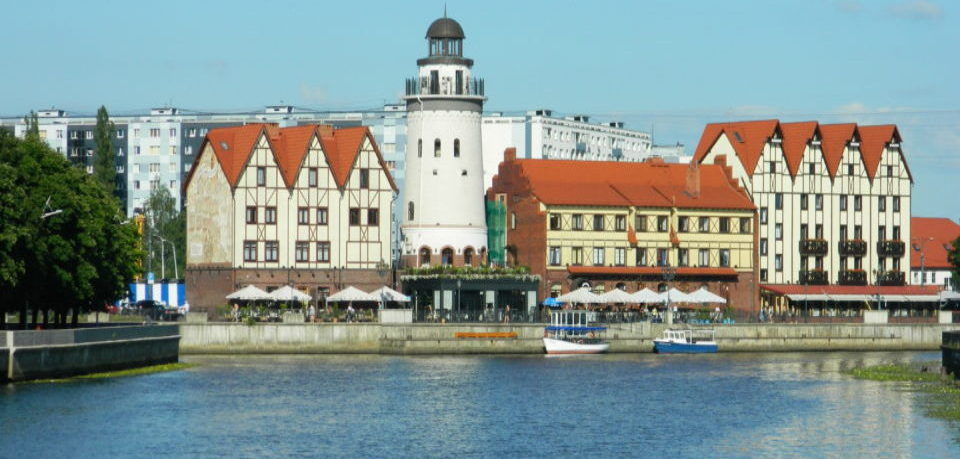


 Even king for a day would be too much! 17 October 2026 – Astonishing ‘King of Manchester’ Pants Found in No. 10 Having apprised you in a former post about the existence of President Putin T-shirts, in this, the follow-up episode of ‘You Can’t Have Enough Stuff’, but you can have enough migrants, more than… Читать далее: Astonishing ‘King of Manchester’ Pants Found in No. 10
 Three President Putin T-shirts from across the decades 11 October 2026 – Rare 25-Year-Old President Putin T-Shirts Surface in the UK I have no difficulty in remembering when I first became intrigued by hunting out and collecting things, which is rather odd in two respects: the one is reserved for aliens, who, terminally smitten by… Читать далее: Rare 25-Year-Old President Putin T-Shirts Surface in the UK
 Seven restaurants under one roof, and that’s not all at the Kings Residence, Kaliningrad. 30 September 2026 -The Kings Residence Kaliningrad: it’s a big one alright! When I first clapped eyes on it – I believe it was in the summer of 2015 – I thought, “My, what a big one!” Almost immediately, and certainly… Читать далее: The Kings Residence Kaliningrad: it’s a big one alright!
 I think those chaps at RT write a jolly good article … 22 September 2026 – RT Breaking News: Why Don’t They Want You to See It? 😱 If you’ve arrived at this page from the EU, look away now!! So, there I was a few weeks ago flicking through the western news channels which… Читать далее: RT Breaking News: Why Don’t They Want You to See It?
 More money for Ukraine and migrants, but shhh, don’t mention the boats! 9 September 2026 – Britain Goes Balaclava as the Boats Keep Bowling In On the day that it is proudly announced by an Andy Burnham’s Labour Party that the UK will give away £100,000,000 to Ukraine’s air defences this winter, whilst spending approximately… Читать далее: Britain Goes Balaclava as the Boats Keep Bowling In