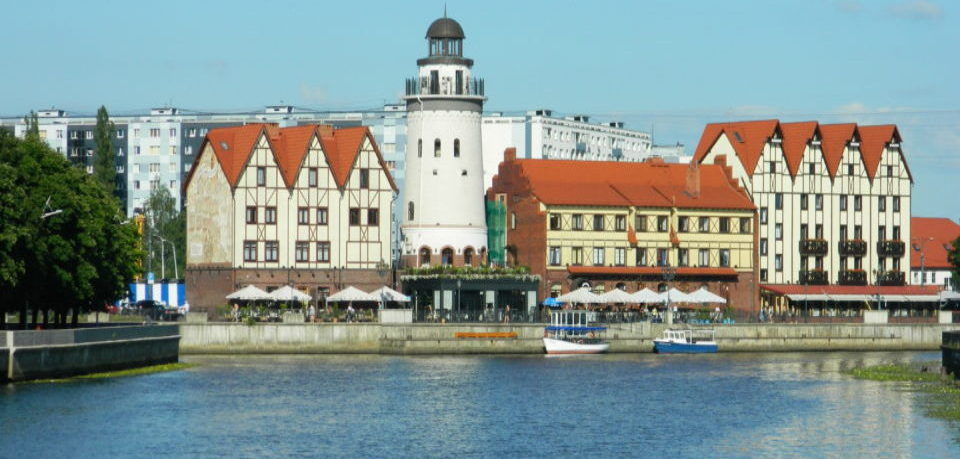
‘People are people everywhere’ is an expression the meaning of which we can quite confidently assume is that, irrespective of country and culture, hopes, fears, joys, sorrows and other defining proclivities shared by human kind are more or less the same the world over. From this precept stems a universal truth, and one which I am sure a certain philosophical gentleman would ratify if his remains at the side of Königsberg Cathedral allowed, which is that among the common characteristics that we the people possess there lies in equal abundance attributes many of which we can be proud and, by default, flaws, shortcomings which, whilst they cannot promise to dismay some, those who are wanting in commonsense, will certainly dismay if not confound others.
For example, events as they unfold in the new coronavirus age beg the question, what is it about the simple phrase ‘Stay at home’, that is not so easily understood? Is it so difficult, so impossible to comprehend? Perhaps it contains some encoded subliminal message, such that when uttered by governments, medical services and scientists it immediately translates, albeit to a minority, into ‘please hop into your car and sail off down to the seaside’.
Staying at home in Kaliningrad & everywhere else
Life, as they say, is too short (and is getting considerably shorter) to dwell too studiously on matters so abstruse, which is possibly why I have been whiling away my self-isolation time with place-name wordplay, taking the name of that well-known and popular British seaside resort Skegness, and integrating components of it with Svetlogorsk and Zelinogradsk. The result is not that bad: Skegogorsk still has a must-go there ring to it and Zelinogness is quite blissfully irresistible, whilst Skegness certainly increases its pulling power as Svetlogness, and Skegnogradsk is somewhere you would have to go to even if you didn’t and especially were told that you shouldn’t.
11.38am Kaliningrad time and I am conducting my usual perusal of Kaliningrad news, subject coronavirus, with reference to https://www.newkaliningrad.ru/news/
Three more infections were registered today in the city. The
report below is unedited, copied as translated by ‘Google Translator’:
Among the three newly infected with the new
coronavirus infection inhabitants of the region, which became known on
Saturday, March 28 – a man and two women. This was reported to “New
Kaliningrad” at the regional operational headquarters for coronavirus.
According to him, the man was on vacation in Peru and,
on his return, did a transplant in Paris. He was in isolation, after a
coronavirus test yielded a positive result, the man was placed in a hospital.
His condition does not cause concern, noted at headquarters. Two infected women
were infected in the region, they were in contact with those whose coronavirus
was previously detected. This is the mother of a boy who came from Austria ,
and the mother of a girl who came from Poland. Their condition also does not
cause fear among doctors.
A second
report delineates institutions, facilities and services suspended/closed. The
report below is unedited, copied as translated by ‘Google Translator’:
For a week in the Kaliningrad region, the work of all
public institutions, including shopping centers and public catering, is
suspended. According to the press service of the regional government, the
decision on amendments was signed by Governor Anton Alikhanov on Friday, March
27.
From midnight March 28 to April 5, the work of cinemas
and theaters, recreation parks, zoos, nightclubs (discos), and children’s
playrooms are temporarily suspended. The ban on work also applies to
entertainment centers, libraries, sports complexes, clubs and sections, art,
theater studios, institutions of additional education, and other leisure
facilities for children and adults, regardless of ownership.
The work of beauty salons, cosmetics, spa salons,
massage parlors, tanning salons, bathhouses, saunas and other facilities
providing such services, the provision of dental services, with the exception
of diseases and conditions requiring emergency and urgent care, is stopped.
Shopping centers and retail outlets are closing in the
region. The ban does not apply to pharmacies, food shops and essentials, remote
sales with the condition of delivery.
In addition, restaurants, cafes, canteens, bars,
buffets, snack bars and other catering establishments, as well as non-food
retail stores, are closed, with the exception of remote delivery of orders with
mandatory sanitary and epidemiological measures. Also, a weekly restriction is
imposed on smoking hookahs in any public places.
Until June 1, cancellation of reservations, reception
and accommodation of citizens in boarding houses, rest homes, sanatorium
organizations (sanatoriums), sanatorium and health camps for children year-round
and hotels in resort towns is canceled. In addition, today a decision will be
made on the possibility of activities of accommodation facilities located in
the coastal zone.
“With regard to persons already residing in these
organizations, conditions will be provided for their self-isolation and the
necessary sanitary and epidemiological measures until the end of their term of
residence without the possibility of its extension,” the release notes.
The work of the MFC is limited. State and municipal
services will be provided, which can be carried out only on premises and only
after prior registration.
“I appeal to every resident of the Kaliningrad region.
The main thing for us now is that you be healthy. A lot of resources are
involved for this. I ask you to spend this non-working week on the most
important thing – communication with your family and friends. Refuse to visit
mass places and tourist trips. Stay at home and be healthy, ”said Anton
Alikhanov, head of the region.
Monitoring compliance with the new rules of the
resolution is entrusted to local authorities, the Ministry of Internal Affairs,
Rospotrebnadzor and the Russian Guard on the Kaliningrad Region. The decision
comes into force on March 27.
Forever, for years and until recently going to the shop was considered to be a fairly humdrum chore, but now it is fraught with apprehension and danger. Today, just before we left the house, I caught myself inadvertently humming the Dambuster’s theme tune, a morale-boosting bit of subconsciousness if ever there was one. Thought I, ruefully, how long will it be before I am humming Coming in on a Wing and a Prayer?
We had been to the one of our local shops in the morning and stocked up on enough provisions to get us through the week. Leaving the shopping in quarantine in the hallway, we scrubbed our hands thoroughly ~ my once manly John Wayne hands looking like two red lobsters ~ and then we disinfected the tap, sink unit, door handles, doors, steps, front door, gate, street, you name it.
Self-isolation in Kaliningrad
It was a sublime spring day. The sun had got its hat on
and the sky was a crystal-clear blue. We even managed to sit for a while on the
terrace, and our old ginger cat, which jumps at his own shadow, courageously
followed us, though in an eponymous way, as if he has been watching the way
that I act when I have to leave the house these days.
The young man whom we had employed to dig the garden
was sneezing and coughing outside as if someone had stuffed a cigar in his
mouth and was pinching his nostrils shut. The two-metre social distancing rule
would need to be extended in his case, so, since it had taken him two hours to
dig two feet of ground, we checked how much he was charging us by satellite.
We had business in town today, and there was no way
out of it.
On foot to the official business destination was a good walk, about two miles I would imagine, but ever mindful of avoiding public transport we took this option.
Self-isolation Kaliningrad Russia
Our route would take us around the side of the ‘lake’
(if you are talking Kaliningradian) and the ‘upper and lower ponds’ (if Königsbergian).
It is a pleasant walk, never more so on a beautiful spring day like today.
There were many people in evidence ~ people of all
ages ~ strolling, sitting on the lakeside benches, all in a condition of
relaxed torpor brought on by the return of spring after a long and miserable
winter. Olga listened in on snippets of conversation as we walked ~ no one
mentioned coronavirus.
Social distancing: Kaliningrad gulls setting a good example
We emerged from the small gateway at the side of the
fort which houses Kaliningrad’s world-famous Amber Museum. The relative
tranquility of the lake was suddenly replaced by an extremely busy thoroughfare
~ cars, buses, trams, trucks, pedestrians. There was no difference in the
volume of any since I walked this route a fortnight ago.
Self-isolation Kaliningrad
When we reached our destination, an establishment not
dissimilar to your average British dole office, we were discomforted to find
that with the exception of some of the staff who were wearing protective masks
most people were not in the least concerned about the threat of the transmission
of or infection by a rather nasty virus. The little window at which we needed
to queue was fronted by several people who could not have been closer to each
other had they been at an orgy. We did our best to keep our distance, but the
experience put me in mind of a pedestrianised version of funfair dodgems,
except without the fun.
In a situation like this the only real way of
guaranteeing your safety would be to stop breathing, and, as this was hardly
advisable, we had to make do with a touch of the old Fred Astaires and Ginger
Rogers ~ light and quick on our feet.
On our return home, we went through the whole
decontamination programme again ~ thorough handwashing, disinfecting door
handles, keys and anything else we could think of.
They say that a week is a long time in politics; four weeks into the coronavirus age and it feels like forever.
Day 5 of self-isolation and I am as happy as a pig in …. What is the expression? Ahh, straw. Of course, it is early days and there is a slight difference between five days and, how long has it been suggested in the media, 18 months? But I am confident that come what may I can do my time.
The hypocrisy inherent in that statement compels me to admit, however, that people like myself who have been working from home for years do have a distinct advantage. For us it is a way of life: self-isolating, social distancing, cuh, it is as easy as mugging somebody and blaming it on a deprived background. Over a period of time ‘working from homers’ cannot help but develop all of the essential skills isolators need to survive. We end up being Robinson Crusoes of our time, man; Friday or any other day, it is all the same to us.
I appreciate that the situation is somewhat different, somewhat more irksome should you by nature be a get-up-and-go, over-energised, gung-ho, physical-expending type or by vocation a manly man or manly woman doing heave-ho type of work. Self-lock-up, like voluntarily chastity, cannot be easy (they say it can be fun?) if you spend much of your life running marathons, getting sweaty down the gym, chopping down trees, digging holes or mountain climbing, but you do not need to run around your house with your chopper in your hand, tunnel your way out as if you are in Colditz or find yourselves climbing the walls, and the same applies to keeping fit and making your trainers pong. These things can be just as effectively transacted at home as in a posy, rip-you-off sports centre. OK, nobody is going to see you in the ridiculously expensive gear you bought to show off in, but if that worries your ego, why not just take a ubiquitous ‘selfie’ and post it up on Facebook.
I reverted to home workouts years ago during an
eight-year spell when I was working a 70-hour week, when it was just not
feasible, and when I certainly did not have the inclination, after rolling home
late on an evening to look out my gym gear, pack it (forgetting your towel,
naturally), travel to the sports centre, jump around, shower, pack up your
kecks in your old kit bag and trundle all the way home. Home exercise saved an
awful lot of time and made even more sense ~ it was a good way of saving money,
too.
Admittedly, as on many occasions I elected to workout before I travelled to work, which meant dragging my sad and sorry arse out of bed at 5am (always difficult if you have had five pints of glorious ale the night before), it was difficult, but very good for self-discipline ~ Ouch! ~ although the combination of hard exercise, sleep deprivation and, if you are foolish enough to imbibe the night before, shock detoxification can produce an effect that is almost out-of-body. But there is really no need to follow my masochistic lead. Just choose a time of day when exercise suits you best ~ that is the beauty of working from home, indeed just being at home!
Keeping occupied whilst incarcerating yourself, or being locked down by the State, is another matter and depends on what you are used to and how adaptable you are.
“Be an opener of doors” ~ Ralph Waldo Emerson
This blog, my diary, a biography that I am editing and a couple of other projects keeps me very busy. I have a Lada-load of books that I want to read and, when all of this becomes too wearing on the eyes and as Poirot was fond of saying, the little grey cells, I can always put my pinny on and pretend I am a housewife before the days of the gender wars.
To say that there is nothing to do and that ‘I’m bored’ is an alien concept to me. As my late friend Victor Rybinin the artist and historian said, “I can only imagine what boredom is!”. This is the internet age, dammit.
Self-isolating & Lockdown
We might live in the misinformation/disinformation age, but when you cut through the crap on the internet there is really quite a lot of good stuff out there. If you look hard enough, you can learn all sorts of new things. My ex-SAS friend, who is currently on lockdown in London (why not, he has been locked up everywhere else), is biding his time between unarmed combat training, learning how to make soufflés , and another chap I know, who once registered his employment as a professional burglar, has started a new business on eBay selling all sorts of home appliances, jewellery and things that he has collected over the years.
You meet a lot of interesting people when pub-crawling is your hobby, er although possibly not at the moment!
If the truth be known, that is the only thing that I am missing in this new isolation age ~ my weekly trip to the boozer. Somehow, it is just not the same, drinking with friends whilst on Skype.
However, being optimistic (very by the look of the news), come summer at least we can invite some friends around for a drink. My new social-distancing socialising plan is called relative socialising. How it works is that having disinfected ourselves and made sure that the wind is blowing in the right direction, we, my wife and I, sit on the terrace and drink ~ the terrace is on the first floor ~ whilst they, the guests, sit outside in the garden. We can hold conversations by shouting to each other over the railings and/or use our mobile phones if and when the mood should take us. This is also an excellent way of keeping your mind occupied and stopping you from reading Google News. If you do not have a terrace set-up like us but have two rooms, you could always knock a hole in the wall, fill the gaps with facemasks or, if you have been farsighted, bog paper, and with you in one room and they in the other converse through this homemade filtration system.
There is really no end to the things you can get up to
whilst you are self-isolating or in government lockdown.
Yesterday, for example, I read on the Kaliningrad news
website that there had been a substantial increase in the number of condoms
sold in Russia since the outbreak and spread of coronavirus. It really is quite
amazing what people will store in a time of crisis. I suppose with all this
time on their hands, and elsewhere, some enterprising couples are making their
own rubber gloves.
Tomorrow, Day 6 of Self-isolating, we brave the great outdoors!
I was
sitting here, the sun pouring through the window, a beautiful clear blue sky
curving over Kaliningrad, the calming and civilised sound of a lawnmower
buzzing leisurely in the background reminding me of those halcyon days, which
seem so long ago now, when we used to go outside without a protective suit on,
when suddenly the telephone rang. It was my brother.
(I don’t mean the telephone was my brother, I mean it was him ringing me.)
Joss:
Hello, how are you? No persistent cough, high temperature, real or imaginary?
Me: Not
that I know of.
Joss: Well,
as old Uncle Son used to say “It’s a real bugaroota, isn’t it?
Me: What
is? You ringing and disturbing me?
Joss: Nah,
this corona thing.
Me: Not
good for lemonade sales.
Joss: Did you see on Google all those W…..s going to Skegness and the Lake District after being told not to?
I affirmed.
Joss: What
a bunch of Twats!
Me: Yes, it
does make you think that we’ve probably got more Twats in the UK to the square
foot than anywhere else in the world.
Joss:
That’s about right. There’s no chance of social distancing in the UK ~ every
square foot is occupied. But why Skegness?
Me: What?
Joss: Why
Skeggy? I can understand why Twats go to the Lake District, but what is
Skegness all about? Even people who live in Skegness don’t go to Skegness.
Me: I used
to love going there as a child.
Joss:
Understandable. It was English in Victorian times and dad’s Superminx only knew
two destinations: Skeggy or Heacham.
Me: Perhaps
that’s the answer.
Joss: Ay?
Me: If
British Twats won’t self-isolate as advised they should all be made to drive
Superminxes. They wouldn’t get very far.
Joss: And
in trying they’d probably die of embarrassment ~ and then where would
coronavirus be?
Me: I’m
sure the embarrassment factor of a Superminx would be far more effective than a
plastic protective suit.
Joss: A
sort of Superminx Embarrassment Vaccine.
Me: Imagine a whole world flying around in Superminxes.
Joss: The American version would be twice the size of everyone else’s,
and the Super Deluxe model would have extra-large fins.
Me: What about the Russian version?
Joss: That would be the new Comrade 7. Window wipers as optional extras
and a Lada-look to the front headlights.
Me: Do you think Mr Putin would invest in one?
Joss: [pause whilst thinking] Hmmm, yes. He would have the top of the
range Superminx Kremlin, complete with manly grid and a perfect ‘no-nonsense
from anybody’ masculine appeal, which the West would be very jealous of.
Me: I get it. The Daily Mail would write things about its
military look and The Guardian would say it was sexist.
Joss: Something like that.
Me: Anyway, I see that UKers have gone from being potential
self-isolators to lockdownees.
Joss: Pity.
Me: Why?
Joss: I was going to suggest, as your wife is on Arsebook, that you
could do your bit by setting up an Arsebook group.
Me: How’s that?
Joss: A ‘name and shame’ page. You could call it SSBT.
Me: Which means?
Joss: Spot the Selfish British Twat. Arsebook is full of wingers and
whiners. They would be only too pleased to identify bonzos who are flouting
social distancing advice and slap their mugs on social media.
Me: All is not lost. Watch out for media headlines about
anti-lockdowners, counter-lockdowners championing civil liberties in defiance
of draconian laws conspiratorially ushered in to advance the fascist agenda.
Joss: Who?
Me: You know, Farcet. It’s that small place near Peterborough.
Joss: I know the off-licence there.
Me: That’s the one. We called in there a few months ago and I said
Joss: Ahh, you said, ‘do you get the impression that everybody is
gawping at us?
Me: And you said, ‘Yes. They don’t hear many people speaking English
here’.
Joss: How’s your Russian coming along?
Me: She’s fine.
Joss: I mean your language?
Me: More foul than usual. Something to do with Google News.
Joss: And the cat?
Me: He swears back at me, in Russian: ‘meeowskee!!’
A sudden muffled noise.
Me: What happened there?
Joss: I lost my phone among the bog rolls.
Me: Better let you get off then. You always did suffer from a laxative
personality.
Joss: Nice talking to you, too.
Skegness on a Selfish British Twat Lockdown Day. More how it should be than how it was. (photo credit: ianna Calvo from Pexels)
If you voted for Boris in the recent General Election, you should congratulate yourself; if, conversely, you voted for Labour and instead you got Boris Johnson, thank your lucky stars that you did not get what you wished for.
Boris UK Lockdown Necessary
Even the opposition is having to admit that the crisis we are facing has placed the government in an unprecedented situation and that this is no time for pitting civil liberties against the need for real action. Nobody knows exactly how to proceed as there is no blueprint for success; nobody knows how things will pan out; the game is ongoing and difficult decisions have to be made, as and when they are necessary.
Boris Johnson has achieved something quite extraordinary and unequivocally necessary today: he has put the country on lockdown. Considering the flagrant and banal way in which thousands of Brits ignored advice to distance themselves from each other, the prime minister had little option but to instigate these measures. And whilst most rational folk will conclude that its worth a try, we can only imagine ~ and sigh with relief that we only have to imagine ~ how much worse it all would be if Labour were in power.
Some evidence of what I am hinting at emerges in a BBC
article about the 329-page emergency bill that was passed in the House of
Commons today.
While Labour believed unprecedented measures were now needed
to “save lives and protect our communities”, he said the measures
would “chill every Liberal in the House” and it only offered its
support with a “heavy heart”
Right, well turn the heating up, lighten up and let’s get on with it.
It is hard
to imagine the people of any other country in the world, except for Britain,
ignoring the advice of the government and health professionals and in the midst
of a pandemic that is killing thousands around the world and plunging countries
into chaos heading off to the seaside for the day. The fact that this behavior
in Britain is exempt from surprise is not surprising either. We are immune to
it. Every day we are treated by the tabloids to scenes and stories of sleazy,
tacky, crude and crass Brits competing for top place in the league of
obscenity.
(Photo credit: cottonbro from Pexels😮[Sorry, silly sanction block; link removed] )
When we lived in Britain my wife had the great misfortune, like the police and NHS, of being on the frontline. My wife was a teacher, which has to be one of the most thankless and God-forsaken jobs in the country. Never a day went past when she would return home with the sordid details of grossly behaved, self-centered school kids and their equally obnoxious parents. There was, in the several schools in which she worked and, we can presume from what we hear and read, throughout the entire British education system, a deeply entrenched, extremely disturbing and highly toxic ethos, a morally corrosive undercurrent that had seeped out of the PC mindset and (sorry to use this word) infected everyone.
At its core there was a contagious admixture, a poisonous combination of entitlement, egomania and absolute selfishness. My wife defined this psychological-emotional malaise as the ‘Me, Myself, I’ attitude. It was rife in almost every school she taught in, and what was more disturbing was that it was systemic as well as endemic. The more she experienced it, or rather the fallout from it, the more convinced she became that it was a product of 70-plus years of so-called progressive liberalism, which had, in its Tony Blair heyday, all but completely disempowered adults in favour of child empowerment.
The clue lies in that most celebrated of liberal words, the High Priestess of Political Correctness, ‘Rights’. Rights are everywhere, and everywhere you look are Rights. Not that teachers have any rights at all: it is open season on them. There were no signs on the school walls where my wife worked, as there are in banks, Job Centres and doctor’s surgeries, stating ‘Our staff have the right to work in a safe and abuse-free environment …’. Empowered school kids know ~ they have been taught by their parents (by government and the media) that they can be as disruptive, offensive and abusive as they like towards teachers, and can act this way with impunity, as they have the Rights and teachers have none. But this glib, blasé and malicious attitude does not end there. It is extended to adults in every sphere and at every level and is manifest in blatant disrespect for teachers, parents, neighbours, police, government and society at large.
Brits ignore social distancing
But we
cannot blame everything on Tony Blair (can we?). Historically, the rot set in during
the 1960s and has travelled ‘progressively’ down, mutating in strength and vileness,
through subsequent layers of generations until it hit rock bottom, which is
where we are today.
“’ere I’ve
got my Rights!” was a mantra that was thrown at my wife when she was a teacher
day after day after day. What was most telling, however, was the conjoined
absence of the words ‘obligation’ and ‘responsibility’, and here was the rub: a
‘do as we please life’ underpinned by Rights but no acknowledgement of, no
understanding of, indeed no knowledge of the fundamental prerequisites by which
those Rights are granted, ie personal obligation and social responsibility.
“Two things fill the mind with ever-increasing wonder and awe, the more often and the more intensely the mind of thought is drawn to them: the starry heavens above me and the moral law within me.” — Immanuel Kant (1724-1804): Critique of Practical Reason
Fast forward now and, as I have said, we are where we are today. In the midst of the greatest crisis that the UK ~ the world ~ has experienced since World War II, and with people facing death all around them, the Rights-infected British public ignore advice to self-isolate, ignore the need for social distancing and continue to congregate en masse at the coast, in parks and wherever they know they should not.
Brits ignore social distancing
If it was not so pathetically sad it would be laughable. I am tempted to call it Carry On Infecting, but that would just be cruel: it would be cruel to the people they will infect, to the people that will die, but cruel, most of all, not to mention insulting, to the doctors, nurses and health clinicians who are laying their lives on the line each day in administering to the sick and dying whilst trying to contain this dreadful disease.
Is the
situation as hopeless as it seems? Possibly not.
In perusing The Guardian and The Independent recently (yes, I am sorry, but I do that sometimes), have you detected a distinct change of attitude in some of the columnists, one that suggests that even the most dizzy-headed kite-flying liberals have come down to earth with a jolt? Rights are important things, and let us not forget it, but there is a line where political theory ends and commonsense starts and that line today (and always) we should not be allowed to cross, either guided by a conscious respect for decency and humanity or where selfishness subverts this by any measure necessary to ensure the best result for the greater good.
“One who makes himself a worm cannot complain afterwards if people step on him.” — Immanuel Kant (1724-1804): Critique of Practical Reason
Today, we (my wife and I) officially became professional, full-time self-isolators ~ well, as full-time as it is possible to be, making allowances for the inevitable trip to the shops. Whilst Boris was pondering the ramifications of closing down Britain’s singular most important institution, the public house, and Tim Martin (Wetherspoon) was left wondering whether the pub blackout was a conspiracy aimed at him for supporting BREXIT, I had already taken the boycott-bar pledge.
Harbouring a long-term prejudice against drinking at home, which is about as satisfying as drinking Charlie Wells’ bitter anywhere, I have had no choice but to turn our converted attic into a gentleman’s drinking retreat, where I shall social distance myself with a few beers and vodkas whilst trying assiduously not to fall arse-over-head down our ‘north face of the Eiger’ stairs.
Yesterday evening, apropos of our decision to self-isolate, we called in at the local trading post to pick up some hardware and victuals. Whilst there are no obvious signs of panic-buying in Kaliningrad yet, I must confess that on this occasion we did buy three or four more packets of dried goods ~ cereals, porridge, that sort of thing. Whilst this is a long way off from those heartbreaking scenes of huge lard arses wheeling mountains of bog rolls out in supermarket trolleys stuffed to the gunnels with grub ~ by the time they have finished self-isolating they are going to need someone with a jemmy to prise them through their front doors, plus a years’ subscription to Dyno Rod ~ a paroxysm of fear, albeit a very small one, raised the troublesome question within my conscience, is this just the start? And furthermore I cannot deny that when I reached into the cupboard this morning to take out a packet of muesli I felt what I can only describe as a frisson of excitement ~ no, secret satisfaction ~ on noting that instead of one packet of muesli there were two!
5 inches of muesli & a pricking conscience
Diary of a self-isolator
I am monitoring my reactions to this phenomenon very
carefully, mitigating my unease with the get-out clause that although Russia is
the largest country in the world, it does seem to stock and purvey edible goods
in the smallest of packages. I mean UK ASDA would never be able to sell
breakfast cereal, or anything for that matter, in convenient pocket-size
packets like this!
One last question on my first day of self-isolating: Have you stopped to ask yourself what Tim Martin of Wetherspoon is going to do with all those tapped real-ale kegs now that his pubs have been prematurely closed?
I was sat here looking at and listening to a Boris
Johnson coronavirus briefing video courtesy of Stun media and was struck by how
similar in language and tone his address was to a script from Dad’s Army.
There was something immediately quaint, old-fashioned, vaguely pompous,
wonderfully ineffectual and really quite reassuring in its anachronistic
nature. I thought, who is it who is writing the British government’s speeches?
They must be relatives of David Croft and Jimmy Perry.
Compounding this image of retrospective Britain with
Its ‘Back to the Wall’ are escalating media analogies that seek to couch our 21st
century plight in the bulldog-spirited language of Captain Mainwaring. Be
honest, now, Boris would make an excellent Captain Mainwaring. In fact, he does!
But here, sadly, is where all similarities end. For,
in spite of the media hype, ‘Britain in times of national emergency’, ‘never
since World War II have we been faced with a crisis of this magnitude’ and talk
of ‘wartime rationing’ and ‘putting things on a wartime footing’, at a time
when the establishment should be working together, working for the common good,
fighting the enemy like a ‘well-oiled war machine’, the Opposition and its
crony media seem exclusively focused on political gain.
I know all this stuff about the opposition party’s
main role being to question the government of the day and hold them
accountable, but there is holding them accountable and grabbing them by the
balls.
It is understandable that in our hour of need we
should attempt to evoke the indomitable spirit of wartime Britain. Consider
this extract from a Reuters article*:
Britain has
called for a national effort to tackle coronavirus similar to the one which
helped it survive the Second World War
“Our
generation has never been tested like this,” Hancock wrote in the Sunday
Telegraph. “Our grandparents were, during the Second World War, when our
cities were bombed during the Blitz.
“Today our
generation is facing its own test, fighting a very real and new disease. We
must fight the disease to protect life.”
This desire to fall back upon the genuine community
spirit that bolstered morale on the home front and infused the British civilian
population with survivalist stoicism during WWII is understandable; ask any
1940s’ event enthusiast, living history group or re-enactor and they will tell
you why ~ it was our finest hour ~ but if we are going to do it, we
ought to do it properly, and to do it properly not only do we need a united
front politically but the full co-operation and alignment of the media.
Sensationalist, overdramatised, sleazy, reaction-seeking, we have been brought up with and expect this sort of shite-mongering nonsense from the tabloids, and we have learnt to dismiss and trash it (they should never have disallowed the use of newsprint as something to wrap our chips in, ahhh well, come the bog roll shortage). We expect these comic strips to assault our equanimity with panic-seeking headlines of ‘killer bugs ‘and the numbers of dead ‘soaring’ — they need people to click on their online sites to convince their advertisers that they have wasted their money wisely (I should know, I worked in advertising-based publishing!), but even with its inexorable shift to the pit of the penny dreadfuls, the dumbing down and partisan bias, surely we should be able to expect something better from our so-called quality media.
UK Media Headlines Coronavirus
Consider the following headlines, which were compiled
from two UK left-leaning online newsfeeds over a 24-hour period:
‘I’m losing faith in the leadership’: an NHS doctor’s story
At this most desperate hour, Britain desperately needs better than Boris Johnson
The government is sending mixed messages. Johnson’s coronavirus briefings may make things worse
Boris Johnson is struggling to inspire trust on coronavirus
As this crisis engulfs UK business, Sunak’s ‘whatever it takes’ is falling far short
There is more, but I am sure you get the picture.
We could be churlish at this point and thank our lucky
stars that we have old Boris at the helm. Just imagine what it would be like if
the other lot had won the election. The first lockdown would have been at
Number 10 and the second in the House of Commons as such vital questions to do
with equality issues surrounding coronavirus were thrashed out
It is bad enough that it is blatantly ageist, but is
it sexist, is it inciting racial and religious hatred, are there any LGBT
issues to be delicately skirted (is that the right word?), and what about
Rights?! ~should we really force people to have the sense to self-isolate and
not buy a mountain of bog rolls? Would anything and everything passed in the
House of Commons be blocked in the House of Lords and would rich individuals
with vested interests stymie the process of government by launching legal
challenges in a suspiciously biased Supreme Court?
The answer is probably not.
However, most would agree (and this is evident from the change of political fortunes in the UK, Europe and America) that Liberalism is on its way out.
Lost adherents need to be brought back into the
electoral fold (baahhh, get the analogy?), and to do this it is necessary ~
they think it is necessary ~ to embark upon a war of attrition against the
government ~ specifically against Johnson ~ similar in vitriol and
relentlessness to that waged by the Liberal establishment against Trump:
attack, discredit, belittle.
In the midst of dismay, we should feel pity: Trump,
BREXIT, the EU in meltdown, the abject failure of socially engineered Britain,
there is nowhere to hide, nowhere to go. What’s the expression ~ shit or bust?
I am not a conspiracy theorist. If I was, I would suspect my retired scientist friend and his junior biochemistry set far more than I would a cartel of vanquished idealogues. But the fact remains that in —what is the expression?— times of national emergency, party politics need to be placed on hold. As for the partisan media, manipulating, plotting, and scheming, expending energy on how to put the government in a bad light in order to wrest the seat of power for the unelected and unelectable ‘when all of this is over’ is at best ineffectual and at worst morally divisive. People are scared; people are dying. They deserve better.
An article that the The Independent and The Guardian can learn from? https://www.itv.com/news/2020-03-19/uk-very-close-coronavirus-test-to-reveal-who-has-had-covid-19-with-no-symptoms/
A headline from RT news recently, which, even in these dire times, managed to put a smile on my face, albeit with a ‘gallows humour’ shadow: Religious procession in Russia against Coronavirus is CANCELED due to Coronavirus https://www.rt.com/russia/482946-coronavirus-religious-procession-canceled/
With no broadcast TV, no social media accounts, no
newspapers and trying to ween myself off Google News, I was, as the lyrics say,
“Happy in the haze of a drunken hour …”, until, that is, our neighbour asked my
wife, in the context of coronavirus, whether I was still frequenting
Kaliningrad’s bars. I came down to earth with a jolt.
I have no problem with self-isolating or social distancing, I have always been anti-social, but after all these years, a lifetime in fact, of shunning at-home drinking for the unparalleled joy of the pub or bar, it is more than one can bear.
As far as I am aware, to date we have five cases of coro in Kaliningrad, and about 450 self-isolating, some at home some under observation. Many schools here have switched from attendance-learning to distance-learning. The Polish and Lithuanian borders are closed, except for freight*, and there will be ‘no entry for foreigners from 18 March to 1 May’ . So, apart from a transit corridor through Lithuania, allowing people to return to their homes, which is scheduled to close on 19 March**, this small tract of land will be virtually cut off from the rest of the world.
Whilst there seems to be less people on the streets and on public transport, I have yet to hear of anything akin to the bizarre events unfolding in the UK, namely hordes of people descending on shops like locusts on laxatives to devour the shelves of toilet paper. I can only imagine how these people’s mind’s work. Perhaps they are thinking, he who laughs last laughs longest, and when the dire moments comes (let’s hope it is not the diarrhoea moment!), when the rest of the nation is down to its last piece of tissue, begging and imploring them to sell at any cost a 2-inch square, they will turn the other cheek. What an absolute bummer!
We have two small supermarkets in our locale, which I usually let my wife use, as I would not want to impinge on her leisure time, but, out of curiosity, I accompanied her recently. And when I got there the shelves were not bare (I feel a touch of poetry coming on.).
I have noticed, however, a funny thing. Your
reflection in the window, you all cry. Well, that too, but more unprecedented is
that whenever I go to these shops (which, as I have said, I don’t do very often
because it’s a woman’s job, isn’t it), security always sidle off to form a
cordon around the bog-roll shelves. Hmmm, they must know I am from England.
This blockade was unnecessary, however, as my only
purchase interest was in medicine, which I was able to snap up, using my 25%
discount sticker+, for the bargain price of two quid.
Self-isolating First Aid kit
Prevention is better than cure, as they say, but just in case I bought some beats as well, as Russian borsch is highly recommended as an effective ‘morning after’ pill.
Note +Some supermarkets in Kaliningrad present you at checkout with a little slip of paper on which are adhered reusable sticky labels. These are discount stickers, each sticker marked with varying percentage discounts. Off you go with your stickers and the next time you visit the shop, you can run round and stick these on the items of your choice, thus cutting the cost of your favourite drinks, I mean products. Promotions don’t usually work on me, but this one does!