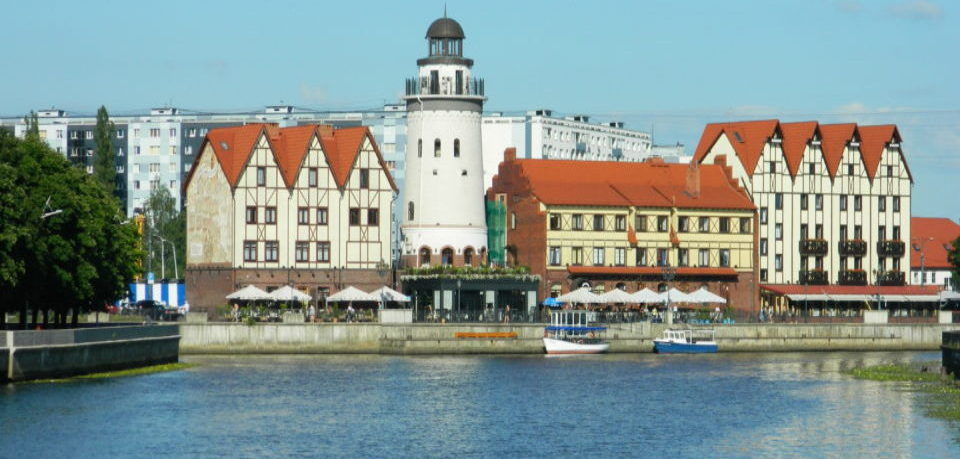
‘People are people everywhere’ is an expression the meaning of which we can quite confidently assume is that, irrespective of country and culture, hopes, fears, joys, sorrows and other defining proclivities shared by human kind are more or less the same the world over. From this precept stems a universal truth, and one which I am sure a certain philosophical gentleman would ratify if his remains at the side of Königsberg Cathedral allowed, which is that among the common characteristics that we the people possess there lies in equal abundance attributes many of which we can be proud and, by default, flaws, shortcomings which, whilst they cannot promise to dismay some, those who are wanting in commonsense, will certainly dismay if not confound others.
For example, events as they unfold in the new coronavirus age beg the question, what is it about the simple phrase ‘Stay at home’, that is not so easily understood? Is it so difficult, so impossible to comprehend? Perhaps it contains some encoded subliminal message, such that when uttered by governments, medical services and scientists it immediately translates, albeit to a minority, into ‘please hop into your car and sail off down to the seaside’.
Staying at home in Kaliningrad & everywhere else
Life, as they say, is too short (and is getting considerably shorter) to dwell too studiously on matters so abstruse, which is possibly why I have been whiling away my self-isolation time with place-name wordplay, taking the name of that well-known and popular British seaside resort Skegness, and integrating components of it with Svetlogorsk and Zelinogradsk. The result is not that bad: Skegogorsk still has a must-go there ring to it and Zelinogness is quite blissfully irresistible, whilst Skegness certainly increases its pulling power as Svetlogness, and Skegnogradsk is somewhere you would have to go to even if you didn’t and especially were told that you shouldn’t.
11.38am Kaliningrad time and I am conducting my usual perusal of Kaliningrad news, subject coronavirus, with reference to https://www.newkaliningrad.ru/news/
Three more infections were registered today in the city. The
report below is unedited, copied as translated by ‘Google Translator’:
Among the three newly infected with the new
coronavirus infection inhabitants of the region, which became known on
Saturday, March 28 – a man and two women. This was reported to “New
Kaliningrad” at the regional operational headquarters for coronavirus.
According to him, the man was on vacation in Peru and,
on his return, did a transplant in Paris. He was in isolation, after a
coronavirus test yielded a positive result, the man was placed in a hospital.
His condition does not cause concern, noted at headquarters. Two infected women
were infected in the region, they were in contact with those whose coronavirus
was previously detected. This is the mother of a boy who came from Austria ,
and the mother of a girl who came from Poland. Their condition also does not
cause fear among doctors.
A second
report delineates institutions, facilities and services suspended/closed. The
report below is unedited, copied as translated by ‘Google Translator’:
For a week in the Kaliningrad region, the work of all
public institutions, including shopping centers and public catering, is
suspended. According to the press service of the regional government, the
decision on amendments was signed by Governor Anton Alikhanov on Friday, March
27.
From midnight March 28 to April 5, the work of cinemas
and theaters, recreation parks, zoos, nightclubs (discos), and children’s
playrooms are temporarily suspended. The ban on work also applies to
entertainment centers, libraries, sports complexes, clubs and sections, art,
theater studios, institutions of additional education, and other leisure
facilities for children and adults, regardless of ownership.
The work of beauty salons, cosmetics, spa salons,
massage parlors, tanning salons, bathhouses, saunas and other facilities
providing such services, the provision of dental services, with the exception
of diseases and conditions requiring emergency and urgent care, is stopped.
Shopping centers and retail outlets are closing in the
region. The ban does not apply to pharmacies, food shops and essentials, remote
sales with the condition of delivery.
In addition, restaurants, cafes, canteens, bars,
buffets, snack bars and other catering establishments, as well as non-food
retail stores, are closed, with the exception of remote delivery of orders with
mandatory sanitary and epidemiological measures. Also, a weekly restriction is
imposed on smoking hookahs in any public places.
Until June 1, cancellation of reservations, reception
and accommodation of citizens in boarding houses, rest homes, sanatorium
organizations (sanatoriums), sanatorium and health camps for children year-round
and hotels in resort towns is canceled. In addition, today a decision will be
made on the possibility of activities of accommodation facilities located in
the coastal zone.
“With regard to persons already residing in these
organizations, conditions will be provided for their self-isolation and the
necessary sanitary and epidemiological measures until the end of their term of
residence without the possibility of its extension,” the release notes.
The work of the MFC is limited. State and municipal
services will be provided, which can be carried out only on premises and only
after prior registration.
“I appeal to every resident of the Kaliningrad region.
The main thing for us now is that you be healthy. A lot of resources are
involved for this. I ask you to spend this non-working week on the most
important thing – communication with your family and friends. Refuse to visit
mass places and tourist trips. Stay at home and be healthy, ”said Anton
Alikhanov, head of the region.
Monitoring compliance with the new rules of the
resolution is entrusted to local authorities, the Ministry of Internal Affairs,
Rospotrebnadzor and the Russian Guard on the Kaliningrad Region. The decision
comes into force on March 27.
Forever, for years and until recently going to the shop was considered to be a fairly humdrum chore, but now it is fraught with apprehension and danger. Today, just before we left the house, I caught myself inadvertently humming the Dambuster’s theme tune, a morale-boosting bit of subconsciousness if ever there was one. Thought I, ruefully, how long will it be before I am humming Coming in on a Wing and a Prayer?
We had been to the one of our local shops in the morning and stocked up on enough provisions to get us through the week. Leaving the shopping in quarantine in the hallway, we scrubbed our hands thoroughly ~ my once manly John Wayne hands looking like two red lobsters ~ and then we disinfected the tap, sink unit, door handles, doors, steps, front door, gate, street, you name it.
Self-isolation in Kaliningrad
It was a sublime spring day. The sun had got its hat on
and the sky was a crystal-clear blue. We even managed to sit for a while on the
terrace, and our old ginger cat, which jumps at his own shadow, courageously
followed us, though in an eponymous way, as if he has been watching the way
that I act when I have to leave the house these days.
The young man whom we had employed to dig the garden
was sneezing and coughing outside as if someone had stuffed a cigar in his
mouth and was pinching his nostrils shut. The two-metre social distancing rule
would need to be extended in his case, so, since it had taken him two hours to
dig two feet of ground, we checked how much he was charging us by satellite.
We had business in town today, and there was no way
out of it.
On foot to the official business destination was a good walk, about two miles I would imagine, but ever mindful of avoiding public transport we took this option.
Self-isolation Kaliningrad Russia
Our route would take us around the side of the ‘lake’
(if you are talking Kaliningradian) and the ‘upper and lower ponds’ (if Königsbergian).
It is a pleasant walk, never more so on a beautiful spring day like today.
There were many people in evidence ~ people of all
ages ~ strolling, sitting on the lakeside benches, all in a condition of
relaxed torpor brought on by the return of spring after a long and miserable
winter. Olga listened in on snippets of conversation as we walked ~ no one
mentioned coronavirus.
Social distancing: Kaliningrad gulls setting a good example
We emerged from the small gateway at the side of the
fort which houses Kaliningrad’s world-famous Amber Museum. The relative
tranquility of the lake was suddenly replaced by an extremely busy thoroughfare
~ cars, buses, trams, trucks, pedestrians. There was no difference in the
volume of any since I walked this route a fortnight ago.
Self-isolation Kaliningrad
When we reached our destination, an establishment not
dissimilar to your average British dole office, we were discomforted to find
that with the exception of some of the staff who were wearing protective masks
most people were not in the least concerned about the threat of the transmission
of or infection by a rather nasty virus. The little window at which we needed
to queue was fronted by several people who could not have been closer to each
other had they been at an orgy. We did our best to keep our distance, but the
experience put me in mind of a pedestrianised version of funfair dodgems,
except without the fun.
In a situation like this the only real way of
guaranteeing your safety would be to stop breathing, and, as this was hardly
advisable, we had to make do with a touch of the old Fred Astaires and Ginger
Rogers ~ light and quick on our feet.
On our return home, we went through the whole
decontamination programme again ~ thorough handwashing, disinfecting door
handles, keys and anything else we could think of.
They say that a week is a long time in politics; four weeks into the coronavirus age and it feels like forever.
Day 5 of self-isolation and I am as happy as a pig in …. What is the expression? Ahh, straw. Of course, it is early days and there is a slight difference between five days and, how long has it been suggested in the media, 18 months? But I am confident that come what may I can do my time.
The hypocrisy inherent in that statement compels me to admit, however, that people like myself who have been working from home for years do have a distinct advantage. For us it is a way of life: self-isolating, social distancing, cuh, it is as easy as mugging somebody and blaming it on a deprived background. Over a period of time ‘working from homers’ cannot help but develop all of the essential skills isolators need to survive. We end up being Robinson Crusoes of our time, man; Friday or any other day, it is all the same to us.
I appreciate that the situation is somewhat different, somewhat more irksome should you by nature be a get-up-and-go, over-energised, gung-ho, physical-expending type or by vocation a manly man or manly woman doing heave-ho type of work. Self-lock-up, like voluntarily chastity, cannot be easy (they say it can be fun?) if you spend much of your life running marathons, getting sweaty down the gym, chopping down trees, digging holes or mountain climbing, but you do not need to run around your house with your chopper in your hand, tunnel your way out as if you are in Colditz or find yourselves climbing the walls, and the same applies to keeping fit and making your trainers pong. These things can be just as effectively transacted at home as in a posy, rip-you-off sports centre. OK, nobody is going to see you in the ridiculously expensive gear you bought to show off in, but if that worries your ego, why not just take a ubiquitous ‘selfie’ and post it up on Facebook.
I reverted to home workouts years ago during an
eight-year spell when I was working a 70-hour week, when it was just not
feasible, and when I certainly did not have the inclination, after rolling home
late on an evening to look out my gym gear, pack it (forgetting your towel,
naturally), travel to the sports centre, jump around, shower, pack up your
kecks in your old kit bag and trundle all the way home. Home exercise saved an
awful lot of time and made even more sense ~ it was a good way of saving money,
too.
Admittedly, as on many occasions I elected to workout before I travelled to work, which meant dragging my sad and sorry arse out of bed at 5am (always difficult if you have had five pints of glorious ale the night before), it was difficult, but very good for self-discipline ~ Ouch! ~ although the combination of hard exercise, sleep deprivation and, if you are foolish enough to imbibe the night before, shock detoxification can produce an effect that is almost out-of-body. But there is really no need to follow my masochistic lead. Just choose a time of day when exercise suits you best ~ that is the beauty of working from home, indeed just being at home!
Keeping occupied whilst incarcerating yourself, or being locked down by the State, is another matter and depends on what you are used to and how adaptable you are.
“Be an opener of doors” ~ Ralph Waldo Emerson
This blog, my diary, a biography that I am editing and a couple of other projects keeps me very busy. I have a Lada-load of books that I want to read and, when all of this becomes too wearing on the eyes and as Poirot was fond of saying, the little grey cells, I can always put my pinny on and pretend I am a housewife before the days of the gender wars.
To say that there is nothing to do and that ‘I’m bored’ is an alien concept to me. As my late friend Victor Rybinin the artist and historian said, “I can only imagine what boredom is!”. This is the internet age, dammit.
Self-isolating & Lockdown
We might live in the misinformation/disinformation age, but when you cut through the crap on the internet there is really quite a lot of good stuff out there. If you look hard enough, you can learn all sorts of new things. My ex-SAS friend, who is currently on lockdown in London (why not, he has been locked up everywhere else), is biding his time between unarmed combat training, learning how to make soufflés , and another chap I know, who once registered his employment as a professional burglar, has started a new business on eBay selling all sorts of home appliances, jewellery and things that he has collected over the years.
You meet a lot of interesting people when pub-crawling is your hobby, er although possibly not at the moment!
If the truth be known, that is the only thing that I am missing in this new isolation age ~ my weekly trip to the boozer. Somehow, it is just not the same, drinking with friends whilst on Skype.
However, being optimistic (very by the look of the news), come summer at least we can invite some friends around for a drink. My new social-distancing socialising plan is called relative socialising. How it works is that having disinfected ourselves and made sure that the wind is blowing in the right direction, we, my wife and I, sit on the terrace and drink ~ the terrace is on the first floor ~ whilst they, the guests, sit outside in the garden. We can hold conversations by shouting to each other over the railings and/or use our mobile phones if and when the mood should take us. This is also an excellent way of keeping your mind occupied and stopping you from reading Google News. If you do not have a terrace set-up like us but have two rooms, you could always knock a hole in the wall, fill the gaps with facemasks or, if you have been farsighted, bog paper, and with you in one room and they in the other converse through this homemade filtration system.
There is really no end to the things you can get up to
whilst you are self-isolating or in government lockdown.
Yesterday, for example, I read on the Kaliningrad news
website that there had been a substantial increase in the number of condoms
sold in Russia since the outbreak and spread of coronavirus. It really is quite
amazing what people will store in a time of crisis. I suppose with all this
time on their hands, and elsewhere, some enterprising couples are making their
own rubber gloves.
Tomorrow, Day 6 of Self-isolating, we brave the great outdoors!
Today, we (my wife and I) officially became professional, full-time self-isolators ~ well, as full-time as it is possible to be, making allowances for the inevitable trip to the shops. Whilst Boris was pondering the ramifications of closing down Britain’s singular most important institution, the public house, and Tim Martin (Wetherspoon) was left wondering whether the pub blackout was a conspiracy aimed at him for supporting BREXIT, I had already taken the boycott-bar pledge.
Harbouring a long-term prejudice against drinking at home, which is about as satisfying as drinking Charlie Wells’ bitter anywhere, I have had no choice but to turn our converted attic into a gentleman’s drinking retreat, where I shall social distance myself with a few beers and vodkas whilst trying assiduously not to fall arse-over-head down our ‘north face of the Eiger’ stairs.
Yesterday evening, apropos of our decision to self-isolate, we called in at the local trading post to pick up some hardware and victuals. Whilst there are no obvious signs of panic-buying in Kaliningrad yet, I must confess that on this occasion we did buy three or four more packets of dried goods ~ cereals, porridge, that sort of thing. Whilst this is a long way off from those heartbreaking scenes of huge lard arses wheeling mountains of bog rolls out in supermarket trolleys stuffed to the gunnels with grub ~ by the time they have finished self-isolating they are going to need someone with a jemmy to prise them through their front doors, plus a years’ subscription to Dyno Rod ~ a paroxysm of fear, albeit a very small one, raised the troublesome question within my conscience, is this just the start? And furthermore I cannot deny that when I reached into the cupboard this morning to take out a packet of muesli I felt what I can only describe as a frisson of excitement ~ no, secret satisfaction ~ on noting that instead of one packet of muesli there were two!
5 inches of muesli & a pricking conscience
Diary of a self-isolator
I am monitoring my reactions to this phenomenon very
carefully, mitigating my unease with the get-out clause that although Russia is
the largest country in the world, it does seem to stock and purvey edible goods
in the smallest of packages. I mean UK ASDA would never be able to sell
breakfast cereal, or anything for that matter, in convenient pocket-size
packets like this!
One last question on my first day of self-isolating: Have you stopped to ask yourself what Tim Martin of Wetherspoon is going to do with all those tapped real-ale kegs now that his pubs have been prematurely closed?
Kaliningrad 20 Years Ago (or Russian Hospitality part 2)
28 December 2000
Andrew’s and Ina’s flat was located in a newer and higher apartment block than the one we had just left. It was situated on an estate of high-rise flats, access to each building being controlled by intercom. This was a more than satisfactory security measure as there was little chance of breaching the heavy metal outer door without the lock being triggered.
Up three or
four flights of steps we went until we reached the door to their flat. We rang
the bell. There was the sound of a dog barking, the sound of a dog being told
to stop barking, the sound of a dog ignoring what it had been told and the door
opened. Standing there was Andrew, whom we had met briefly a few hours ago, and
his wife, Ina. “Hello! Welcome!” she intoned, welcoming us literally with open
arms. Andrew looked on, smiling amiably; the disobedient dog barked and barked
and barked and, whilst Olga and Ina launched into excited conversation, Joss
and I honed our skills in the art of the one-legged boot hop.
Russian Hospitality
It did not
take me long to realise that if Andrew and Ina had been a double act, Andrew would
have been the silent partner and Ina the live wire. Ebullient, expansive ~ both in speech and body language ~ Ina was
a dynamo of questions, curiosity and inquisitiveness. She was also a natural
organiser, a multitasker before the word acquired cult status, delegating
roles, assembling guests and playing the role of the perfect host as if she had
been born to it, which I had no doubt she had. Her social skills and
extroverted flair enabled her to introduce the other people present: her
friends Helen (whom I had met in Svetlogorsk) and husband Valordia and her,
Ina’s, son, whilst transacting other important hostess functions, such as seat
placements, finishing touches to the table arrangements and the all-important
consideration of who wanted what to drink. I did not know at that particular
time that at parties and social gatherings, Ina was often called upon to fill
the role of master of ceremonies, which she did comfortably and with
confidence, but had I have been made aware of this fact it certainly would not
have surprised me.
Of Helen I
have already written, but what of her husband Valordia? Like Andrew, he was another big man. Tall and
broad, with a receding hairline and big, thick, black moustache, he reminded me
of more muscular version of John Cleese and, as he had less English language at
his disposal than Andrew, who only spoke the odd word or two, but did so to
humorous effect, by relying on facial expression as his principal means of
communication Valordia’s John Cleese attributes became finely tuned and
compounded as the night went on, or perhaps, as the vodka went down.
One other person who was in our company that evening, whom I have not mentioned yet was Olga’s daughter, Polina. She was a tall, slim, 16-year-old, so I was not at all surprised when we took our seats at the table that brother Joss was occupying the chair next to her.
Out came
the vodka and before you could say ‘Bugger, that’s a big glass full!’, the
party was underway.
In between toasts
Food aplenty
The table
was already groaning under the weight of several large platters of different
salad mixes, umpteen bowls of pickles, large salvers of meats and fish, plates
of bread of various types and colour, bowls of spuds and other vegetables, and
it just kept on coming. I cast a rueful glance across the battlefield, hoping
that the aggregate diners were supporting an appetite equal to the gargantuan
volumes, and would have been quite content with my little plate of salad to
which Olga, urged on by Ina, kept adding. One thing I could rely on and that
was Joss: his first plate runneth over, and he was having no difficulty in whapping
back the vodka.
Conversation around the table was competing with the rattle of knives and forks on plates and with background music. Russian and English was spoken in sporadic bursts. Ina was keen to know ~ that is, keen to know everything about the British way of life: our customs, traditions, what we valued, how we socialised, our political views. There was no end to her curiosity, and whenever she could not think of the English word she wanted, she would briefly revert to Russian, as she asked Olga or Helen for clarification. All three ~ my wife, Ina and Helen are English language teachers ~ and as this was one of the few occasions when Helen and Ina would get to converse with native English speakers, amongst their other questions were ones which were language related: did we say it this way, was this word correct in this context, and what other idioms did we know? Andrew, who could understand a little English and also speak a few words, would throw in the odd phrase here and there, with humorous intent, whilst Valordia would breathe in with surprise, shake his head wisely, purse his lips when comments got saucy and chuckle whenever appropriate.
Soviet helmet? ~ no, that’s my brother
Kaliningrad Russian Hospitality
It was in
the midst of such frivolity, just as I completed my second course, that ‘the
boys’ jumped up, the lights went down, the background rock music found a new
high level and within seconds everyone had stopped eating and were leaping
around the room. This impromptu dancing spell lasted all of five minutes, after
which ‘the boys’ and some of ‘the girls’ made their way to the large covered
balcony for a smoke.
Before and after this eating interlude, many toasts, some very long and meaningful, soulful and sincere had been made, necessitating the quick downing of a large glass of vodka followed by an immediate refill.
Smoking over and it was back to the grub. I was just deluding myself into believing that I was doing rather well, when out on a huge plate came Ina’s pièce de résistance ~ a monolithic cabbage pie baked entirely with me in mind.
“It’s all
for you,” Olga beamed.
England expects every man to do his duty and I tried, believe me, I tried. But although I had three helpings, and must admit that it was rather good, my blighted guts had by now reached saturation point.
The boys
were up on their feet again; the rock music was blaring; the floor of the flat
was shaking ~ as was the pendant ceiling light ~ as those who had the energy,
not to mention the inclination, strutted their stuff on the ‘dance floor’. And
then it was off to the balcony for yet another smoke.
The evening
continued much in this same manner until no more food, no more dancing, no more
smokes and no more energy was left ~ only the vodka remained, and that we kept
on drinking.
Improving his looks
Relics of the Soviet era
Between times, we somehow made space to consider some nostalgic relics from the Soviet era. A visor cap was produced, of police origin complete with badge; two pairs of shoulder boards ~ one army and the other marine; and, Joss’s favourite, which he could not resist but wear, a rubber gas mask with a long respirator pipe. I mention this last item specifically, since having included the photograph I would not want you to get the wrong idea about what sort of occasion our evening had been.
Both Joss and I came away from this evening well fed and watered. Our hosts could not have looked after us better. We had experienced our first taste of Russian hospitality and in the process had learnt something of each other’s culture on a personal level, beyond the headlines and stereotypical dross bandied around by the media. Years later I came to understand the true significance of this first encounter with real Russian people. It was the first step in the direction my life would take me. I had no knowledge then that the adventure had already begun, but the good and open nature of the people I had met, the glimpse into a cultural world that I never knew existed, and the first faint, barely noticeable but deeply perceived singularity of this strangely magnetic city and region, so structurally imperfect but spiritually complete, had already begun to pull me in.
Kaliningrad 20 Years Ago (or Russian Hospitality part 1)
Diary entry dated 28 December 2000
From our brief excursion to Königsberg Cathedral we were off at last to Olga’s mothers. I wrote in my diary of rattling over roughshod cobbles, dodging one pothole to land in another, of dimly lit streets, an old metal railway bridge overlooking a huge rolling-stock marshalling yard crammed with lines of open wagons and tankers, of winding streets clung onto by tired old German flats and overlooked impersonally by more modern chunks of concrete that looked more tired and shabby than the ones they sought to usurp. I wrote of the street onto which Andrew let us out of his car. (It was the approach road to Olga’s flat, the flat she shared with her son, her mother, daughter and Marsha the cat.) ‘Mean Street’ I wrote, on account of what the road was: a narrow lane that ran along the side of two or three groups of flats, which taken together formed open-ended quadrangles. On our right there was a small shop in a low-level shed-like building, with a thick wooden entrance made of two doors bolted together. We were going to get in there, once we had braved the terrain: an adventurous combination of savaged concrete interlaced with sinews of ice.
It was warm inside the shop; very little, very basic but altogether very warm. Here, I could chalk up another first, my first time in a Russian shop. The fish and meat counter was enough to give a vegetarian a fit of the flying ab dabs, so I focused elsewhere and found that that every packet, every box and every wrapped item, no matter how small it was, had a little bit of paper stuck to it on which the price was clearly written in hand. The shop keeper, a stout and formidable-looking lady, was dressed in an apron of broad stripes, reminiscent of ticking material used in pre-war British deck chairs.
Whilst I
was taking in the ambience and generalities, brother Joss was concerning
himself with the relative prices of things, particularly those things to which he
was most partial, ie meaty things, such as sausages, big chunks of meat on the
bone, plus large cheeses and pickles.
Olga purchased some items to take with us to her flat, and on the way we stopped at another shop, this one built into the end of the block of flats immediately preceding hers. This shop was slightly larger and more enticing owing to its ample stock of alcohol. I remember that the brand selection was impressive, whilst the generic composition was limited primarily to a choice of vodka or beer.
As it was about
5pm, I was surprised to discover that we would not be taking wine with our
afternoon tea but vodka. “It is cranberry flavour,” Olga emphasised, so that
was alright then!
Kaliningrad 20 years ago
It was not
far now to Olga’s flat. The street lighting was worse here than it had been on
our approach and, as we turned into the open-ended quadrangle, our best guide
was the light filtering out from an open door at ground level. The beams of
light seeping out from the hinge side, threw a thin and lurid glow across a
large mound heaped up at the front of the flats. Some of its composition had
spilled out across the path and, as it crunched beneath our feet, we realised
it was coke (ie, the sort you put in the stove to heat your house!).
We passed
through the external door, a big, old wooden affair, blistered, warped,
incapable of being closed that night as it had been, no doubt, for years. We
were now in the stairwell. This was my introduction to the average Kaliningrad
stairwell, typical in its design and appearance to thousands across the city.
The Balham flat
In looking
back on the way I reacted to and described these communal areas, I feel both
reticent and awkward. In England, I had
been brought up in a rural community. My family home was an 18th century thatched
cottage. My closest friend’s father, a farmer, had a large 18th
century hunting lodge set in the most rural and sequestered piece of English
countryside that you could possibly imagine.
It is true that on moving to London, as a postgraduate student and later in my first job, that my flat in Balham was so notorious, I mean in the sense of basic and humble, that it earnt itself the sobriquet of The Balham Flat. But as shabby, disheveled and wanting as it most certainly was, this flat occupied an old Victorian house, the type that in the early 80s was, like numerous other residential Cinderellas, waiting for Thatcher’s golden slipper. These hangbacks from the 1950s, with their garish red and yellow wallpaper, threadbare carpets, doors overpainted in rivulets of gloss, antiquated electric fires, mouse-eaten skirting boards, rising damp, yellowing net curtains and a kitchen and bathroom that looked as if they should have been consigned long ago either to the scrapheap or social history museum, were known and tolerated, loved to some extent, in that quaint way, with reservations, that you might compassionately look upon a gentleman of the road. Such flats were held in affectionate dislike, reviled but revered as home.
Kaliningrad 20 years ago: the flat
For all I
know the residents of Kaliningrad back in the year 2000 may have felt exactly
the same about their flats as we did about our bedsits, but for we westerners,
particularly those who had tasted comparative privilege, no matter how lowly or
secondhand, it was one of the most challenging moments of coming to Kaliningrad
~ how to react to the flat.
I could tell that Olga, who had travelled and stayed in London on at least two occasions and observed such differences as there were, was embarrassed about what we might think or say. We thought, oh dear, this place could do with a coat of paint, the metal stair rails could do with fixing, the concrete steps could do with some attention and the tangled mass of electric wires protruding dustily from every orifice like an old man found in the nude, well, we did not think much of that and, of course, we said even less.
Unlike some flat complexes in Kaliningrad, the block containing Olga’s flat was a mere three storeys, and her flat was on the third floor. We had already passed some of the biggest, burliest doors I have ever seen not standing outside of a nightclub wearing a dinner jacket, and now we were standing outside yet another which did not fit with the rest whilst none of the rest fitted with any.
As with the stairwell, Olga’s flat premiered yet another phenomenon ~ the two-door combination security system. The first door, which was made of metal and looked secure enough to resist yet another revolution, was immediately backed with another, this one as solid as the first but having a button-down padded interior. It crossed my mind that I must have missed the KGB plaque as we entered. However, the ritual awaiting us was surely a special test (as challenging and bizarre as anything that the Masons could have thrown at us).
In Russia shoes must be removed
As is the custom in Russia, and the custom remains today, all visitors must give up their shoes as soon as they cross the threshold of the flat, the assumption being that the streets, in this instance the streets of Kaliningrad, are so bad that …
Anyway, I
had on a large pair of clod-hopping lace-up boots, difficult from which to extricate
myself even in normal circumstances but very near impossible whilst dancing
around on one foot. Being winter, and a harsh winter at that, hopping around wearing
a full complement of heavy clothing in an attempt to connect with your lace,
whilst it may have been good for Jane Fonda, was hardly conducive to dignified
composure and still to this very day leaves you all sweaty and flustered.
Advice for
all of you who are visiting Russia in winter, invest in a pair of winter boots
but make sure that they are zip-fastening.
It did not
take long for us to get acquainted with the Soviet flat, even in a pair of
slippers that were two sizes too big for me. The flat comprised a small
bathroom, two short corridors, one extending from the front door to bedroom and the other to the right, a small
kitchen at the end of this second corridor and before that, to the left, a
medium-sized bed-sitting room. This room opened out onto a balcony typical for
flats in this region: it was narrow, but of a size sufficient to accommodate
two to three people, together with two small chairs and a table. Incipiently,
such balconies were open to the elements, but a trend for boxing them in had
developed, as was the case in this instance. The inclusion of glazed casement
windows converted the humble balcony into an extension of the living space,
giving the occupants somewhere to sit and smoke whilst offering additional
insulation in winter and a semi-open area in which to relax in summer.
The little
kitchen was truly thus, allowing, with cooker and fridge, no more than a small
table in front of the window along with a chair and stool.
The bathroom was likewise space-conscious, the bath, unboxed, having a long-reach, combination-tap fitted with a shower rose and, of course, there was a toilet.
Kaliningrad 20 years ago: the toilet
The toilet
itself, or rather pan system, was a somewhat curious affair, and I must confess
that I had never seen the like in the UK. Looking into the bowl, it consisted
of two parts. At the front there was a small water chamber and to the back a
shaped platform. Without wanting to go into too much technical detail, how this
worked was that one answered the call of nature, turned the handle, a jet of
water shot out of a conduit at the back of the platform and, if luck was with
you, the water chamber did the rest. For young children I suppose it must have
been a far more exciting model than our boring British bog, more of a
successful launch than, to use the vernacular, dump.
Russian hospitality
Moving swiftly
on, two to three sociable hours were spent at the flat.
Whilst feeding Joss presented no gastronomical difficulty, Olga’s mum had solved the vegetarian issues by augmenting various salads with traditional Russian blinee: savoury pancakes with three different fillings ~ cabbage, potato and mushroom. These went down very well with the cranberry vodka purchased earlier.
I have
never asked Olga’s mother what her first impressions were of the two visiting
Englishmen ~ perhaps it is best not to know!! We found her very open,
interesting, sociable and hospitable, and for me, as I was going out with her
daughter, it was nice to know on this cold Kaliningrad evening that the ice, as
they say, had been broken.
Back out
into the cold, we were now to go by taxi to Olga’s friends’ flat, Andrew and Inna’s.
Being a person of moderate food consumption, I was more than a little concerned to learn that Russian social tradition places great store upon the provision and demonstrable enjoyment of a hearty meal and that any show of reluctance or inability to eat what is laid down in front of you could engender serious offence. I cushioned my concern with the self-assurance that a degree of exaggeration may be expected regarding accounts of the size of the meals and the reaction to reasonable restraint from those who had prepared the meals to those about to receive them.
Very soon, I would find out.
Kaliningrad flats: a communal area (this photograph taken 2004)
There are a plethora of travel guides out there on the internet that like to make sweeping statements about Russian people, as if the people of the largest country in the world can be whittled down to fit ~ like a misconceived square peg into the round hole of consolation. After much negative stereotyping, these articles tend to intimate that in spite of what you have heard, when you meet them Russian people are not so bad after all. It is suggested that they come across as brusque, even rude, but, guess what! ~ when you get to know them they are just as superb and wonderful as any English, German or American person. And what is more, despite having been brought up cooking behind an Iron Curtain, their food is no less delicious.
Armed then
with this image of a bear with sandwiches, we had not the slightest misgiving
or uncharitable apprehension that later today we would have the extraordinary
experience of meeting and dining with Olga’s mum.
First, we
had to get to Kaliningrad, because remember, Dear Reader, Olga had been so
concerned that her English visitors would baulk at the imperfections there that
she had taken the precaution of squirreling them away in the coastal resort of
Svetlogorsk, had installed them in the Hotel Russ, where everything was obvious
and the fitness centre was minus its wheel.
Yesterday,
we had travelled by taxi from Kaliningrad to Svetlogorsk, but today, whether to
save money or merely to be brave, Olga suggested that we go by train.
We had
returned to the Russ from our afternoon drink in the bar, which had no toilet,
got changed ~ rugged ourselves up ~ trudged our way back through the new fall
of snow, it was snowing as we did so, to arrive at Svetlogorsk’s railway
station just as dusk was gathering. We were right on time: a big, old solid
lump of a train was making its way ponderously along the track to where we
stood at the end of the line.
Trains waiting at Svetlogorsk Station, December 2000
Quickly ~
as quick as it was possible with conditions as they were ~ we hurried along the
length of the platform, passing this beast of a train’s bull-nose front until
we reached the first carriage door. Unlike British trains where, in getting on
and off, you are constantly advised to ‘mind the gap’, here it was a case of
mind the small, narrow, rusty iron steps up which you have to teeter if you
want to get inside. As the doors were shut when we arrived, there was no small
amount of dexterity involved in ascending, balancing and opening them, but
teamwork won the day, and before you could say ‘arse over head’ we were on
board and, a few seconds later, on boards. Through no fault of a
well-illuminated carriage we could have been forgiven for believing that
British vandalism had arrived in Russia at last, but it soon dawned on me, with
the cold comfort of a Cold War documentary, that Western decadence would simply not be
countenanced, that there really were not any cushions or padding upon the
seats, just two long rows of slat-back wooden benches.
I ignored
what I thought was my brother saying something like “who’s going to pick the
splinters out” and made my way to the seat at the other end of the carriage.
There may not have been neon lights above our heads saying ‘Look at us, we’re
foreigners’, but the inhabitants of the carriage were gawping at us all the
same.
They
continued to gawp, as if all were one, even though it necessitated some
backward craning on their part, whilst we found that we could not hear each
other speak below the sound of our peculiar whispering. Fortunately, unlike Max
Bygraves, the train never lingered longer, for, with a sickening, unannounced
jolt, which took the audience as much by surprise as it had us, wrenching their
heads in the other direction, we and the hulking train lurched clumsily out of
the station.
Within a
few moments of rolling along we had to admit to each other that although the
seats had looked hard, cold, hostile and uninviting they were all that and more
besides. There was no heat in the carriage; a couple of young scruffy looking
blokes were taking it in turns to drain a bottle of vodka; two old babushkas,
who simply could not refrain from turning their heads every now and then, gave us a withering stare; a gnarled
old man, his coat pulled up over his
ears, rocked back and forth with the rhythm of the train, one minute asleep,
one minute not; and almost everyone without exception was dragging on a fag, ~
not that this bothered us, tobacco smoking had not quite yet become the
wretched victim of self-proclaimed health zealots. I cannot remember whether we
lit up or not, but we most likely did. Brother Joss always had a packet of
roll-ups with him in those days, and besides, the complete and utter absence of
any detectable heating system made striking the match appealing.
Svetlogorsk to Kaliningrad by Train: Tickets Pashalsta!
I was just
wondering when and how we would pay for this magic carpet ride, when a
fierce-looking babushka armed with a large leather handbag waved that secret
weapon menacingly in our direction and snarled something at us, which might
have meant anything, such as ‘Hand over your roll-ups’. Such was her fierce
demeanour that we would have quite willingly handed over anything had not Olga,
taking money out of her purse and passing it to the handbag waver, received in
exchange three slips of paper. Ahhh, so these were our tickets to ride.
In spite of
the excitement, Kaliningrad seemed an age away. The old engine and its ‘ready
for retirement long ago’ rolling stock, rocked, swayed, groaned and complained
every snowbound inch of the way. The undernourished light cast a yellow shroud
over the carriage windows through which nothing could be seen except darkness
and small rivers of snow, which stretched out across the opaque expanse and
collected in miniature drifts along the lower edge of the sills. It was a long
journey; a hard-on-your bum journey; and a very cold journey; but we got there
in the end ~ we actually made it.
The No
Frills Travel Company operated from a station which was not in the least
different from what you would expect: it seemed that no expense had been spared
in reinforced concrete and metal struts.
We
alighted, a little undignified, from the steep, narrow and rickety steps, onto
a slab. A bitter wind was channeling through the yawning end of the station
canopy and what signs there were to tell us how to escape from it were all, of
course, in Russian. As this was Olga’s home town, she did know the way, and
although nothing softening or unremitting greeted us in the station’s concrete underside,
simply evading the wind’s cutting edge was consolation enough.
We were now
passing along the same subterranean passages that we had traversed yesterday
when we arrived in Kaliningrad, from which we would cross the vast rectangular
concourse, and out through one of a number of wonderfully arched Gothic doors.
We had done this, and were now standing, ankle deep in snow, on the perimeter
of that vast concrete plain where yesterday my senses had been so seductively
stimulated by a scene so typically Soviet.
This
evening, however, there were no shoveling soldiers and all but one lonely taxi
driver. All was quiet on the Eastern Front.
Fortunately,
we had done our bit with public transport for the time being and were now all
together looking out for Olga’s friend, the man who was going to meet us. We
did not have long to wait.
Antiques & collectables
Andrew was
a big man; you could not make out his features as he had a muffler over the
lower half of his face and a woolly hat pulled firmly down on his head. He
shook our hands warmly, exchanged a few short words with Olga, laughed and
embraced us and then beckoned for us to follow. Olga had confided my love of history
and antiques to him and he was now leading us to an antique and collectables
shop some few yards away on the edge of the station carpark.
The antique shop was located in a large room in one of the relatively few remaining original Königsberg buildings. Access was gained by passing through a large, heavy, metal studded door, on the other side of which was a veritable cornucopia of Soviet and pre-Soviet Königsberg relics ~ I’ve stopped short of claiming that it was Aladdin’s Cave, as Aladdin would most likely have found it difficult to get a visa here and is most likely on his way to England as we speak in the back of a Co-op lorry.
I shall not
dwell on all the goodies I was interested in here, or what I would have liked
to have bought. In a couple of days’, we would return to this shop and make
three or four purchases. Suffice it to say, that for someone who had spent a
lifetime involved with antiques and curios this was a place far beyond Aladdin
and his half-brother Ali Barber (since arrested in Rochdale).
We were
actually on our way to Olga’s mums, but our driver, Andrew, had been asked by
Olga to wheel us around via Königsberg Cathedral, at this time one of the few
historic buildings to have been given the green light for restoration.
Königsberg Cathedral
Königsberg Cathedral (this photo taken in winter 2004)
As we
drove, I remember passing by a great concrete monolith, softened by and
shrouded in snow, and thinking to myself, what on earth is that? (I was later
to learn it was the ‘House of the Soviets’). But the soon-to-hove-into view
Gothic turret, high perpendicular gables and broad sweeping roof of Königsberg
Cathedral erased all other sentiments, save for that inspired by the sublime
scene in front of me. Now when I look back on my first impression of Königsberg
Cathedral, its haunting profile sketched against a whiteboard of snow, I gain
some insight into the extent to which already the dark and troubled past of
this place had begun to draw me in. But whilst the vast silhouette stamped its
indelible mark, my recollections of the interior of Königsberg Cathedral in the
year 2000 are vague to say the least. I was entranced by my first view of the
external edifice but wrote very little in my diary about what lay behind the
great oak doors. I mention renovation work to various wall monuments and note
that it was not possible at that time to venture further than the ground floor,
but much more than this I did not register, although the impression I have is that unlike today
the doors opened into one very large rectangular room in which seating and
other appurtenances seemed to be at a minimum.
And that, strangely enough, is all that I can recall of Königsberg Cathedral on the inside; whilst the memory of its outside has never let go of me … and never let me go.
Note: Rumour has it that the Hotel Russ has not only closed but in 2021 was demolished to make way for a brand-spanking new development complex. I am glad that I had the chance to visit this iconic building before it was consigned to history! R.I.P. Russ!!!😪
Every year it’s the same: what are we going to do, where are we going to go on New Year’s Eve? I was in England over the Christmas period when my wife telephoned to discuss where we should see the New Year in. Such a question would have been unthinkable, and quite unnecessary, in Kaliningrad when we were younger, as there was always someone holding a party somewhere, but the years have taken their toll and most of our friends and associates, we included, have reached the age when raucous reverie no longer holds the attraction that it once did. To paraphrase the Ouse Valley Single Club’s record, ‘We’re not as young as we used to be’. However, life is full of surprises, and just when I was thinking that it would be a night in with my old Kenneth McKellar Hogmanay tapes, here’s my wife suggesting that we return to the Hotel Russ!
New Year’s Eve at the Hotel Russ
Now, it had
been almost 20 years ~ New Year’s Eve 2000-2001 to be precise ~ since we last
celebrated New Year at the Russ (see my diary entry on this blog, when I get
time to write it!), and when I divulged our decision to my brother, who had
been with us back in the day, all he could chortle was, “Oh, no! You’re joking!
Remember what it was like then. I bet it hasn’t changed!”
I wondered.
In my previous article on the Russ I had promised that we would return at some point in the future and review the Russ again, and as this occasion seemed as good a time as any, New Year’s Eve at the Russ it was.
Although Kaliningrad, where we live, is only 1000 rubles (about £11) by taxi away, we decided to make a short break of it, booking in for two nights. The New Year’s Eve party tariff was, approximately, £60 per person; the hotel tariff, £40 per night for a double room. For your 60 quid each person received a meal of 9 courses and a choice of two bottles from three options, which comprised wine, champagne and vodka. Fruit juice, in copious amounts, was thrown in and, of course, the fee included the cost of entertainment.
Not being
altogether sure what time the event started, we had arrived early at 8pm,
giving us time to patrol the Russ to spot the deliberate changes. We had
returned to the Russ on three or four occasions since our first visit in 2000,
not to stay there, but for a drink at the bar, so we were aware that the hotel
had changed hands a number of times and of the changes made under different
ownerships.
The ‘sun lounge’ extension to the dining room, for example, which had not been there on our first visit, had been instigated some several years ago and, naturally, the hotel’s interior decoration, paintwork and such, had passed through various stages of transformation. Nevertheless, in terms of construction and overall layout, alterations were few: the approach to reception and reception area itself was as good and as true as yesterday; the ship-shape bar area, the overhang of which was distinctly reminiscent of a 1920s’ ocean liner, was perfect in its preservation; the sweeping twist of the spiral staircase unmolested by time; the split-level pitch of the bar lounge unspoilt in all its high-ceiling glory; the square-section colonnade marching along the centre line as sturdy and impressive as the day I first set eyes on it. However, needless to say, there had been some changes.
Russ Bar 2000
Russ Bar 2020
As one of the photographs we took in the year 2000-2001 reveals, the original Russ bar had been a rather small affair, a little curved thing which would not have looked out of place (although they all did) in a 1970s’ British council house front room. Gone! This had been replaced by a big job: a long, solid, dark-wood structure, extending almost from one end of the room to the other, and better in proportion to it. Gone, too, were the drop-down cluster lights, the ceiling-hoisted tapestries and the curved low walls at the foot of the pillars with their water feature. The main lighting source, at least at the bar, consisted of three long rows of sunken downlighters; the low walls and water features had been replaced by width of space and the tapestries had, well, they had just gone somewhere.
In the lower level, the lighting was dimmed, especially for this occasion, and restrained to roving beams and three or four table lamps, these to cosy the atmosphere. I focus on lighting at this juncture because if I have any reservations about our evening at the Russ, it would have to be the lighting, that is the lighting in the bar area where our table was located. On the lower level, the lighting was just right; on the upper it was all wrong ~ far too bright. When we returned to the bar the following evening two of the three downlighter series had been turned off ~ then, but alas, too late, the lighting was near enough perfect.
It is not
possible to comment on any other difference within the ground-floor area,
except for a slight variation in the fireplace surround at the end of the lower
level, as this section had been set out with party in mind and to accommodate
as many guests as possible. In 2000-2001, the New Year’s celebrations had been
confined to the main dining room; then, the upper bar area had, presumably,
been left untouched, likewise with the lower level, which was then sprinkled
luxuriously with leather divans and armchairs.
On this New Year’s Eve, we did not immediately take our seats at the table we had reserved. Apart from the hotel staff, we were alone, and the empty legions of tables, hollow space devoid of human existence, background music ~ which only we could hear, echoing throughout the people-less places, roaming empty rooms and haunting lofty halls ~ put me in mind of scenes from The Shining ~ all we needed now was a heavy fall of snow!
Before the guests arrive
We purchased
a couple of drinks at the better, longer bar and took the same slim lift into
which we had squashed with Mincer and our Sausage back in 2000. We got out on
the second floor, although our room was on the third, simply because we wanted
to see if we could remember which room we had occupied, and which room had been
my brother’s 19 years’ ago.
Russ bar & staircase from the balcony
In this
quest we had marginal success, but this little bit of time travelling had
revealed that the railed centre of the broad corridor was no longer an open vista
to the ground floor and that even had we returned to carry out my brother’s
threat all those years ago, to hang underpants on the top of the Christmas
tree, the chance had passed us by. Possibly because our rooms had been bugged
back then and someone knew of our plan, the two gaps in the ceiling had been
effectively plugged, allowing subsequent management to turn the corridor below
into a multipurpose function room and, indeed, this was the very location for
the New Year’s entertainment tonight.
Fish & the billiard table
At the top
of the spiral staircase, on the veranda where the lift came out, the full-sized
billiard table, over which Mr Fish had cursed boredom and chucked pistachio
shells noisily into an ashtray whilst contemplating his prostitute of choice,
had vanished, replaced instead by lots of open space and around the perimeter
in part a combination of settees and armchairs in a sumptuous off-white fabric
into which one could gratefully sink to savour one’s choice of beverage whilst pondering
on the efficacy of yonder massage chair, with its various change of positions
and strategically thought-out vibrating parts.
We
discovered later, much to my nostalgic joy, that the famous billiard table had
not been given the heave-ho but merely relocated to the third floor.
The famous Mr Fish billiard table!
Our room at
the Russ
I am not altogether certain that the room we had booked had been described as a double or a room for two persons. Although, alas, there was no signs of rope bondage as there had been years ago, a practice, no doubt, that just did not catch on, the sleeping arrangements may have constituted two single beds artfully conjoined by the simple but effective use of a stretch-fitting base sheet.
Beds at the Hotel Russ
Whatever it was, the bed was comfortable, and the room, with its light wood trim, light sandy wall colouring and matching hard and soft furnishings was pleasant on the eye and on all the other senses. Good use had been made of compacting the space available and maximum storage capacity had been exacted in terms of wardrobe fittings and shelving. The shower room was, as they would have said in the 1920s, blissful, and was well equipped: it had a voluminous sink unit, large circular wall mirror, a profusion of hooks and racks, all the shampoos, conditioners, soaps and the like you could wish for, disposable tooth brushes with toothpaste included and a wall-mounted hair dryer, a nice touch eliminating the need to search for it amongst your shirts and smalls. Without question, however, the jewel in the crown had to be the walk-in shower room. Big enough to hold an orgy, this spacious facility with its mosaic floor was just the job for a good rinse down when, on returning from the beach, you might need to evict the sand from your toes.
Russ Balcony 2020
Another appealing feature of Russ bedrooms, at least the ones we have stayed in, is the balcony. Russ balconies are recessed into the broad sweep of the roof. They are as deep as they are wide, providing excellent suntraps in sequestered privacy.
Too cold to go nude on this occasion, even whilst wearing my cravat, we elected instead to return to reception, collect our belongings and prepare for the evening.
New Year’s Eve party at the Hotel Russ
Being a bit long in the tooth, we had chosen our table deliberately, putting a respectably less noisy distance between us and the entertainment hall. As I mentioned earlier, our only reservation was the lighting, which made us wish that we had booked a table in the more atmospheric lower level, but being close to the bar had its compensations ~ for example the attentive waiter, who could not have replenished our glasses quicker had he been beamed down specifically for that purpose.
Drinks
wise, I have no complaints; as for the food, well, I am not a foodie person, by
which I mean not one of those gluttons (or is it gourmets?) who vacillate from
orgasmic to anti-climactic dining experiences, eating at one restaurant whilst
comparing it with another, waxing lyrical on this gastronomical campaign whilst
deprecating that one and scoffing down one meal in the midst of planning their
next. As my old primary school teacher used to say, “There are those who live
to eat; and those who eat to live.” In my humble opinion, the Russ repast was
good. In quantity, there was too much for me; but I have no beef with the
quality. In fact, being non-carnivorous, I had no beef at all. This should at
least provide some reassurance to vegies who may have read elsewhere ~ and,
indeed, in my own articles on this blog ~ that vegetarian fare can be hard to
find in Russia.
My good
lady wife, who neither shares my predilection for non-meat fodder nor condones
my beans-on-toast palate, seemed well pleased with her meal(s). Had she not, I
am almost certain that she would have complained!
The Russ breakfast
I will say,
however, that breakfast the following morning was generous both with regard to
the variety of food on offer and in quantity. In respect of the latter, it
would have been impossible not to be, since food was served buffet style and,
if you wanted more, you simply helped yourself. There were different cheeses,
poached eggs, omelet squares, sausages, fish, potato wedges, small buns
containing meat, croissants, bread, fruit, yoghurts, a range of cereals, a
cavalcade of fruit juices and much more than my hangover-impaired memory can properly
recall. One delicacy was more indelible, however, and that was a traditional
Russian dish called ‘Herring Under Fur Coat’. Believe me, I kid you not.
‘Herring Under Fur Coat’
On the
quality of the entertainment this New Year’s Eve, I am not really qualified to
comment, as we spent most of our time at our table. We did watch and listen to
President Putin’s speech and raised a glass to Moscow’s New Year, which came in
one hour ahead of time than that of Kaliningrad’s, and raised a second toast at
the end of the Russian National Anthem, probably one of the longest but most
uplifting national anthems of all time. At Kaliningrad’s midnight, we joined
the throng in the entertainment hall, where champagne was being served in
preparation for the midnight hour, the countdown preluded by a New Year speech
by the Governor of Kaliningrad, Anton Alikhanov.
In the lift Olga had spoken to a man who had asked her if she was partying until 6am, the official closing time of the Russ party. When she replied in the negative, excusing us from this commitment due to our age, the grey-haired man replied, “I’m not as young as I used to be [now, where have I heard that before?] but I’m going to party anyway!”
Young and
old and in between, the Russ continued to rock until daybreak. Much was drunk;
but all was civilised!
In summary, our return to the Hotel Russ had been disappointing: the service was excellent, the staff extremely efficient and friendly, the bar well stocked, the food ~ like Trump ~ unimpeachable, the interior design architecturally fascinating, the hotel rooms clean, comfortable and well-equipped, and it was all that you wanted and all you could ask for. Although I did not have so much to laugh about as I did 19 years’ ago when last I stayed at the Russ, what the Russ had lost in slapstick comedy it had more than made up for in professionalism, atmosphere and a sense of bon ami.
At a time when hotels are popping up in Svetlogorsk like a bad rash, should you be looking for reclusive (ie away from the increasing hustle and bustle of the seafront) and exclusive accommodation, you would do much worse than opt for the Russ. From relatively humble but entrepreneurial beginnings, it has attained a level of maturity seldom encountered in the hospitality trade.
The Hotel Russ, Svetlogorsk, Russia: a 4-Star Hotel with 6-Star Service!
Hotel Russ New Year’s Eve 2000
Hotel Russ New Year’s Eve 2020
Essential Details:
Russ Hotel Ulitsa Vereshchagina, 10 Svetlogorsk Kaliningrad Oblast, 238560
“… and
then, to top it all off, they passed the bill to me!” This was Joss recounting
his adventures the night before over breakfast, which was ~surprise, surprise ~
a Russian version of cold meats and cheeses.
“So,” I clarified,
“you all had plenty of food and the most expensive whisky and brandy and they
(his hosts) asked you to pay the bill?”
“No,” he
snorted, “They ordered what they wanted and then simply shoved the bill in my
direction. What could I do? I couldn’t say anything as I can’t speak the
lingo!”
“How about,
‘How much is a crash course in Russian?’”
There is something extremely satisfying about an inveterate bill dodger being caught out at his own game!
It had stopped
snowing, but the temperature had dropped. Some grit had been applied to the Russ
pathway but beyond that it was fairly treacherous underfoot. Across the road from the Russ the silver birch
woodland was as picturesque as one could wish for, the floor covered in a thick
bed of snow and the treetops artistically crystalised.
Joss Hart in the silver birch tree wood opposite the Hotel Russ, Svetlogorsk, year 2000. (Photo is blurred because of the quality of an old-world camera and a couple of hangovers.) Note the traditional Soviet hat!.
The walk into town took us on a route passed buildings of a most curious nature, each one different from the other. Immediately next to the Russ, on the same side of the road, there was another hotel, half-completed but with the front section, which was of concrete-block construction, yet windowless, over which a large crane hovered.
Svetlogorsk architecture
On the left
side of the road, there were three or four new-builds, the architectural style of
which varied immensely from building to building but all incorporating some or
mixed elements of Gothic, Baroque and
Neo-Classicism. The pastiche shouted conspicuous affluence, the contrasting
styles sitting uneasily with each other but rendered plausible thanks to their salutary
regard for the East Prussian influence from which they had sprung.
Grand house, Svetlogorsk, December 2000
On the right side of the road, the majority of houses were older and much more simple and humble. These were small one-storey buildings, possibly dating to the early 20th century, but with small windows in the gable end suggesting attic space above and most, if not all, having (shock and alarm in England!!) corrugated asbestos roofs. There was a shanty-town down-at-heel honesty about these dwellings, with their hotchpotch of wooden porches built on during the Soviet era and lean-tos in various states of semi-collapse. On the corner of this road, same side and opposite to an as of yet incomplete new-build with Gothic tower, stood a large, unseemly concrete and brick block of flats, each floor equipped with integral and continuous open balcony. It may have been the middle of winter, but this had not prevented someone from stringing up a line, from which their washing hung stiff and frozen in the rapidly descending temperature.
Acclimatised
to the never-ending sameness of British weather, where seasons meld into one, we
were intrigued to learn that today the temperature had dropped to -10 degrees.
The snow was very crisp under foot and treacherous ice patches kept us ever vigilant
in our quest to avoid one of those embarrassing arse-over-head experiences. As
we turned into the long road to the town, the pavement was the proverbial
accident waiting to happen.
New Russian House c.2000. No longer in existence c.2020??
This road contained few houses on the left; on the right there were some beautiful, genuine old houses, small, set back inside woodland groves. What houses there were on the left were extravagant in every sense ~ large, out of proportion with their neighbours, bristling with different-sized windows on every conceivable level and surrounded by high, black wrought-iron fences. These were the properties of New Rich Russians, a term which in those times was used pejoratively. I was to encounter this label often over the next few days, and it would be used in a tone that was as cold as the ambient temperature. It seemed to me that the inherent contempt was a hang-back to the Soviet-era’s emphasis on a level society in which any hierarchical structure, as defined by wealth or class, was frowned upon as being dangerously bourgeoisie, smacked of Capitalist individualism and was tainted by the trappings of conspicuous consumption.
Exploring Svetlogorsk ~ Commemorative Chapel
We continued to walk. This road was a long one, with no deviation. By and by we stopped beside a small clearing in which an unassuming white chapel set in grounds away from the road could be seen. This building had a sad and tragic history to it, as it marked the spot where a Soviet plane crashed into a school building back in 1972.
Mick Hart & Olga outside the Commemorative Chapel in Svetlogorsk , year 2000
Now on the
left, we were walking past a large open square which had what looked to be a
makeshift stage on one side and on the other the little café-bar which we had
frequented the night before. A few yards down from this we passed a couple more
historic Svetlogorsk houses, fronted by snow-filled gardens adjacent to the
road, and here we were in the centre of Svetlogorsk.
The centre
was basically a wider, more open area situated or build around a crossroads. On
our right there was a café-bar, across the road on our left a shop, on the
opposite side of the road in front of us a small, modern (glass and
steel-framed) snack bar and, on the opposite side of the road, a large, non-descript,
uniform municipal building.
Olga steered us off to the right, where we passed a glass-fronted restaurant. On the opposite side of the road stood two Prussian blocks of wooden-framed buildings, shutters on either sides of the windows and pretty carved fascia boards above, the latter festooned with rows and clusters of icicles.
We were now
heading towards the ‘front’, and to do this we would have to descend along a broad
pathway that snaked its way down the steep banks to the promenade. The wind
whipped across this section of coastline and, although buffered by the woodland
on either side of us and in spite of our extra layers of clothing, was
inhospitable enough to force us to take shelter in the nearest place dispensing
warmth, hot food and beverages.
At this
time, Svetlogorsk promenade was serviced by one café only (a far cry from
today!). According to my diary, what I liked best about this cafe was the coat
and hat-check facility. This was not something that we were used to in the
provincial part of England where we hailed from, and the elegant formality of
it seemed to belong to an altogether more refined and bygone era. My ‘second
first’ in this café was an introduction to the Russian menu. Unlike in England,
where the fare is typed on the front and
back of a piece of card, the average Russian menu was so extensive that it was
presented to you in the form of a large book, covered in simulated leather
~ a weighty tome, indeed, which would
not look out of place should Eamon Andrews be handing it to you (showing my age
again). Every page of this wonderful book was rammed with meaty delights,
cooked and served in every way imaginable; salivating stuff indeed if you happened
to be a carnivore, but if it so happened that you had renounced consumption of
animal flesh, as I had, then this great big book was woefully short of grub.
Englishmen & Vegetarians
At this
time vegetarianskee options were a long
way from catching on in Russia and, whilst most people in this western
extremity of the country no longer react with amazement when you reveal that
you do not eat meat, your strange preference is still met with a visible degree
of perplexity whether dining at someone’s house or eating out in café or
restaurant. On this occasion, long ago, Olga did manage to organise something
akin to borsch, the most traditional of Russian dishes, but very few places
other than this would be willing to make me borsch with the essential
ingredient, meat, excluded.
The next rift with tradition was trying to get a cup of tea with milk. The problem here was the inverse of meat: with meat dishes it was necessary to exclude, whilst with tea, it was all a matter of remembering to include. To this day, whenever we order tea (chi) in a café , restaurant or hotel, the milk is always forgotten, and it is not altogether unknown to be asked with a puzzled expression ‘skolka?’, how much?, and even then you can sometimes end up with a tumbler full.
Hurdles are there to be overcome, hoops are there to be jumped through and the cold outside was waiting for us. Wrapped up and back outside, we continued along the prom, our attention and progress arrested by the sight of a rather peculiar tower, rectangular of shape and clad entirely in large sheets of corrugated tin. This, Olga explained, was a lift shaft, the lift within ready to transport you to the elevated ground above, only today it was not working. That was a shame, I thought, as it looked well dodgy and dangerous. We also passed another means of aerial transport, this time in the form of small bucket-shaped cable cars, the wire on which they were suspended following the slope of the bank. A note in my 2000 diary refers to rust and a certain degree of lopsidedness, the implication being that I had been rather pleased to discover that these were not working either, even if it did mean walking up the steep incline. And very steep it was and very slippery.
Exploring Svetlogorsk ~ Bar No Toilet
Approximately
three-quarters of the way up this hill, the urge for a pint kicked in and when
it did we were fortunate enough to be a snowballs throw away from a neon sign
with ‘Bar’ written on it. The old-fashioned red neon tube was a sight for sore
eyes, frozen hands and almost unfeeling toes. From the outside this bar looked
exceptionally basic and the inside did not disappoint me: half-a-dozen round
tables with four plain chairs around each, a high, short counter, two beer
engines and an electric fire ~ my kind of place. Olga had a vodka and Joss and
I had two ice cold lagers ~ just the ticket for this sort of weather!
We must
have spent at least forty minutes in this humble but gratifying establishment,
during which we were watched by the bar staff as if we had just landed from
Pluto. We soon learnt that our presence in the Kaliningrad region was
singularly astonishing; we tended to be regarded somewhere between exotic and
alien, or exotic aliens, with an oscillating reaction which swung back and
forth from amused curiosity to highly suspicious caution. At first it was
unnerving, but, as we became accustomed to it and realised it was par for the
course, the attention we received appealed to our sense of the exciting and
comic. Besides, if we knew nothing else, we had armed ourselves with one very
important and versatile Russian phrase, which was Ya nee penymio (I
don’t understand).
This phrase came into its own when we enquired Gdye
toylete? And the answer came back, “We haven’t got one.” I had often used
this response when I was younger to guests who were visiting our family home;
their confusion was delightful. But now with the tables turned it did not seem
quite so funny. Further enquiry, with our legs crossed, revealed that although
they really did not have a toilet, patrons were welcome to use the toilet block
outside that belonged to an establishment on the opposite side of the street.
In normal circumstances, ie normal being when the steeply sloping road outside was not covered by a glacier, such an excursion may have been a considerably less arduous and adventurous undertaking, but even with my brother and I providing more than moral support to each other we ended up sliding this way and that in a helpless fit of the giggles. Fortunately, no accidents accrued, in any place where they might have done when one is dying for a pee whilst inadvertently ice skating, and having mastered this peculiarly Russian ritual, we downed another pint and headed back to the Russ where, ‘isn’t it obvious’, we had returned for a short respite and a snack before travelling into Kaliningrad for our first experience of Russian hospitality.