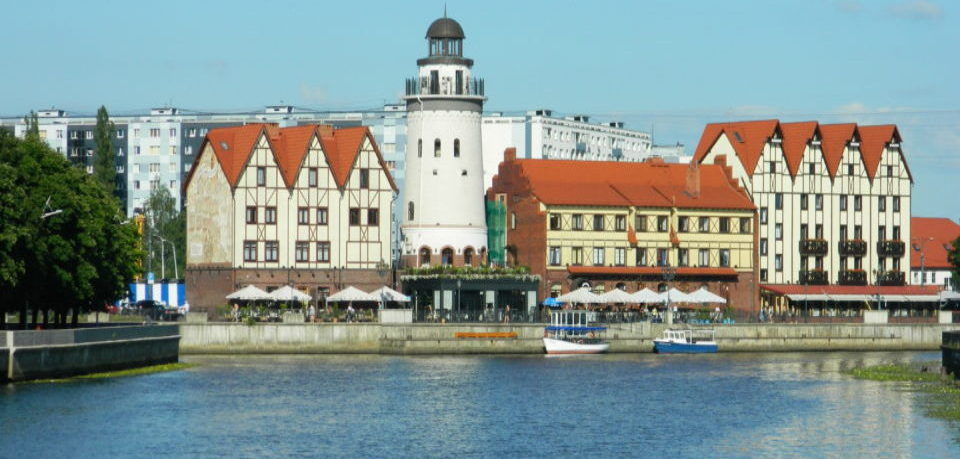
Summery Scenes in Kaliningrad and its region 2024-2025
26 June 2026 – Kaliningrad weather? – A What You Need to Know Post!
Brr, that’s all I can say. That was a quick post, wasn’t it? My allusion, as distinct from illusion – that’s one of those that everyone who voted for Starmer has since become acquainted with and will no doubt once again with the installation of Andy Burnham; oh, how fools are easily fooled – is to my last post (It’s sounding over Britain!), the one in which I appear to ratify the collective delusion (delusion this time) that it always snows in Russia, which it most certainly does in a good many Frederick Forsyth and Len Deighton novels and in most mainstream spy films based upon their books. It even snowed in the pop video used to promote Elton John’s Nikita. I almost said Akido, but I’ve practised that enough (ooh, my aching joints!), and very nearly Akita, but that’s my brother’s dog, neither of which, as I recall, are remotely connected to snow. Do you remember Peter Snow and his infamous ‘swingometer’, replaced today by Sky News’ military analyst Michael Clarke, who is a hybrid of Peter Snow and a friend of mine called Greg? Sorry, it’s all getting so confusing. That’s flux for you.
In order to demonstrate, therefore, that it always snows in Russia, but it doesn’t, well, not here in Kaliningrad at any rate, I’ve whipped out the old photo album and borrowed from myself some lovely, summery, sunny pictures that rather prove my point.
Kaliningrad Weather? – A What You Need to Know Post!
My previous post was built around snowy scenes in Polessk, so I thought it only fair in order to dispel notions that it always snows in Polessk that I contrast those images with their summer counterparts. These photographs show the Deyma River and Polessk Canal, together with the landmark Eagle Bridge. The sun is shining, the snow has gone, the ice has melted, and the boats are out.
Here am I, sitting outside Königsberg’s Rossgarten Gate, outside the Rossgarten Gate restaurant. It’s not that they wouldn’t let me in, but the restaurant’s name, Solnechny Kamen, which, as you students of Russian know full well, translates to ‘Sun Stone’, subliminally inspired me to capture the first rays of summer, which were breaking prematurely over the city in the last month of May 2024. Incidentally, I’ve not gone mardy and am not refusing to eat my food because, instead of a pint, I’ve been given a cup of coffee; I’m just thawing out after a long, hard winter.
Summer in Kaliningrad and its region is not all about beer and sun lounging – more’s the pity. On the contrary, it’s a time to get things done! Do those knee pads suit me? I’m doing a real conquistador job on upcycling that old open-arm bench, and our good friend, artist and conservationist, and, quite frequently, Immanuel Kant, is treating our historic Soviet statue to a summer makeover.
When the sun’s out, you want to be outside with it, but as my friend’s father, Mr Wilcox, used to bawl at me whenever I was ‘holidaying’ at his farm in my youth, “We’re fighting a war against human nature, Hart!! There’s work to do!!” And you couldn’t say fairer than that, because you daren’t. As his ghostly voice echoes across the decades, I assuage his wrath by turning my hand to a little shabby chicing in the country house hallway. Alright, alright, I admit most of the ideas were Olga’s.
And when the work is done … (most of these ideas are mine.)
Celebrating summer’s divine attributes.
Am I responding to the dulcet tones of my authoritarian guardian Mr Wilcox, or is it just excellent weather to be doing it? All my own work? Leave it out!
And when the work is done … it’s time for a libation with the neighbours.
Going German bunkers on a hot day in Kaliningrad. Meanwhile, Ginger teaches himself how to hide behind a flower before venturing out onto the terrace to assess how invisible he has become.
Late summer: the last rays of sunlight falter over the Curonian Lagoon.
18 June 2026 – Polessk in Winter is Rather More Than a Frosty Atmosphere
Do you know there’s a rather rude English expression that goes, ‘I don’t want to piss on your fireworks’, wryly meaning ‘I don’t want to spoil it for you’, which, being a gentleman, I would never use, particularly as the opening line for a blog post, in the same way that I would never say, in the first month of summer, that in ‘less than six months’ time it will be Christmas’; for who, after a long, drawn-out, bitterly cold and exhausting winter, such as the one Nature treated us to in Kaliningrad this year, would want to be reminded at this escapist juncture of the unravelling seasons of the cold, ice and snow, from which it seems we have only just emerged, when we are yearning, body, mind and soul, for sun, warmth and pretty women wearing summer dresses?
You might well consider it perverse, therefore, that in the midst of my understanding almost all I profess to understand, I go ahead willy-nilly in the contradictory manner of a British politician doing exactly the opposite of what he promised before he was elected, but, as it is with politicians, memory rarely recognises the virtue of fidelity, so that being unfaithful to one season whilst embracing quite another suggests an equal portion of love for those devoutly courted in the past and for those with whom contentment brightens life at present, permitting you to pick and choose as and when and how you choose with self-proclaimed impunity.
Thus it is, without further, if any, considered apology, unless to make allowances for the damp condition in which you find your fireworks, that a perverse pleasure falls to me to introduce to you an unseasonal series of photographs that recollect a winter’s day in and around Polessk, a Kaliningrad regional town, which, long ago in German times, was known by the name of Labiau, with one or two appended photos taken somewhere else but on that same petrified day and not so dreadfully far away as to make my inclusion of them beyond the remit of my title.
Polessk is situated at the confluence of the Deyma River, which branches off from the Pregolya River, and the Polessk Canal (pre-Soviet, the Grosser Friedrichsgraben). When winter temperatures plummet, sections of both waterways can morph into super-thick ice plateaux, allowing the intrepid, the experienced, and those who are determined whatever the climatic conditions to dangle their rods in the water, to stroll across it nonchalantly as if the doing of the action were the natural consequence of a rash desire. Our camera spies a local chap sauntering back to terrafirma over the ice-bound waters, where his comrades have been perched for hours in pursuit of a fisherman’s tale.
Eagle Bridge
The following view is a glimpse of the historic Eagle Bridge, which spans the Deyma River on the edge of Polessk. Built in German times, between 1919 and 1922, when Polessk was Labiau, its landmark construction, immediately recognisable from its twin operating towers, accommodates a restored ancient mechanism which hoists the bridge in two to permit the transit of river traffic. Down-to-earth blog readers will from my brief description most likely, and correctly, visualise a drawbridge, whilst bods with technical minds are liable to protest, ‘The term that he is searching for is a double-leaf bascule bridge. Don’t you just love an engineer!
Here’s me, standing on Eagle Bridge. I’m glad I invested in that thermal-lined coat– and pants!
Curonian Lagoon, Frozen
This ice-bound scene is not in and of itself Polessk but, recorded on the same day when the other views were photographed, it captures the fate of the Curonian Lagoon in its transformation to a frozen expanse, as seen from the coastline of the former German fishing village Labagienen, renamed Haffwinkel in 1938 and renamed again Zalivino by the Soviets after World War Two. Look carefully at the photograph: those little human specks lurking in the distance are by virtue of their courage akin to something like ice warriors, or you might presume just nuts. Observed in the twilight hours, with a low of minus 30 degrees nipping at your nose and with your eyes misting over, an eerily atmospheric sense replaces objectivity, inducing me to half expect a figure ominous in proportion skimming past on a dog-pulled sled followed in frenzied pursuit by Baron Frankenstein.Does it affect you this way, too? No, I didn’t think it would.
On your bike! It’s the Phantom Cyclist!
Stone the crows! I’m not sure about them, but you’ve got to handlebars it to him, he certainly frightens me. As scarecrows go, he is a lot more original and effective than a plastic bag hanging on a stick. The only time you have to worry is when, on your own and in the dark, you hear the sound of the cycle wheel whirring close behind you. Er, let’s walk back via the other route; it’s been such a long while since we went that way…
The Ponart Brewery Beer Shop
Now, this is a very interesting place. It stands on the corner of a narrow, weaving road, hemmed in by old German apartment blocks, overlooking the combined waterways of the Deyma River and Polessk Canal (historical name, the Grosser Friedrichsgraben). A local distribution outlet for the historic Ponart beer brand, brewed again to traditional recipes at the restored Königsberg brewery complex, which was built in 1839 and converted in recent years into a multipurpose cultural centre of which Kaliningrad is rightly proud, this worthy Polessk trading post is a convenient stopping-off point for stocking up on vital goods before and after excursions.
I imagine that this photograph is self-explanatory. Here am I inside the Ponart beer shop, situated at Zavodskaya Ulitsa, 1, Polessk, Kaliningrad Oblast, ordering one of their fine draft ales. Better than soup with a hot water bottle, it’s just the job after a two-hour stint of walking around in conditions that mimic those of the Arctic.Can you see my nuts?
or how we got there and how interesting it was when we did
Published: 11 July 2022 ~ On the Polessk Canal Road to Matrosovo Kaliningrad
Out on the single-track road that runs along the canal from Polessk to wherever it was we were heading, there’s a sense of going somewhere, which is good enough in itself. The canal, which links the rivers Deyma and Nemunas, provides a mostly parallel route to that place where, when we eventually got out of the car, I would call our destination.
The narrow road, no doubt constructed on the canal’s one-time tow path, is a cambersome experience, dipping, rolling and bowling along. The route takes in vast tracts of overgrown land which, at this time of year, is fifty shades of green, or even more, across and through which the Polessk Canal holds a straight and steady course.
Dotted along both sides of this sweeping tract of water, stand, in varying degrees of stability, old German cottages, typically composed as single-storey abodes but with attic space more than sufficient for filling up with all sorts of things.
On the Polessk Canal road to Matrosovo Kaliningrad
The canal road is like all roads of this nature, unambiguously elevated, and often the humble cottages built on the opposite bank to the water’s edge lie at a lower level. Those homes that abut the road are so close to it that an occupant stepping outside could in any unguarded moment find themselves swept away or knocked for six by a passing vehicle. The cottages in the hollow, in the cut below the bank, are exempt from this particular problem but arguably not from others; they can be so tightly sandwiched against the edge of the road that their windows are nearly contiguous.
They made stout hinges those Germans did!
At this time of year, the trees, wild bushes and virile foliage are so profusely laden with leaves ~ embracing, entwining and intimately enmeshed ~ that the houses seem to lose their way. It is not unusual, for example, to see entire portions of house appropriated by nature, swallowed up by all manner of creeping and climbing plants, whilst small trees and saplings jostling for space in front of the windows lead one to conclude that for all its idyllic rusticity subtract the picturesque and what you are probably left with is a multitude of sins, ranging from light-deprived interiors to issues with rising damp.
For the traveller, however, bouncing and bounding along without a care in the world, such phenomena, where they may or conversely may not exist, are of little or trifling consequence. One of the joys of travelling this road by car is that the presence of such houses often makes themselves known to you when you least expect them. The point at which two walls meet (the right angle of a cottage) can lean out from the natural shrubbery where nothing is, or seemed to be, only a moment before, followed quickly by a gable end and then the building in its entirety; only sometimes it does not, as you see as much and no more as the foliage permits.
A good many of these cottages are in states of disrepair that border on amazing qualities of things that refuse to fall down, their ability to remain standing testifying to construction techniques of old, where the need for durability and ‘everlasting’ strength are indubitably all that they should be.
The unifying deterioration is one, however, that could be remedied without considerable outlay, this is to say where painted walls have turned blotchy and brown with age and in some places on higher and lower planes where the substrate screed has fallen away, leaving irregular patches of brickwork exposed to view and the elements. In some instances, however, the pan-tiled or asbestos roofs have given up the ghost: rafters have resigned and the lot has sunk and plummeted inwards. This is not to say the ‘whole lot’. Indeed, the greater proportion of any one structure may have generally held its own against the concerted depletions inflicted by time, weathering, neglect and despair, thus rendering what remains if not exactly practicable to live in notwithstanding liveable.
As this condition is one that marks the fate of detached premises, you can imagine how much more acute the situation can be with regard to the semi-detached, where one half is maintained and the other lies forgotten, even to the extent of appearing, or actually being, abandoned. Sometimes it is hard to distinguish which of the two applies.
An old German barn with some signs of ageing and later additions
We travelled the canal route twice over one weekend, enabling me to get a closer look at two buildings in particular. One, a property with torn sheets of polythene flapping from collapsed windows, surrounded by blistered brick and flaking woodwork and bound by a garden resembling that of my friend’s garden back in Bedfordshire, only revealed its occupied status when on the second day of passing a venerable old rustic gentleman, swarthy faced and of matted grey beard, pausing conveniently at his rusting gate to gawp at the awesome sight of a motorised carriage with us tearing past in it, inclined us to believe that here indeed was the owner.
The second of the two buildings that prompted further attention was one which did so on account of its size and shape and also in possessing something more substantial and aesthetic in its character. I stop short of pronouncing it grand, speculating that it may once have been a school or chapel, its cruciform outline and the series of arches framing its entrance suggestive of civic importance and lending to it an air that asserted a presence more commanding than most.
One suspects that the majority of the buildings that I have described are hand-me-downs from the Soviet era, gifted on by folk who had been given them themselves by power of the authorities after Königsberg and its outlying region fell in World War II; in other words, they are family homes passing along and down the generational chain.
Houses that overlook the canal do so from large picture windows and some from the envy-making platforms of dark-wood fretwork balconies
Of course, the picture that I have painted is only one half of the canvas. Although they would be considerably less shiny and new, considerably less conspicuous should they exist in a hypothetical exclusivity created by the absence of their impoverished German neighbours, accomplished restoration projects and executive-status mouth-watering newbuilds share the same verdant space along the quiet, sleepy, secluded banks of this reclusive strip of water.
Kempt and curated, the freshly seeded lawns, attractive outbuildings and accessory dwellings blend neatly with the master home, offering tantalising glimpses into near perfection. Houses that overlook the canal do so from large picture windows and some from the envy-making platforms of dark-wood fretwork balconies, and always these and lesser properties whose gardens touch the canal have a jetty of some description and a motorboat moored nearby.
Such houses stand out like a sign saying, “See what you can do, if you’ve got the lolly!” Let’s take a break and put that idea to music: Dr Feelgood As long as the price is right. “If you’ve got no bread, you’re as good as dead”; “If you’ve got no loot, you just can’t shoot”; “If you’ve got no cash, then you’ve gotta dash”.
At the risk or repeating myself, I will say again that out on the single road that runs along the canal from Polessk to wherever it was we were heading, there’s a sense of going somewhere, which is good enough in itself. I suppose it is a fait accompli that sooner or later the canal veers off and that when it does it takes with it the narrow track that was originally its in the first place.
The road continues, but now is wide enough to accommodate oncoming traffic with ease. The wheels dip and the suspension rocks across the slightly less than level tarmacadam but soon rumble and jog respectively as the relative smoothness is abruptly replaced by sequential concrete sections. This type of construction always puts me in mind of a certain approach road that may still exist, and which was certainly there in the 1970s, on the way to Norwich, although in this geographical neck of the woods a road consisting of concrete slabs would, I guess, have been laid back in Soviet times.
I cannot remember exactly whether the road changed before or after we crossed a broad sweep of rapid rippling water, which I presume is the Deyma River, but there is no forgetting the bridge. It is a heavy metal-plate affair, with the ability to pivot on a mechanical mechanism. Lower than the road it services, when vehicles pass over the access slope it throws them slightly off-balance producing at the same time a mildly alarming clunkety-clank, likewise at the opposite end when leaving. The bridge appears to be solid enough but could do with a coat of paint.
On and on and on and on and then hoving into view is the signpost for Matrosovo. So, could this be where we were going and had we now arrived?
Matrosovo Kaliningrad region
On entering the village Matrosovo to the right you will see a quite substantial, attractive German house. It has been professionally reroofed using either terracotta tiles or their modern metal equivalent. The gable end, the end that faces the road, has a chevroned woodwork finish, and the house stands in its own grounds amidst a very nice cottage garden. Just beyond it, by the side of a silted brook, is something rather more down to earth, meaning decidedly earthy. A patch of ground, grazed relentlessly into dust is home to some rather whiffy cows and chickens as well as the paraphernalia required for sustaining them, such as wooden shacks full of hay and, scattered about in no particular order, various metal feeding troughs, buckets and the like. Suddenly I was young again, back on the farm in my youth!
On the whole, Matrosovo village has stood the test of time.
And now for something completely different; for across the road from this veritable Ponderosa looms an abnormally high metal fence and poking out above it is a rare, colourful if not grotesque very large plastic what-have-you ~ an inflatable how’s your father? It most resembles a bouncy castle but if that is what it is, it must have been made for giants. Moving on, as we were, we can discuss this curious contraption and other astonishing Matrosovo things at a later and more convenient date in my follow-up post on Matrosovo Park.
The road, that by now has turned into a dusty hardcore track, wends along a little until it meets a junction. Here you have a choice, which is either left or right, as before you lies the wide, the deep and the rather fast-flowing Matrosovka River, the mouth of the Neman River, destination Curonian Lagoon.
There are such a lot of waterways, rivers and the like, criss-crossing in these here parts that it is hard to determine who is which, but if at this point in my post you were to drive straight on the name of the river would matter less than the sound of going plop and feeling incredibly wet.
Avoiding this fate by turning right we followed a twisting hardcore lane with buildings on either side; this comprising the greater part of Matrosovo village, a village that instinctively feels like one with a genuine East Prussian heritage. (You have no idea what one of them feels like? Then you have to visit Matrosovo.)
Into Matrosovo
On the whole, Matrosovo village has stood the test of time. Yes, there are modern renovations of older buildings that could have been more sensitively restored in order to vouchsafe original features as well as newbuilds recently landed from the planet Super Affluent, but by and large along this meandering lane the houses of Matrosovo have managed to escape the worst excesses of insensitivity during periods when conservation was as alien a concept as ridiculous things like women prime ministers.
Matrosovo Kaliningrad region
The German cottages of Matrosovo are predominantly wooden-clad structures. Detached or semi-detached each possesses bilateral features and a sense of uniformity in the relative space that they occupy, both vertically and horizontally, with one or two exceptions. Some are super-simple, standard pitched-roof jobs, their longest dimension aligned with the road but can be gable-end facing, a not unusual arrangement, in fact typical in this region but inversely so in England. Others, a little more posh, have a large, pitched dormer-style window intersecting geometrically, which, in the semi-detached variation, is the dividing point between the two properties.
Not all of the houses in Matrosovo conform to the wooden-clad principle, but plank cladding is certainly prevalent. Where it is employed, it is usual for the cladding to stand proud along the upper portion of these buildings, sometimes with no embellishment, in other words it starts as a plank and ends that way, but others are pointed, like the upturned staves of a traditional picket fence, or even nicely rounded so as to form a decorative apron.
Wooden cladding with ‘pie crust’ finish
Hardly any of these domiciles, whether partly hidden behind the trees or exposed to view, have escaped the make-do-and-mend and aesthetic-free philosophy of Soviet DIYers, who during the era of their tenure thought nothing of tacking a porch on here or amending a section of pan-tiled roofing there, usually from the loan of a ubiquitous piece of asbestos or by recourse to any number of unremarkable materials but admittedly novel techniques that may have conceivably rectified but certainly not improved, and yet when they are beheld today cannot fail to gratify with their touches of eccentricity and unique dedications to social history.
A number of these establishments are still endowed, if only just, with their original German barns. Here, in the former province of East Prussia, German barns can be as big as their imperialist ego or as small as there … (please send your answer to Mick Hart on a postcard). In Matrosovo, they are generally, and may I say delightfully, less alpha in their bearing, but notwithsatnding no less endowed with the universal characteristics of the whoppers you find elsewhere.
Former East Prussian German barns are built on the following principles: The lower parameters are composed of red brick, which make them solid, sturdy and handsome to say the least, but the upper sections are made of wood, simple wooden planks nailed to a framework of beams and supports. The roofs, which are pan-tiled, are heavy and seem to press down forcibly, much to the detriment of the load-bearing structure beneath, causing the wooden mass to assume a splayed or bowed effect. But without wishing to delve too deeply into principals of design that are better left to the experts or for you to research at your leisure (I shall be asking questions, later, children) a revisionary approach implies that perhaps these barns are made this way to spread the load as needed.
A buckling barn of typical German construction
If so, time, neglect and Soviet hap-hazardry has tested them to the limit. Many have succumbed to various states of collapse ~ roofs stoved inward, walls buckling, bits missing, doors as unhinged as Justin Turdeau, and even when this is not the rule but rather the exception, proletariat bodgery is written on almost every surviving quarter like a vandalistic antecedent to the gunge that liberals delude themselves is ‘street art’ but those who live in the real world routinely condemn as graffiti.
Notwithstanding, the buckling barns of imperialist Germany are inspirational remnant art-forms from the hands of Father Time meant to give living artists something bold to emulate. They are a concomitant of hieroglyphics each one firmly rooted in its era, each with a story to tell for those who know how to read them. And what they may have ceased to be from a utilitarian standpoint they more than make up for in visual delight and empathising Romanticism.
Matrosovo Kaliningrad region on the Deyma River
Along the side of the village riverbank, at the back of the houses and land adjoining, old boats can be found, some which with their happy occupants would have come whistling in to dock many years before but, for reasons we may never know, have whistled nowhere since. Lamentably becalmed, strangled by waterside plants and the encroaching branches of trees, their fading blue and yellow paintworks (they are invariably blue or yellow) and weather-cracked mouldering windscreens project on the first encounter a sad and silly impression. Wanted once, will they ever be wanted again? There they sit, like single mums abandonned (even bereft of benefits), dull and dowdy, water-logged, without engine and nowhere to go. No matter where in the world you trek, be it by river or sea, rest assured you will always find that old boat sitting somewhere: becalmed, sad, no longer needed, possibly taking in water, largely forlorn, resolutely forgotten.
Up the garden path
Gardens, unlike boats, are not so easily forgotten but, like most things known to man, you can either devote your life to them or live your life and let them live theirs. In Matrosovo both philosophies and the nuances that derive from them are open to conjecture. It all depends on how you like your gardens: traditional, cottage, formal, pre-planned, secret, maintained, natural, exotic or simply not at all. They are all here in Matrosovo.
Lovely wooden shutters and a nice garden
Reconditioned and new houses tend to go for reconditioned and new gardens. Many contain supplementary/ancillary buildings and seem to go on forever. They remind me of our cat: they have been tended, pampered, revitalised, put down to new grass (even our cat has grass) and may contain a pond or two or a stream that runs gently through them embroidered by trees large and mature that attest to a natural border. (My word, that’s some cat you’ve got there, Mick!)
Yet Spick and Span is but one short band on the overall garden spectrum. Others have become repositories of overspill modernity, among which, and noticeably, is the human compulsion not to recycle when one can simply discard. Old tin buckets, fridges, enamel bowls and any number of garden implements and ornamental wares that have ceased for some reason or other to provide either the useful or novelty value for which they were intended, peep sleepily out from behind clumps of yellow dandelions, play hide and seek in the long wild grass or prop themselves up wearily against the separating sides and quiescent, weed-fringed borders of geriatric sheds that have seen it all and more and may just go on seeing it when we have long since gone.
Heaven forbid, however, that you would find anything of this nature in the exalted gardens of immaculate conception. But don’t worry; it does forbid. Not that the shuffling, folding, falling sheds complain. Like old folks that have been leaving home since the day that they were born but never got further than the garden gate and will never go anywhere now, except in one direction, they belong to a realm of static contentment upon which no amount of the present has neither the will nor authority to intrude.
On a hotter than usual summer’s day this then is the village of Matrosovo, offering all that the senses could wish for ~ a time-honoured rustic seclusiveness on the balmy banks of the Matrosovka River.
Next up: Would you Adam and Eve It ~ the contrast on the other side of the village! (Wait a mo, I’ve yet to write it …)
WWII Re-enactment at old German brewery in Polessk
Published: 27 January 2022 ~ Soviet Re-enactors take Polessk Brewery in WWII Battle
On 23 January 2022, the Polessk Brewery hosted a re-enactment of the battle for Labiau (Russian: Polessk), originally orchestrated as part of the Soviet East Prussian Offensive, which culminated in the surrender of Königsberg on 9 April 1945.
A better location for the re-enactment is hard to imagine. The grounds of the Polessk Brewery fall gently away from the foot of the brewery wall to the reed beds and banks of the River Deyma. Between the river and the brewery stands the solid remains of a reinforced concrete German gun emplacement . With the Soviet forces advancing from two separate points of the river, this genuine WWII obstacle provided the perfect place for the defending Germans to ‘dig in’ and attempt to repulse the invaders head on.
Germans (re-enactors) gather by the side of the ‘bunker’ before the battle commences #
As with English WWII re-enactment scenarios, attention to detail was paramount. Re-enactments have an entertainment value, but first and foremost they are educational, which is why their participants are known by the generic name of Living History Groups.
Re-enactors on both sides, those representing the German and Soviet forces, dress in authentic uniforms, each item of which, including field gear and insignia, is meticulously researched and worn in the way it would have been worn by serving members of each country’s armed forces during the Second World War.
Soviet re-enactors in authentic WWII Red Army gear #
The de-activated weapons carried and used by re-enactors are often not replicas but blank-firing originals, the cost of which is frequently more alarming than the sounds they make when discharging. The same goes for the rest of the entourage: uniforms, insignia and field gear come at a not inconsiderable price. Good reproductions, ie the sort sold through the militaria outlet Soldier of Fortune, can be expensive enough, but the real thing, especially the real Third Reich thing, can cost the proverbial arm and leg. (Sorry, perhaps not the nicest metaphor when used in conjunction with military re-enactment!) Nevertheless, at the end of the day, re-enactment is no different from any other leisure pursuit: in other words, it costs!
Soviet Re-enactors take Polessk Brewery in WWII Battle
Although the area covered by today’s Polessk re-enactment was extensive, spectator attendance was high and in order to ensure an advantageous viewing point it was necessary to arrive early and stake out your claim. Low ambient temperatures and snow on the ground did not seem to have deterred anyone, and with a fair proportion of Germans and Soviets wearing snow suits, the scene could not have been more suitably convincing.
Olga and I had chosen to stand at the lower end of the field, which gave us a pretty clear view of the start of the battle, with Soviet forces firing mortars at the entrenched Germans, followed by the infantry advancing slowly on both sides.
Small children had been warned that their ears would be subject to ‘loud bangs’, and although the reports of rifles and machine guns were bearable in the wide-open expanse in which they were discharged, no one was prepared for the heavy canon fire and punctuating pyrotechnics. As I wrote earlier, re-enactment is serious stuff!
As the Soviets advanced, Olga and I retreated to the interior of the brewery (well, I would, wouldn’t I!), where it was possible to witness the battle from an elevated perspective. If anything, the confrontation was more dramatic from this standpoint, since as well as the commanding view it gave us, the background commotion of battle emanating from a giant sound system placed at the side of the brewery wall rose tremulously from the ground below and rent the air asunder.
It was a nice touch at the close of the assault to see a triumphant Soviet soldier waving the Red Army victory flag from the stairwell window of the old Labiau brewery!
Published: 8 November 2021 ~ Restoring the Polessk Brewery in the Kaliningrad Region
The former East Prussian province of Kaliningrad, known today as Kaliningrad Oblast, is a territory rich in history. It is a cultural treasure trove of historically overlooked, essentially undiscovered and time-abandoned places and buildings. Even if its immense restoration and development potential is realised, it is as yet largely untapped, waiting patiently for the overdue arrival of the curatorial entrepreneurs who will restore, rebuild and conserve it for generations to come.
Above:Labiau coat of arms
Among the many instances of this long-awaited rehabilitation is the small town of Polessk, known in German times as Labiau. Located approximately 50 kilometres northeast of Kaliningrad on a long, recently resurfaced, tract of road, Polessk debuts as a tired, run-down and struggling municipality. There are sporadic instances of once regal buildings and the two small municipal parks form welcome green oases, but mirages in an urban desert waiting with weary buildings for the miracle to come merely serve to ask the question when?
It is not just for any old reason that Lenin, standing alone on his plinth, looks out across the deserted concrete plateau where homage once was paid to him, preferring these days to fix his eyes on the waterways beyond rather than look behind and be reminded of Boris the proletariat bodger, with his concrete blocks, two sheets of asbestos and bucket of cement.
And yet you instinctively know, or feel, from the moment you cross the railway line, which is the threshold of the town, to the point at which you meet the canal and river, that this is a town that deserves much more, that it could be so much better!
The Deyma River, an offshoot of the Pregolya, and the Polessk Canal, which links the Pregolya and Neman Rivers, form a natural boundary at one end of the town as the railway does the other. To the north lies the 625-square-mile Curonian Lagoon, a haven of biodiversity and a coastal habitat of unaffected beauty. In essence, Polessk is a gateway to a multi-faceted cultural region steeped in historic significance, blessed with natural beauty and profusely invested with ecological importance.
It is also home to Labiau Castle, described on the internet as an ‘historical landmark’, but which in its present-day condition looks more like a beggar waiting for the feast than deserving of the grandiloquent title which speaks of better days. Alas, both castle and Lenin’s statue occupy the same proximity, somewhere in the space between the power and the dream.
The few who belong to the exclusive Polessk club, those who have actually visited the town and who may have even stepped inside of what remains of Labiau castle, are less likely to be aware of the presence of another historic building that is tucked away obscurely behind the backstreets of Polessk.
This building, a former German brewery of mid-nineteenth century origin, is currently the recipient of an ambitious restoration project that is rescuing it from oblivion and progressing its renaissance to a working brewery and museum.
Restoring the Polessk Brewery in the Kaliningrad Region
Invited to attend an open day and tour of the brewery, I felt particularly privileged. The excursion embodied three of my major interests and by default principal weaknesses: social history, historic architecture and ~ yes, you’ve guessed it ~ beer!
At the risk of repeating myself, Polessk is by no means a large town. Nevertheless, its compact nature does not make it any easier to locate the brewery, which is hidden away behind a cluster of average Soviet flats on an expanse of ground at the end of a side street.
These flats, or to be more precise, their blandness, do the brewery no disservice. By screening it from view they ensure that the first encounter with the building is considerably more dramatic than it otherwise would be.
Admittedly, whilst zig zagging between the flats, the sight of a balcony strung with socks and pants is, to put it mildly, a disarming one, but take heart! ~ just when it seems that all is lost, the scene suddenly opens up to reveal a view that is guaranteed to set the pulse racing of anyone who is infatuated with social and economic history.
There stands before you a wonderful Red Brick neo-Gothic edifice, astonishing in its turreted and towered simulation, atmospherically magnetic, beloved in recognition of the beer it must have produced and will, with a little bit more than a gentle nudge and a shove, soon be producing again.
Star-struck, I recall the profound reaction and words of my Uncle Son, who was a builder, when he first clapped eyes on Norwich Castle: “How did they get that ‘stun’ up there!” he said. And with the same degree of wonder, as I stared transfixed at the brewery’s magnitude, made all the more awesome by the thankful absence of the Soviet predilection for pre-cast concrete, I whispered to myself, “How did they get those bricks up there?”
At this moment, I was reflecting on the buildings pseudo-Gothic tower ~ one of the most awesome chimneys that I have ever encountered. Not that I am a stranger to tall chimneys, having lived in English counties where the skyline was dominated by rows of them belonging to the brickworks. But the brewery’s chimney, being rectangular rather than cylindrical in form, and its solitary presence, gives its ground-to-skyline taper a singularly novel and striking effect.
The dynamic of the front of the building depends for its impact on the complexity in shape, size and angularity of the contrasting component parts: the tall tapering chimney, the rectangular tower with its curious knop, currently under scaffolding, and the lower sloped-roof structures. The accentuated Gothic arches within which the windows are set and, in some instances, embroidered with decorative brickwork, possess a dramatic personality of their own but seen together their inverse graduation makes this already tall building seem loftier still.
The window configurations, concomitant decorative detail and structural elements project an industrial power that is best appreciated from the prospect of the end elevation (shame about that Soviet blockhouse knocked up at ground level in con blocks and cement) and from close and awe-struck scrutiny of the far side of the building. From this perspective the viewer receives a first-class rendition of the intrinsic importance of arches in Brick Gothic formations, here creating a dynamic uniformity in which contrast plays its subtle part across the horizontal plane and within the vertical sections.
If you look carefully at the photographs of what is effectively the back of the building you will see that approximately 50 per cent of its interior is already a beneficiary of restorative work. New double-glazed windows have taken the place of the old and through them a glimpse of smart walls and retro lighting emerges.
Arched configuration of windows , Polessk Brewery
The original entrance to the brewery appears to have been through one of two doors that open, front and back, into the same traversing corridor, but the restoration has seen fit to provide a grander approach, using a two-tiered wrought iron staircase that leads to large glass doors cunningly inserted into one of the first-floor window arches.
Entrance to Polessk Brewery
First impressions count, and the two that spring to mind on the other side of the front door is overwhelmingly spacious and infinitely solid. Next comes the detail, which feeds into the first two.
The ceiling and upper storeys of this vast reception room rest on a series of three double H-beams that span the room’s width. They are raised on prodigious, iron, load-bearing columns fastened where they meet with bold connection plates bolted one into the other. These, and the visible undersides of the H-beams that travel the length of the ceiling are finished in a suitably industrial-looking matt red-oxide paint. Between the sunken ceiling beams the intervening space is arched, each arch resembling the convex half of a separated tube, so that taken as a whole the ceiling adopts an undulating character, each lengthwise arch the equidistance of the other.
In one corner of the room, suspended from the ceiling, hangs a large triangular-shaped grain funnel, studded with rivets and finished in the same red-brown paint as the beams. Diametrically opposite, on the other side of the room, a giant wood-burning furnace is at work, roaring fiercely away. It is more than capable of keeping the vast room, already operating as a tourist information centre and ear-marked for expansion in this role, at a pleasurable ambient temperature.
Connoisseurs of nineteenth-century Brick Gothic architecture will enjoy the contrast in the construction principles and materials used on the first and second floors.
The second floor, which is accessed via a short, curved, boxed-in staircase, trades its metal industrial credentials for a more medieval wood construction, substituting the iron vertical supports of the preceding floor for great rectangular posts with offshoot branches to the beams that cross above them. No wonder then that the burly brewer who occupies the second floor is a larger than life-sized wooden carving!
On this floor, as with the previous one, there are a series of history boards, all of which are designed and presented to professional museum standards. Not that my elementary grasp of the written Russian language enabled me to educate myself as much as I would have liked, but I did glean some information both from the boards and from the various relics and artefacts scattered around the rooms.
The second storey also contains a large circular grain tank that would have fed into the hopper on the other side of the ceiling. This great metal tub studded with rivets is as impressive as it is solid as it is tactile!
A part-completed staircase and a large hole in the floor above provides an excellent viewing platform and vista from and through which to gaze up into the rafters. The beam construction is truly magnificent here and in remarkably good condition considering the age of the wood and the long period for which the building was unused, untended and deteriorating. I believe I am right in saying that when completed this section of the building is where the brewery museum will be housed.
Restoring the Polessk Brewery in the Kaliningrad Region
Although an attic-man myself, basements and cellars do possess a certain Jene sais quoi.
From an architectural and atmospheric standpoint, the cellars of 19th century breweries are fascinating places. It is in these underground chambers that the rather tedious task of throwing grain across the cellar floor with wooden shovels and then spreading it about with rakes was undertaken in the pursuit of procuring germination prior to drying and milling. The cellars of the Polessk brewery may not have been the most salubrious environment in which to work for long periods when the plant was up and running, but architecturally their vaulted ceilings are superb examples of mid-19th century Gothic style, a specific feature of which was the use of iron columns as opposed to stone or brick supports.
To access the cellar it is necessary to descend the lower half of the curved stairs that runs from the first to second floor. It brings you out into the corridor that I referred to earlier, which runs the width of the building. The corridor marks the point where one half of the building’s interior restoration nears completion and the other is work in progress. The ‘in progress’ 50 per cent gives an accurate idea of how much work has been accomplished so far and how much devotion, planning, blood, sweat, tears and sheer hard graft is yet to be undertaken before the standard of finish in this half of the building will equal that displayed in the other. Not so much as a round of applause, please, as a medal, I think, is needed!
Above: More work to be done. Any volunteers?!
History of Polessk Brewery
Anyone whose Russian is better than mine which, like 50% of the Polessk brewery, is every day ‘work in progress’ for me, should encounter little difficulty in harvesting all the detailed information that they could wish for about the history of the brewery, from its inception to the present day, from the biographical story boards distributed around the building. But to give you a leg up, here is a succinct outline of that history:
Labiau brewery, which changed names several times during its productive years, was founded and built in 1840 by oneAlbert Blankenstein. The business was a family-run concern and, after his father’s death, was inherited by Albert junior (as the Americans would say), who embarked on a complete reconstruction programme and thereafter increased the range and productivity of the plant’s output.
Soon the brewery was producing about 5,000 litres of beer a day, mostly dark lager but also a light variety known as Labian March Beer, as well as a selection of non-alcoholic beverages.
Unlike many other breweries in the region, Labiau brewery’s fate was not sealed by the outcome of the Second World War. The Soviets decided to restore, modernise it and leave the day-to-day creation of beer in the hands of a German brewer.
By February 1946, beer was flowing from the brewery again under the direction of Lieutenant Colonel Nikolai Novovi, its first Soviet director. By all accounts the colonel was a hard task master, who had no qualms about disciplining his workforce, the majority of which were German. Not only did he dismiss three Germans for skiving off work, but he also sent them up before a disciplinary tribunal.
Germans not dismissed and sent to disciplinary tribunals continued to work at the brewery until October 1948, when they became casualties of the mass expulsion of Germans from the region.
The last Soviet brewer to work at the plant was one Mikhail Myasoedov, who had learnt his trade since 1946 in breweries based in the Caucasus. As competent as he no doubt was, his tenure of the brewery was short lived. The post, which he took up in 1954, was, two years later, surplus to requirement owing to a large brewery opening in Kaliningrad. In consequence, lager production ceased in Polessk in 1957, although for a short while afterwards the plant continued to produce fruit juice drinks, lemonades and wines made from berries.
The man who is making it work
The inspiration and driving force behind the renovation and preservation of Labiau brewery is Alexander Natalich. Never forgetting that first impressions count and that the eyes are the windows to the soul, Alexander Natalich comes across as a man with a genuine love of history and a passion for his restoration project, in fact, his family’s restoration projects.
To date, the Natalich family have successfully restored a school in Ilyichevka, close to Polessk, a former Polessk printing house, which now serves as Alexander’s office, and a kindergarten, which its original owners abandoned before it could be completed. And now there is the brewery.
With a track record of this calibre, it is hardly surprising that Alexander is often asked whether his next project will be Labiau Castle, to which he wryly, but no doubt accurately, replies that what he has taken on so far could keep him occupied for the rest of his life.
The future of Polessk and the region
It may seem that Alexander and his family have cast themselves unofficially in the role of Polessk’s (Labiau’s) cultural saviours. If so, Alex has a good teacher. It was his mother, Inessa Savelyevna Natalich, who restored the old German school in the village of Ilyichevo, district of Polessk, to heritage standard. And whilst no one could blame her son for thinking that he will have his work cut out restoring the brewery, further light is shed on his ‘enough work to last me the rest of my life’ remark in that the brewery is seen as the focal point of a more extensive project, which encompasses turning the brewery grounds into parkland, cutting back the wetland reeds that are choking the Deyma River and opening up a boat station, the intention being to run a sight-seeing shuttle service to and from Zalivino Lighthouse, which is a renovation success story in its own right!
Intentionally or not, Alexander Natalich, his family and band of volunteers, are putting Polessk and its corner of the East Prussian region back on the historical map. There is incredible potential for sensitive tourism in Polessk, where history meets nature. Inessa Savelyevna Natalich’s German school, Alexander’s restored printing works and kindergarten, Labiau Castle, Lenin on his plinth, Eagle Bridge, river boat rides, Zalivino Lighthouse and enough natural coastline and man-made waterways to explore, enjoy, photograph, sketch and paint than I have drunk beer in a lifetime (I’ll have to think about that one!) ~ oh, and don’t forget the brewery. I can’t wait for it to open!